






Manila Bulletin
 Philippines
National
APEC leaders launch 'AI for All' vision, adopt Gyeongju Declaration for inclusive growth
Philippines
National
APEC leaders launch 'AI for All' vision, adopt Gyeongju Declaration for inclusive growth
Philippines
National
APEC leaders launch 'AI for All' vision, adopt Gyeongju Declaration for inclusive growth
APEC leaders launch 'AI for All' vision, adopt Gyeongju Declaration for inclusive growth
Published Nov 1, 2025 02:41 pm


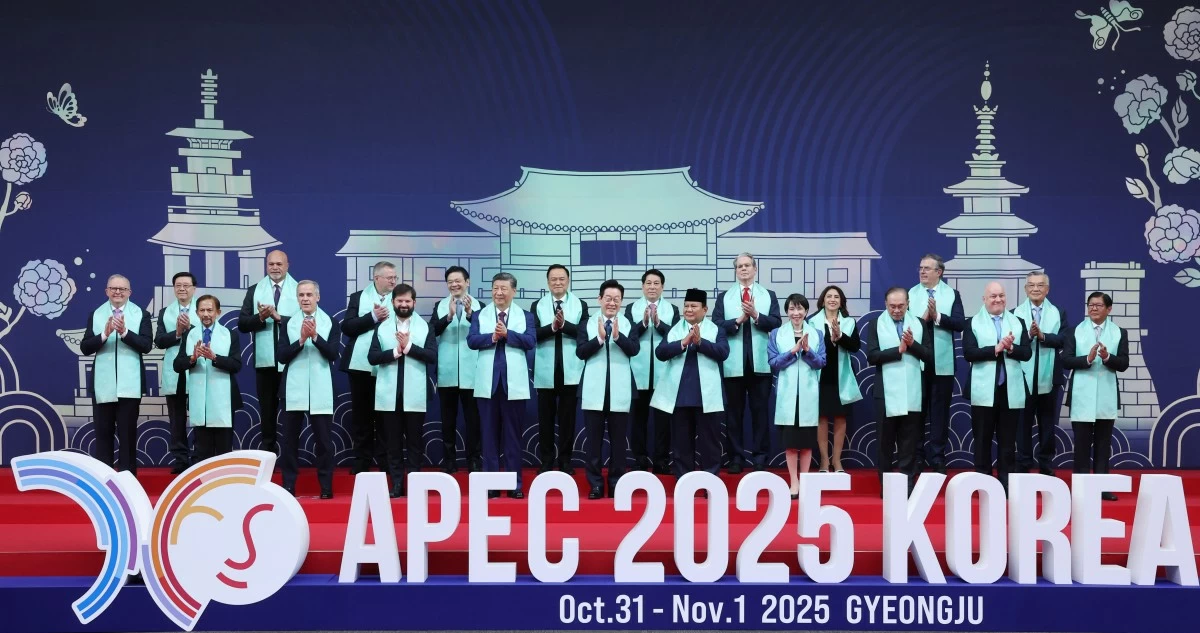
Leaders pose for a family photo at the annual Asia-Pacific Economic Cooperation Economic Leaders’ Meeting on Nov. 1, 2025, at the Hwabaek International Convention Center in Gyeongju, South Korea. (APEC 2025 KOREA/Yonhap News)
BUSAN, South Korea — Asia-Pacific leaders adopted the Gyeongju Declaration at the conclusion of the 2025 Asia-Pacific Economic Cooperation (APEC) Economic Leaders’ Meeting on Saturday, Nov. 1, committing to harnessing artificial intelligence (AI) and addressing demographic challenges to drive inclusive and sustainable growth across the region.
President Lee Jae Myung, this year’s APEC chair, said the “AI for All” initiative embodies the region’s shared goal of using technology to create opportunities for every citizen.
“The foremost principle is to build an AI-driven society where technological innovation fosters inclusive growth,” Lee said during the closing session titled “Preparing a Future-Ready Asia-Pacific.”
He added that South Korea envisions “a global AI society where people around the world can equally enjoy the benefits of technological progress,” emphasizing that member economies must turn “the great transformation brought by AI into an opportunity.”
‘AI for All’
Under the Gyeongju Declaration, leaders endorsed the APEC AI Initiative to advance cooperation in AI capacity building, innovation ecosystems, and governance.
The document calls for regional collaboration to “build AI capacities at all levels,” cultivate investment in AI infrastructure, and ensure that innovation remains human-centered, accessible, and trustworthy.
“We also call for continued efforts to enhance security, accessibility, trustworthiness, and reliability in realizing the benefits of AI for all,” the declaration said, noting the need for policies that balance innovation with workforce development.
Lee said South Korea is already expanding AI infrastructure, such as large-scale data centers and implementing regulatory reforms to create an environment where “global companies can innovate freely.”
He also highlighted the importance of addressing the digital divide, saying inclusive growth depends on “making the benefits of digital transformation accessible to all.”
The declaration emphasizes that AI should enhance the well-being of people and promote economic resilience across the Asia-Pacific region.
Demographic change and creativity
Alongside the AI initiative, APEC leaders adopted the Collaborative Framework for Demographic Changes to tackle declining birth rates, aging populations, and rapid urbanization.
The framework encourages intergenerational policies and collective action to unlock new opportunities for growth amid demographic shifts.
“Demographic changes pose serious challenges that affect all areas of society, ranging from economic growth and the labor market to education and welfare. They cannot be resolved through partial or isolated measures,” President Lee said.
For the first time in its history, the APEC declaration also recognizes cultural and creative industries (CCIs) as a new growth driver for the region.
It highlights the role of CCIs in “fostering people-to-people ties and encouraging mutual respect” among member economies, while noting that AI and digital technologies are “fostering creativity and enabling innovation across the entire process of creation, production, and consumption.”
Trade and investment
While reaffirming the importance of robust trade and investment, this year’s declaration notably omitted the reference to a "rules-based multilateral trading system with the WTO (World Trade Organization) at its core" — a phrase that had appeared in every APEC declaration since 2021. The APEC leaders' declaration can only be adopted by consensus, with support from every single member economy.
The change reflects growing divergence among major economies amid the renewed US–China trade rivalry.
Still, the Gyeongju Declaration likewise reaffirmed that “robust trade and investment are vital to the growth and prosperity of the Asia-Pacific region” and that APEC will advance economic integration in a market-driven manner.
The leaders also reaffirmed support for the Free Trade Area of the Asia-Pacific (FTAAP) agenda and committed to strengthening supply chain resilience through greater private sector engagement.
Energy, food security, and anti-corruption cooperation
Beyond technology and trade, the declaration emphasized cooperation in energy diversification, food security, and anti-corruption.
APEC economies recognized “the need to ensure a stable power supply” and encouraged investment in renewable and cleaner energy technologies, including liquefied natural gas and modernized power grids.
They also vowed to strengthen food security by reducing supply chain disruptions and minimizing food loss and waste.
On governance, leaders reaffirmed that “corruption transcends borders, distorts markets, and erodes public trust,” calling for innovative and coordinated anti-corruption measures across member economies.
“We recognize the detrimental impact of corruption as a threat in that it transcends borders, distorts markets, erodes public trust, and facilitates crimes, including organized crimes,” the declaration read.
“We reaffirm that anti-corruption efforts must be more innovative, better coordinated, and more effective. We will continue our efforts to deny safe haven to corruption offenders and illicit assets,” it added.
The declaration also acknowledges that the current global landscape “further demonstrates APEC’s importance and role as the premier forum for regional economic cooperation.”
Turnover to China
As the summit concluded, President Lee formally handed over the APEC chairmanship to Chinese President Xi Jinping, whose country will host APEC 2026. President Marcos congratulated Xi for hosting next year’s summit.
“I congratulated President Xi Jinping as China assumes the APEC Chairmanship in 2026, and reaffirmed the Philippines’ commitment to partnership and meaningful cooperation in our region,” he wrote on a Facebook post.