ADVERTISEMENT

Years after Argentina shut a notorious zoo, the stranded animals are finally being rescued

Published Oct 31, 2025 09:02 am
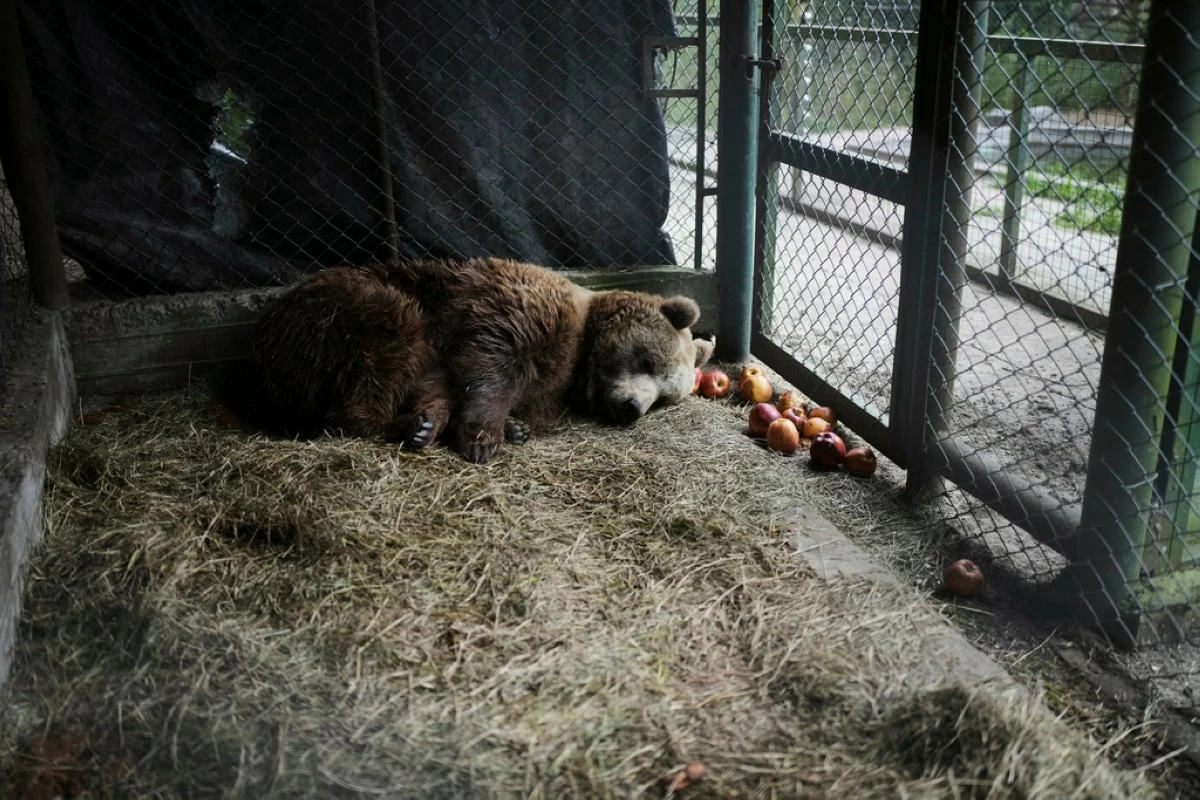
Florencia, a brown bear, lies in her cage at the former Lujan Zoo, which closed in 2020, where in recent days a global animal welfare organization has been treating animals, in Lujan, Argentina, Thursday, Oct. 30, 2025. (AP Photo/Natacha Pisarenko)

LUJAN, Argentina (AP) — Lions, tigers and bears that managed to survive in substandard conditions at a now-shuttered zoo on the outskirts of Buenos Aires, Argentina, paced weakly in their claustrophobic cages on Thursday, waiting their turn to receive urgent veterinary care for the first time in years.

The 62 big cats and two brown bears were being evaluated and treated before their eventual transfer to vast wildlife sanctuaries abroad — one of the largest and most challenging yet after a recent arrangement between Argentina and an international animal welfare organization.

Argentine authorities in 2020 shut down the Lujan Zoo — famous for letting visitors handle and pose for pictures with tigers and lions — over mounting safety concerns.

But the plight of the captive cats there only worsened. For the past five years, the animals were sustained by little more than a few loyal zookeepers who, despite having lost their jobs at Lujan, took it upon themselves to feed and care for the stranded lions and tigers left behind.

Most didn’t make it.

When Four Paws, an international animal welfare organization, first visited the zoo in 2023, caretakers counted 112 lions and tigers — already down from the more than 200 big cats believed to have been housed in the zoo at the time of its closure.

Two years on, almost half of the animals have succumbed to illnesses from poor nutrition, wounds from fights with animals they’d never encounter in the wild, infections from lack of medical attention and organ failure from the stress of living in such cramped conditions.

“It was really shocking,” said the organization’s chief program officer, Luciana D’Abramo, pointing to a 3-meter by 3-meter cage crammed with seven female lions. “Overcrowded is an understatement.”

Next-door, two Asian tigers shared a tiny cage with two African lions — a “social composition that would never be found in nature,” D’Abramo said. “There’s a lot of hostility, fighting.”

A single lion typically gets 10,000 square meters to itself at Four Paws' sanctuaries around the world.

After striking an agreement with Argentina’s government earlier this year, Four Paws took over responsibility for the surviving wild animals in Lujan last month.

The memorandum of understanding involved Argentina committing to end the sale and private ownership of exotic felines in the large South American country, where enforcement efforts often run aground across 23 provinces that have their own rules and regulations.

Although the Vienna-based organization has previously evacuated starving tigers from Syria's civil war, abandoned bears and hyenas from the war-ravaged Iraqi city of Mosul and neglected lion cubs from the besieged Gaza Strip, it has never rescued such a large number of big cats before.

“Here, the number of animals and the conditions where they are kept make this a much bigger challenge,” said Dr. Amir Khalil, the veterinarian leading the group’s emergency mission. “This is one of our biggest missions ... not only in Argentina or Latin America, but worldwide."

On Thursday, veterinarians and experts from the organization were scrambling around the derelict zoo to assess the animals one by one. Most had not been vaccinated, sterilized or microchipped for identification.

The team whisked sedated lions and tigers onto operating tables, dispensing nutrients, antibiotics and doses of pain medication via IV drips.

The quick checkups frequently transformed into emergency surgeries. One tiger was treated for a bleeding gash in its tail last week, another for a vaginal tumor on Thursday. Several tigers and lions needed root canals to repair infected molars that had been broken on the steel cage bars.

Others received treatment for claws that had grown inward from walking too much on unnatural, plank flooring in the spartan enclosures.

After evaluating each animal in the coming weeks, Four Paws will arrange for their transfer to more expansive, natural homes around the world.

Some Argentine zookeepers who spent decades feeding and caring for the big cats say they're happy to see Four Paws improving the conditions. But there was also a sense of nostalgia for how things were.

“It used to be a very popular place ... I’ve seen people cry because they could touch a lion or feed a tiger with a bottle," said Alberto Díaz, who spent 27 years working with the wild cats at the Lujan Zoo, overseeing hands-on experiences that catered to countless tourists.

“Time changes, laws change, and you have to adapt or get left behind."

Related Tags

World news
ADVERTISEMENT
.most-popular .layout-ratio{ padding-bottom: 79.13%; } @media (min-width: 768px) and (max-width: 1024px) { .widget-title { font-size: 15px !important; } }

{{ articles_filter_1561_widget.title }}

.most-popular .layout-ratio{ padding-bottom: 79.13%; } @media (min-width: 768px) and (max-width: 1024px) { .widget-title { font-size: 15px !important; } }

{{ articles_filter_1562_widget.title }}

.most-popular .layout-ratio{ padding-bottom: 79.13%; } @media (min-width: 768px) and (max-width: 1024px) { .widget-title { font-size: 15px !important; } }

{{ articles_filter_1563_widget.title }}

{{ articles_filter_1564_widget.title }}

.mb-article-details { position: relative; } .mb-article-details .article-body-preview, .mb-article-details .article-body-summary{ font-size: 17px; line-height: 30px; font-family: "Libre Caslon Text", serif; color: #000; } .mb-article-details .article-body-preview iframe , .mb-article-details .article-body-summary iframe{ width: 100%; margin: auto; } .read-more-background { background: linear-gradient(180deg, color(display-p3 1.000 1.000 1.000 / 0) 13.75%, color(display-p3 1.000 1.000 1.000 / 0.8) 30.79%, color(display-p3 1.000 1.000 1.000) 72.5%); position: absolute; height: 200px; width: 100%; bottom: 0; display: flex; justify-content: center; align-items: center; padding: 0; } .read-more-background a{ color: #000; } .read-more-btn { padding: 17px 45px; font-family: Inter; font-weight: 700; font-size: 18px; line-height: 16px; text-align: center; vertical-align: middle; border: 1px solid black; background-color: white; } .hidden { display: none; }
function initializeAllSwipers() { // Get all hidden inputs with cms_article_id document.querySelectorAll('[id^="cms_article_id_"]').forEach(function (input) { const cmsArticleId = input.value; const articleSelector = '#article-' + cmsArticleId + ' .body_images'; const swiperElement = document.querySelector(articleSelector); if (swiperElement && !swiperElement.classList.contains('swiper-initialized')) { new Swiper(articleSelector, { loop: true, pagination: false, navigation: { nextEl: '#article-' + cmsArticleId + ' .swiper-button-next', prevEl: '#article-' + cmsArticleId + ' .swiper-button-prev', }, }); } }); } setTimeout(initializeAllSwipers, 3000); const intersectionObserver = new IntersectionObserver( (entries) => { entries.forEach((entry) => { if (entry.isIntersecting) { const newUrl = entry.target.getAttribute("data-url"); if (newUrl) { history.pushState(null, null, newUrl); let article = entry.target; // Extract metadata const author = article.querySelector('.author-section').textContent.replace('By', '').trim(); const section = article.querySelector('.section-info ').textContent.replace(' ', ' '); const title = article.querySelector('.article-title h1').textContent; // Parse URL for Chartbeat path format const parsedUrl = new URL(newUrl, window.location.origin); const cleanUrl = parsedUrl.host + parsedUrl.pathname; // Update Chartbeat configuration if (typeof window._sf_async_config !== 'undefined') { window._sf_async_config.path = cleanUrl; window._sf_async_config.sections = section; window._sf_async_config.authors = author; } // Track virtual page view with Chartbeat if (typeof pSUPERFLY !== 'undefined' && typeof pSUPERFLY.virtualPage === 'function') { try { pSUPERFLY.virtualPage({ path: cleanUrl, title: title, sections: section, authors: author }); } catch (error) { console.error('ping error', error); } } // Optional: Update document title if (title && title !== document.title) { document.title = title; } } } }); }, { threshold: 0.1 } ); function showArticleBody(button) { const article = button.closest("article"); const summary = article.querySelector(".article-body-summary"); const body = article.querySelector(".article-body-preview"); const readMoreSection = article.querySelector(".read-more-background"); // Hide summary and read-more section summary.style.display = "none"; readMoreSection.style.display = "none"; // Show the full article body body.classList.remove("hidden"); } document.addEventListener("DOMContentLoaded", () => { let loadCount = 0; // Track how many times articles are loaded const offset = [1, 2, 3, 4, 5, 6, 7, 8, 9, 10]; // Offset values const currentUrl = window.location.pathname.substring(1); let isLoading = false; // Prevent multiple calls if (!currentUrl) { console.log("Current URL is invalid."); return; } const sentinel = document.getElementById("load-more-sentinel"); if (!sentinel) { console.log("Sentinel element not found."); return; } function isSentinelVisible() { const rect = sentinel.getBoundingClientRect(); return ( rect.top < window.innerHeight && rect.bottom >= 0 ); } function onScroll() { if (isLoading) return; if (isSentinelVisible()) { if (loadCount >= offset.length) { console.log("Maximum load attempts reached."); window.removeEventListener("scroll", onScroll); return; } isLoading = true; const currentOffset = offset[loadCount]; window.loadMoreItems().then(() => { let article = document.querySelector('#widget_1690 > div:nth-last-of-type(2) article'); intersectionObserver.observe(article) loadCount++; }).catch(error => { console.error("Error loading more items:", error); }).finally(() => { isLoading = false; }); } } window.addEventListener("scroll", onScroll); });

Sign up by email to receive news.