ADVERTISEMENT

US dollar-allied Asian currencies like Philippine peso 'less' resilient amid stronger greenback—DBS

Published Oct 31, 2025 02:36 pm
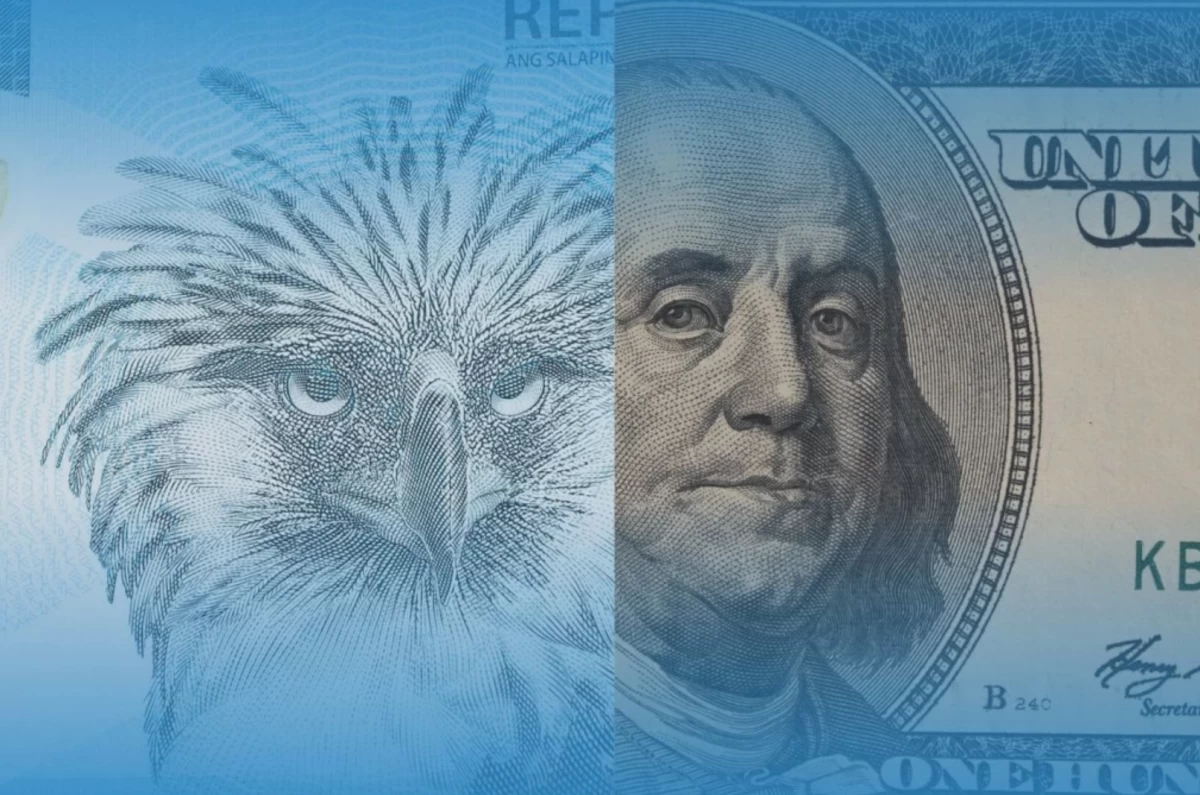
Currencies of Asian countries allied with the United States (US), like the Philippine peso, depreciated the most against the US dollar in October, according to Singapore-based DBS Bank Ltd.
“In Asia, the BRICS currencies—Chinese yuan, Indian rupee, Indonesian rupiah, Malaysian ringgit, and Thai baht—were significantly more resilient than the US-allied currencies such as Japanese yen, South Korean won, and Philippine peso,” DBS Group Research senior foreign exchange (FX) strategist Philip Wee said in a report on Friday, Oct. 31.
BRICS, which stands for the group of major emerging economies Brazil, Russia, India, China, and South Africa, has been expanding to include other emerging markets (EMs) and is reportedly developing a common currency to challenge the US dollar’s dominance and advance dedollarization efforts.
“[October’s] top BRICS currencies were the baht and ringgit, which staged a late comeback this week on the Fed’s [US Federal Reserve] rate cut and the Xi-Trump agreement to extend the trade truce for another year,” DBS said, referring to Chinese President Xi Jinping and US President Donald Trump.
On the flip side, DBS noted that the yen was weakest US-allied currency as it depreciated by four percent versus the greenback during the month, while the won weakened to a five-month low last Oct. 23 before stabilizing when Trump visited Asia, including South Korea for the Asia-Pacific Economic Cooperation (APEC) Summit.
As for the peso, DBS recalled that the Philippine currency fell to a historic low of ₱59.13 against the US dollar on Tuesday, Oct. 28.
“However, the peso’s new low was only slightly above previous lows seen around ₱59 in 2022 and 2024,” DBS noted, adding that the Bangko Sentral ng Pilipinas (BSP) had “reiterated that it intervenes to moderate long-term volatility, emphasizing that the peso remains supported by its sound fundamentals.”
DBS further recalled that following the Fed’s final rate hike in July 2022, the peso fluctuated between the ₱55 and ₱59 levels.
In an Oct. 29 report, DBS Group Research senior economist Radhika Rao noted that the peso’s plunge last Tuesday “bucked the regional trend... amid signs of restrained intervention to derail the one-sided move.”
Rao said that while the peso is among the region’s year-to-date underperformers, structural supports such as remittances, services trade, and reforms are expected to aid recovery over time.
“Our in-house FX forecast leans toward a weaker US dollar providing some relief to Asian currencies by year-end,” she added.
However, Rao cautioned that Philippine economic growth “might be hurt by ongoing corruption allegations in past flood infrastructure-related spending.”
She cited that former BSP governor and current Monetary Board Member (MBM) Benjamin E. Diokno had signaled possible interest rate cuts in December amid dovish central bank guidance and a weak growth outlook, while also hinting at trimming the country’s “excessive” gold reserves to align with regional norms.
Meanwhile, MUFG Global Markets Research senior currency analyst Lloyd Chan noted that in an Oct. 31 report that “Asian currencies have weakened against the US dollar following hawkish rhetoric by Fed Chair [Jerome] Powell,” with regional losses led by the yen, won, and rupee.
In an earlier Oct. 30 report, Chan said the Fed’s rate cut this week weighed on the region’s currencies.
For Chan, “high-yielding currencies such as the rupiah, rupee, and peso could stay under pressure.”
ADVERTISEMENT
.most-popular .layout-ratio{ padding-bottom: 79.13%; } @media (min-width: 768px) and (max-width: 1024px) { .widget-title { font-size: 15px !important; } }

{{ articles_filter_1561_widget.title }}

.most-popular .layout-ratio{ padding-bottom: 79.13%; } @media (min-width: 768px) and (max-width: 1024px) { .widget-title { font-size: 15px !important; } }

{{ articles_filter_1562_widget.title }}

.most-popular .layout-ratio{ padding-bottom: 79.13%; } @media (min-width: 768px) and (max-width: 1024px) { .widget-title { font-size: 15px !important; } }

{{ articles_filter_1563_widget.title }}

{{ articles_filter_1564_widget.title }}

.mb-article-details { position: relative; } .mb-article-details .article-body-preview, .mb-article-details .article-body-summary{ font-size: 17px; line-height: 30px; font-family: "Libre Caslon Text", serif; color: #000; } .mb-article-details .article-body-preview iframe , .mb-article-details .article-body-summary iframe{ width: 100%; margin: auto; } .read-more-background { background: linear-gradient(180deg, color(display-p3 1.000 1.000 1.000 / 0) 13.75%, color(display-p3 1.000 1.000 1.000 / 0.8) 30.79%, color(display-p3 1.000 1.000 1.000) 72.5%); position: absolute; height: 200px; width: 100%; bottom: 0; display: flex; justify-content: center; align-items: center; padding: 0; } .read-more-background a{ color: #000; } .read-more-btn { padding: 17px 45px; font-family: Inter; font-weight: 700; font-size: 18px; line-height: 16px; text-align: center; vertical-align: middle; border: 1px solid black; background-color: white; } .hidden { display: none; }
function initializeAllSwipers() { // Get all hidden inputs with cms_article_id document.querySelectorAll('[id^="cms_article_id_"]').forEach(function (input) { const cmsArticleId = input.value; const articleSelector = '#article-' + cmsArticleId + ' .body_images'; const swiperElement = document.querySelector(articleSelector); if (swiperElement && !swiperElement.classList.contains('swiper-initialized')) { new Swiper(articleSelector, { loop: true, pagination: false, navigation: { nextEl: '#article-' + cmsArticleId + ' .swiper-button-next', prevEl: '#article-' + cmsArticleId + ' .swiper-button-prev', }, }); } }); } setTimeout(initializeAllSwipers, 3000); const intersectionObserver = new IntersectionObserver( (entries) => { entries.forEach((entry) => { if (entry.isIntersecting) { const newUrl = entry.target.getAttribute("data-url"); if (newUrl) { history.pushState(null, null, newUrl); let article = entry.target; // Extract metadata const author = article.querySelector('.author-section').textContent.replace('By', '').trim(); const section = article.querySelector('.section-info ').textContent.replace(' ', ' '); const title = article.querySelector('.article-title h1').textContent; // Parse URL for Chartbeat path format const parsedUrl = new URL(newUrl, window.location.origin); const cleanUrl = parsedUrl.host + parsedUrl.pathname; // Update Chartbeat configuration if (typeof window._sf_async_config !== 'undefined') { window._sf_async_config.path = cleanUrl; window._sf_async_config.sections = section; window._sf_async_config.authors = author; } // Track virtual page view with Chartbeat if (typeof pSUPERFLY !== 'undefined' && typeof pSUPERFLY.virtualPage === 'function') { try { pSUPERFLY.virtualPage({ path: cleanUrl, title: title, sections: section, authors: author }); } catch (error) { console.error('ping error', error); } } // Optional: Update document title if (title && title !== document.title) { document.title = title; } } } }); }, { threshold: 0.1 } ); function showArticleBody(button) { const article = button.closest("article"); const summary = article.querySelector(".article-body-summary"); const body = article.querySelector(".article-body-preview"); const readMoreSection = article.querySelector(".read-more-background"); // Hide summary and read-more section summary.style.display = "none"; readMoreSection.style.display = "none"; // Show the full article body body.classList.remove("hidden"); } document.addEventListener("DOMContentLoaded", () => { let loadCount = 0; // Track how many times articles are loaded const offset = [1, 2, 3, 4, 5, 6, 7, 8, 9, 10]; // Offset values const currentUrl = window.location.pathname.substring(1); let isLoading = false; // Prevent multiple calls if (!currentUrl) { console.log("Current URL is invalid."); return; } const sentinel = document.getElementById("load-more-sentinel"); if (!sentinel) { console.log("Sentinel element not found."); return; } function isSentinelVisible() { const rect = sentinel.getBoundingClientRect(); return ( rect.top < window.innerHeight && rect.bottom >= 0 ); } function onScroll() { if (isLoading) return; if (isSentinelVisible()) { if (loadCount >= offset.length) { console.log("Maximum load attempts reached."); window.removeEventListener("scroll", onScroll); return; } isLoading = true; const currentOffset = offset[loadCount]; window.loadMoreItems().then(() => { let article = document.querySelector('#widget_1690 > div:nth-last-of-type(2) article'); intersectionObserver.observe(article) loadCount++; }).catch(error => { console.error("Error loading more items:", error); }).finally(() => { isLoading = false; }); } } window.addEventListener("scroll", onScroll); });

Sign up by email to receive news.