






Manila Bulletin
 Business
Trade & Industry
Gov't urged to 'tread carefully' to protect farms in US tariff talks
Business
Trade & Industry
Gov't urged to 'tread carefully' to protect farms in US tariff talks
Business
Trade & Industry
Gov't urged to 'tread carefully' to protect farms in US tariff talks
Gov't urged to 'tread carefully' to protect farms in US tariff talks
Published Oct 31, 2025 01:33 pm


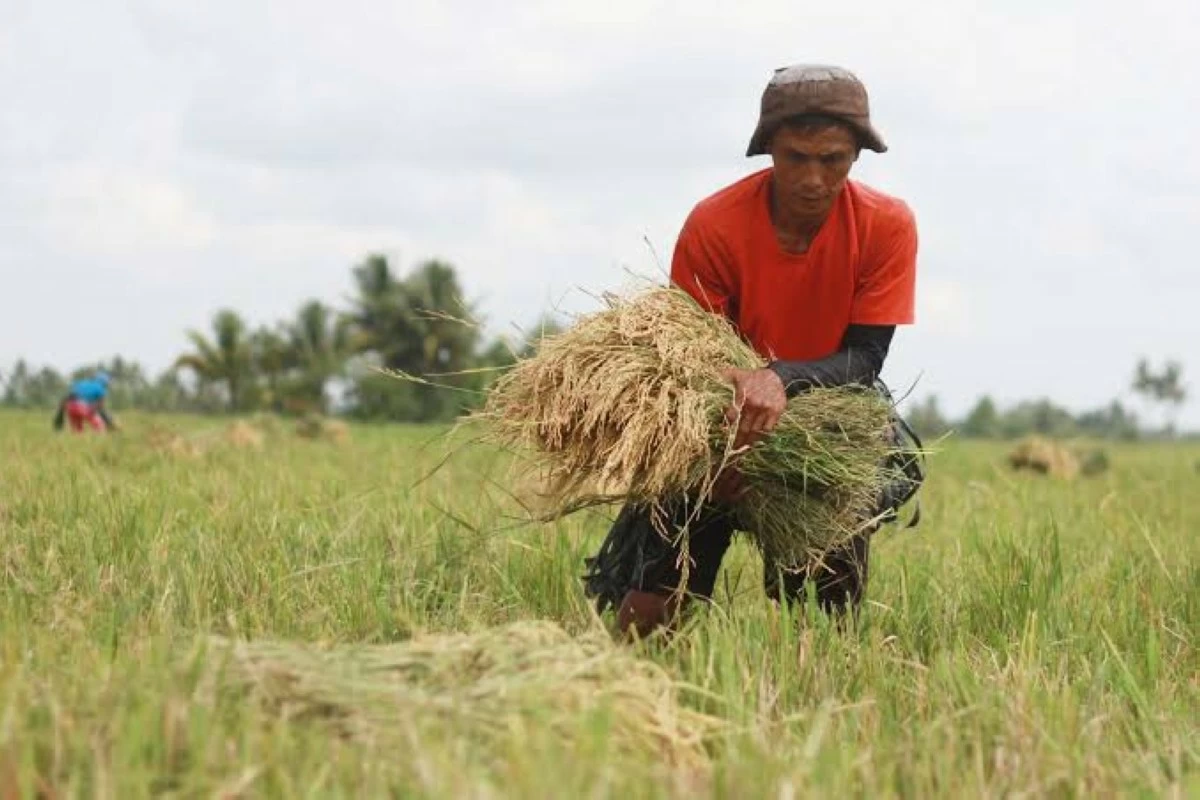
The agriculture sector could be in deep trouble if the government moves to open up the market to imports from the United States (US) as part of concessions to reduce the 19 percent tariff slapped on Philippine goods, according to the Philippine Chamber of Agriculture and Food Inc. (PCAFI).
PCAFI President Danilo Fausto said the government’s top negotiators must tread carefully to balance the interests of exporters and local industries as they aim to conclude a reciprocal tariff agreement with the US.
Unlike the trade deals already secured by neighboring countries in Southeast Asia, Fausto said the country’s agreement should ensure that critical agricultural products are protected.
He stated that an unfair deal could significantly impact the country’s agricultural productivity and drive up prices, thereby further accelerating inflation.
“If you're going to be killed by imported goods, how are you going to fight?” he told reporters.
Earlier, US President Donald Trump formalized reciprocal tariff agreements with his counterparts from Thailand, Cambodia, and Malaysia, allowing the three countries to secure zero tariffs on certain imports.
The respective deals will still retain the 19 percent tariffs imposed on Thailand, Cambodia, and Malaysia, but the US has committed to identify products that will have no tariffs.
These exemptions are expected to cover products that cannot be grown, mined, or naturally produced in the US. This would include certain agricultural products, aircraft and aircraft parts, and non-patented articles for pharmaceutical applications, among others.
In return, the three countries will remove tariffs and further ease trade barriers on American exports such as agricultural products.
Moreover, the agreement also enforces what the US described as complementary actions, wherein the trade restrictions it imposes on a third country must be likewise imposed through similar measures in a manner that does not infringe on the sovereign interests of the third country.
Fausto warned that such a policy could harm local agriculture as it essentially negates the government’s authority to craft policies that serve the industry’s best interests.
“If we follow the agreement of the three [countries] with Trump, some of our commodities might be in danger,” he explained.
Since negotiations for reciprocal tariffs began, PCAFI has been urging the government to protect key commodities such as sugar, corn, rice, chicken, pork, and seafood from potential harm arising from the easier entry of American goods.
The industry group earlier lauded the concessions for wheat and soy products—which are not locally produced—noting that the potential influx of imports would not cause significant harm to local industries and could even lead to cheaper animal feed products.
To recall, President Marcos offered zero tariffs on these commodities, alongside automobiles and pharmaceutical products, as part of the deal that saw the country’s US tariff rate drop from 20 percent to 19 percent.
In response to concerns over delays in securing a tariff deal, Malacañang said it is “trying to protect several industries in the Philippines, such as rice, corn, sugar, and poultry.”
In 2024, the US was the Philippines’ most valuable export partner, with an export value of $12.14 billion, or 16.6 percent of the country’s total exports. Total trade between the two countries reached $23.5 billion last year.