






Manila Bulletin
 Philippines
Visayas
University of San Agustin eyes telemedicine project expansion for Indigenous Peoples
Philippines
Visayas
University of San Agustin eyes telemedicine project expansion for Indigenous Peoples
Philippines
Visayas
University of San Agustin eyes telemedicine project expansion for Indigenous Peoples
University of San Agustin eyes telemedicine project expansion for Indigenous Peoples
By Tara Yap
Published Oct 30, 2025 12:56 pm
|
Updated Oct 30, 2025 05:34 pm


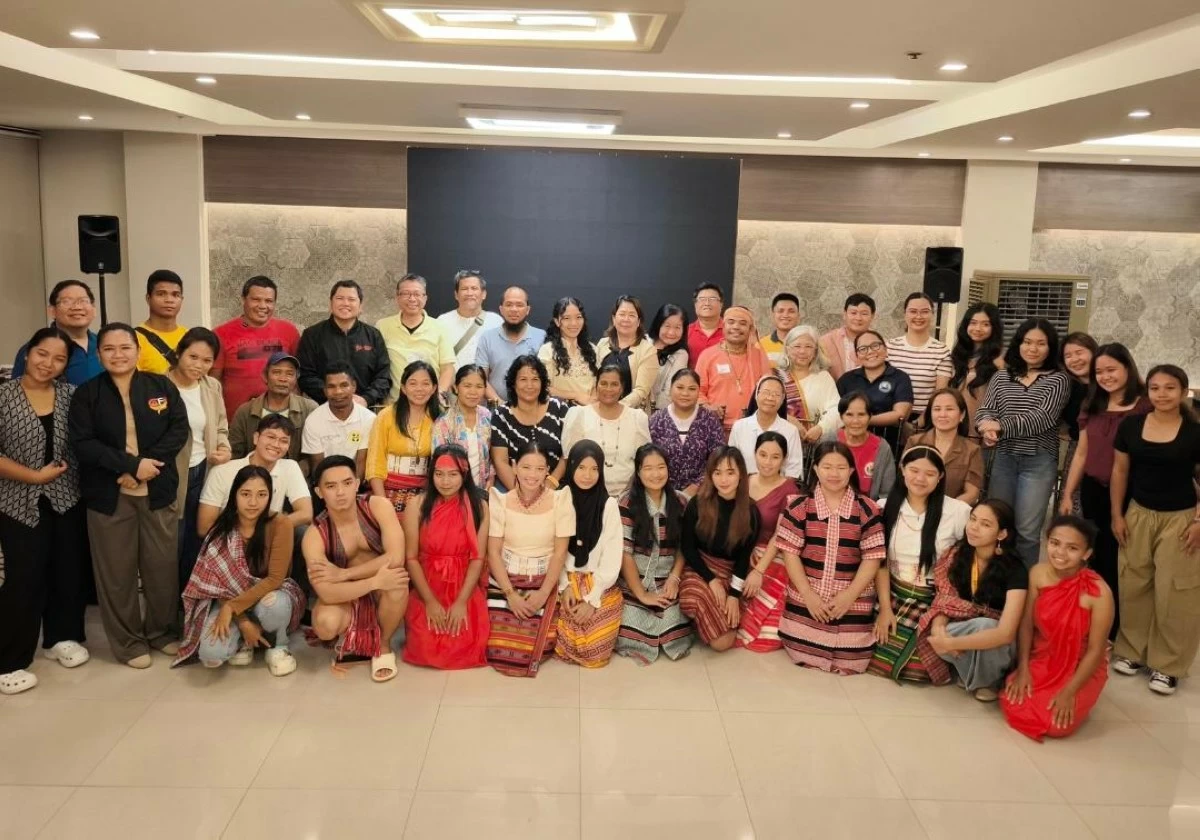
THE University of San Agustin in Iloilo City hosts Indigenous Peoples (IPs) from Luzon and the Visayas during the Indigenous Health Equity Conversations. (Tara Yap)
ILOILO CITY – The University of San Agustin (USA) is seeking to expand a telemedicine project in other parts of the country to bridge health care gaps for Indigenous Peoples (IPs).
“We can extend digital health to remote communities towards the goal of universal healthcare. This is a model project that can be done nationwide,” said Prof. Romulo “Jong” de Castro, Atipan project lead and a Balik Scientist.
Launched late in 2021, the project initiated by the USA Center for Informatics (CFI) and Center for Heritage and Indigenous Cultures (CHIC) brought digital healthcare to seven Ati IP communities in far-flung areas.
Dr. Pia Zamora-Rico, who was part of the initial implementation of the project, said Atipan provided the technological system for free medical consultation, free technology training, basic medication, and health kits.
After the initial funding from the Asian Development Bank (ADB) ended, the project was expanded as Atipan+.
Assistant Prof. John Paul Petrola said both Atipan projects covered digital healthcare for Ati IPs in Aklan, Antique, Guimaras, Iloilo, and Negros Occidental provinces.
Atipan+ expanded its services with the Panay Bukidnon IPs in central Panay Island.
The initial Atipan team was composed of software developer Raphael Nelo Aguila, Prof. Roselle K. Rivera, Jake Ledesma, Miles Kaye Ermoso, Jimuel Celeste Jr., Robbie Mondia, Oliver Generalao, Cindy dela Cruz, Aida Espinosa, Mae Vicedo-Oswald, and Lauren Faustino.
During the Indigenous Health Equity Conversations (IHECs) last July, Atipan’s positive impact was discussed when 18 IPs from Luzon and the Visayas were in Iloilo City.
This National Indigenous Peoples Month, the call continues for the Department of Health (DOH), the Philippine Health Insurance Corp. (PhilHealth), Department of Science and Technology (DOST), the National Commission of Indigenous Peoples (NCIP), and local governments to look into replicating Atipan to bring health equity to marginalized IP communities.
Aside from IPs, Atipan was also implemented in marginalized rural communities in Panay Island.
Beneficiaries were survivors of super typhoon ‘’Yolanda’’ (‘’Haiyan’’) in Estancia town, Iloilo, sugarcane farmers in Passi City, Iloilo, and agrarian farmers in Barbaza town, Antique province.