






Manila Bulletin
 Philippines
National
Solons make aggressive push for 'Bicol Express', call for immediate feasibility study
Philippines
National
Solons make aggressive push for 'Bicol Express', call for immediate feasibility study
Philippines
National
Solons make aggressive push for 'Bicol Express', call for immediate feasibility study
Solons make aggressive push for 'Bicol Express', call for immediate feasibility study
Published Oct 30, 2025 11:21 pm


At A Glance
- Four Bicol-based congressmen have revived in the 20th Congress the push to establish a high-speed Philippine National Railway-South Long Haul (PNR-SLH) rail project—more popularly known as the "Bicol Express".
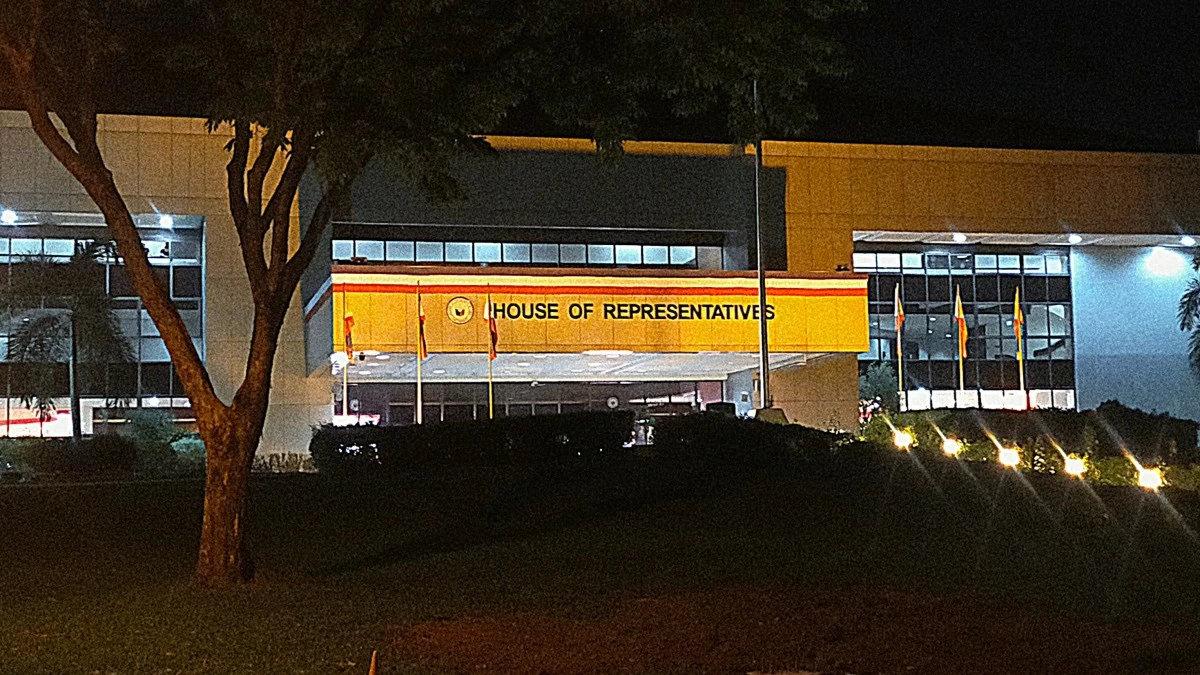
The House of Representatives (Ellson Quismorio/ MANILA BULLETIN)
Four Bicol-based congressmen have revived in the 20th Congress the push to establish a high-speed Philippine National Railway-South Long Haul (PNR-SLH) rail project—more popularly known as the “Bicol Express”.
Camarines Sur 5th district Rep. Migz Villafuerte, Camarines Sur 2nd district Rep. Luigi Villafuerte, Camarines Sur 5th district Rep. Tsuyoshi Anthony Horibata, and Bicol Saro Party-list Rep. Terry Ridon filed House Resolution (HR) No.18 for this purpose.
The authors' “Bicol Express” project proposes “the transformation of the historic Manila-Bicol railway into a modern, standard-gauge, higher-speed rail line spanning over 500 kilometers (km), designed to significantly reduce travel time, improve freight and passenger mobility, and serve as a critical infrastructure backbone for economic integration and development in Southern Luzon and Bicol".
Under HR No.18, the Department of Transportation (DOTr) is tasked to pursue the feasibility study on this long-stalled flagship venture.
Once up and running, the Bicol Express is seen to drastically cut travel time from Metro Manila to Albay or Sorsogon from the current 12 hours to just about four hours.
The solons noted that although Region V has been “recognized for its economic potential, rich natural resources and growing population … the lack of efficient and reliable transport systems hampers regional development, limits mobility and constrains trade and tourism in Bicol and adjacent areas."
That Bicol is saddled with a poverty incidence of 32.9 percent and a subsistence incidence of 12.8 percent as of the first semester of 2023—according to Philippine Statistics Authority (PSA) data—“underscores the urgent need for large-scale infrastructure projects to stimulate inclusive growth, create employment, and improve market access and logistics in the region".
HR No.18 says the conduct of the Bicol Express High-Speed Rail Feasibility Study should cover "thorough analysis of the project's economic, environmental, engineering, and social impacts".
It encourages the DOTr “to engage relevant stakeholders—including local government units LGUs in the Bicol Region, regional development councils (RDCs) and the private sector—to support the study and eventual project implementation".
HR No.18’s authors stressed that a 2015 corridor study by the Japan International Cooperation Agency (JICA) indicated “a viable transport market that can support long-term investment in high-capacity, efficient rail systems".
They were referring to the JICA study in 2015 that projected rail demand along the PNR-SLH corridor to reach up to 25,000 daily one-way trips by 2039.
They said Tokyo has expressed interest in undertaking the feasibility study earlier this year.
“In 2025, reports confirmed that the Government of Japan, through its development agencies, has expressed interest in funding the Bicol Express High-Speed Rail Feasibility Study, signaling renewed momentum for the long-delayed project,” the solons reckoned.
They added that Tokyo’s interest in doing this feasibility study “follows the lapse of the earlier China-backed rail plan, and reflects renewed support for high-impact infrastructure under the Philippine government's ‘Build Better More’ program".
During the June 2024 confirmation hearings by the Commission on Appointments (CA) on the Cabinet posting of then-DOTr secretary Vince Dizon, the resolution’s authors recalled that Dizon “vowed to double down on efforts to secure international funding for the ‘Bicol Express’ project, noting that investors from the European Union (EU), particularly France, have expressed interest in the said high-speed rail initiative".