






Manila Bulletin
 Philippines
National
Philippines receives P140-M aid from Japan to enhance TB detection in far-flung communities
Philippines
National
Philippines receives P140-M aid from Japan to enhance TB detection in far-flung communities
Philippines
National
Philippines receives P140-M aid from Japan to enhance TB detection in far-flung communities
Philippines receives P140-M aid from Japan to enhance TB detection in far-flung communities
By Jel Santos
Published Oct 30, 2025 09:54 pm


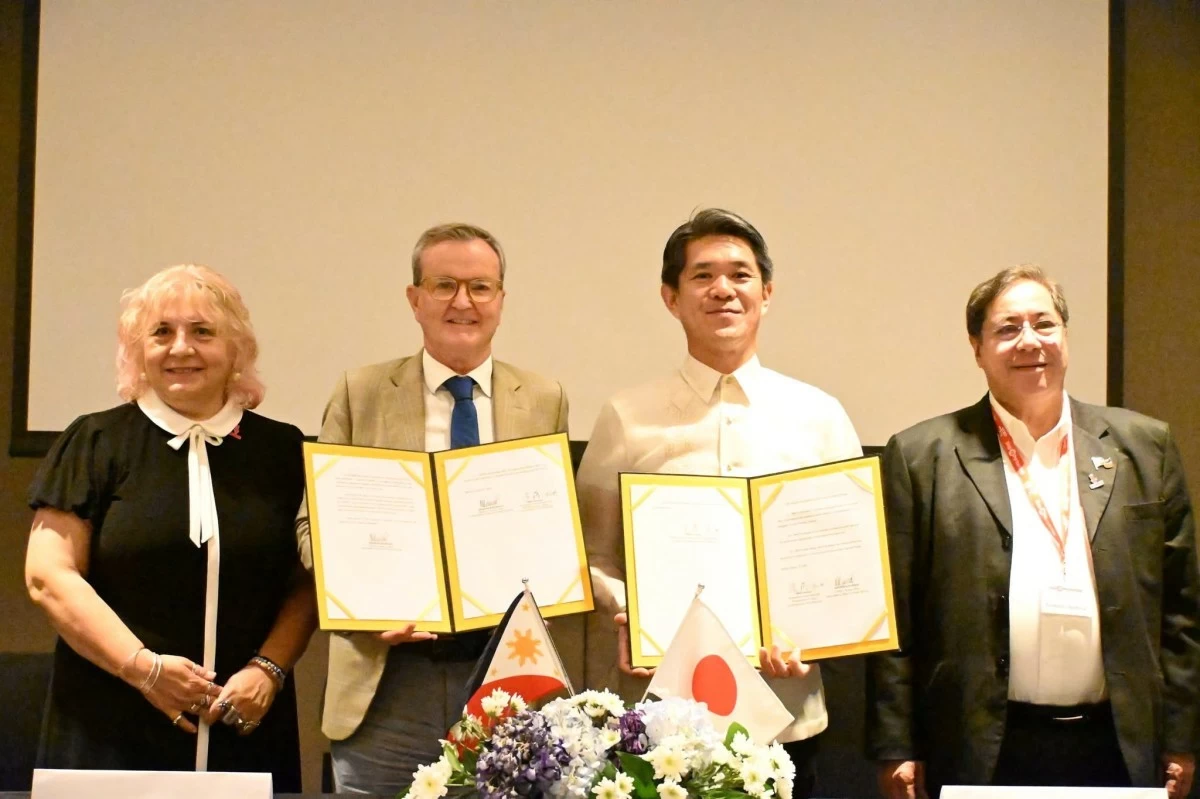
(PHOTO: EMBASSY OF JAPAN IN THE PHILIPPINES)
The Philippines has received a ¥370-million (approximately P140 million) grant from the Government of Japan to strengthen tuberculosis (TB) screening in remote areas, as the country continues to grapple with a high TB burden identified by the World Health Organization (WHO).
On Thursday, Oct. 30, Japanese Ambassador Endo Kazuya and United Nations Office for Project Services (UNOPS) Geneva Office Director Andrew Kirkwood signed a grant-aid agreement for “The Project for Enhancing Tuberculosis Screening in Remote Areas” in the Philippines, witnessed by Department of Health (DOH) Secretary Ted Herbosa.
Under the project, Japan will provide 20 ultraportable X-ray units equipped with computer-aided diagnosis (AI-CAD) technology developed by Fujifilm to provincial health offices serving Geographically Isolated and Disadvantaged Areas (GIDAs).
The project—implemented by the Stop TB Partnership, hosted by UNOPS and carried out in coordination with the DOH—seeks to expand early detection and treatment by bringing screening technology directly to underserved communities.
Ambassador Endo underscored Japan’s long-standing partnership with the Philippines in fighting TB.
He said Japan has supported the Philippine government’s TB-control efforts for more than three decades, adding that, as a “committed neighbor and partner,” his country will continue to back initiatives toward a TB-free Philippines.
Faster TB detection
According to Herbosa, the technology will make TB detection faster and more accessible, especially in far-flung areas.
“Well, as you saw, it’s 600 almost 700,000 for the people with TB and we’re only diagnosing 500,000 plus. So there are many undiagnosed. So these are the ones spreading. So with the technology we’re going to get the ultra-portable just like this handheld camera. We can bring it to the remote villages and you don’t need a radiologist because it has artificial intelligence. So we with the diagnosis we can start treatment,” he told reporters.
He said the DOH has yet to finalize deployment sites but will prioritize provinces with the highest number of undiagnosed TB cases.
“Not yet. But we know the high-burden provinces. So in the north in the Cagayan I think it was in the map that was shown, we have high-burden provinces where TB is high undiagnosed. So we will deploy there. Anyway these are mobile so they will not be fixed so they can move around. They can be carried in a backpack. So they can go to the very far-flung villages,” he said when asked if the agency has already mapped out where to deploy the machines.
Asked about the treatment process after detection, Herbosa said: “Well, we start with treatment. So the DOH provides the medicines. We buy the medicines for TB and that they go on a six- to nine-month treatment for TB.”
Herbosa said the use of AI-powered diagnostics will speed up confirmation of TB cases.
“Ah, it’s immediate. It’s in a laptop and the moment they take the X-ray, the laptop will tell you if it’s TB or not,” he said.
Per the WHO, an estimated 739,000 Filipinos developed TB in 2023, making the disease one of the leading causes of illness and death in the country.