ADVERTISEMENT

Marcos orders agencies to reduce infra project costs for 2026

Published Oct 30, 2025 02:15 pm
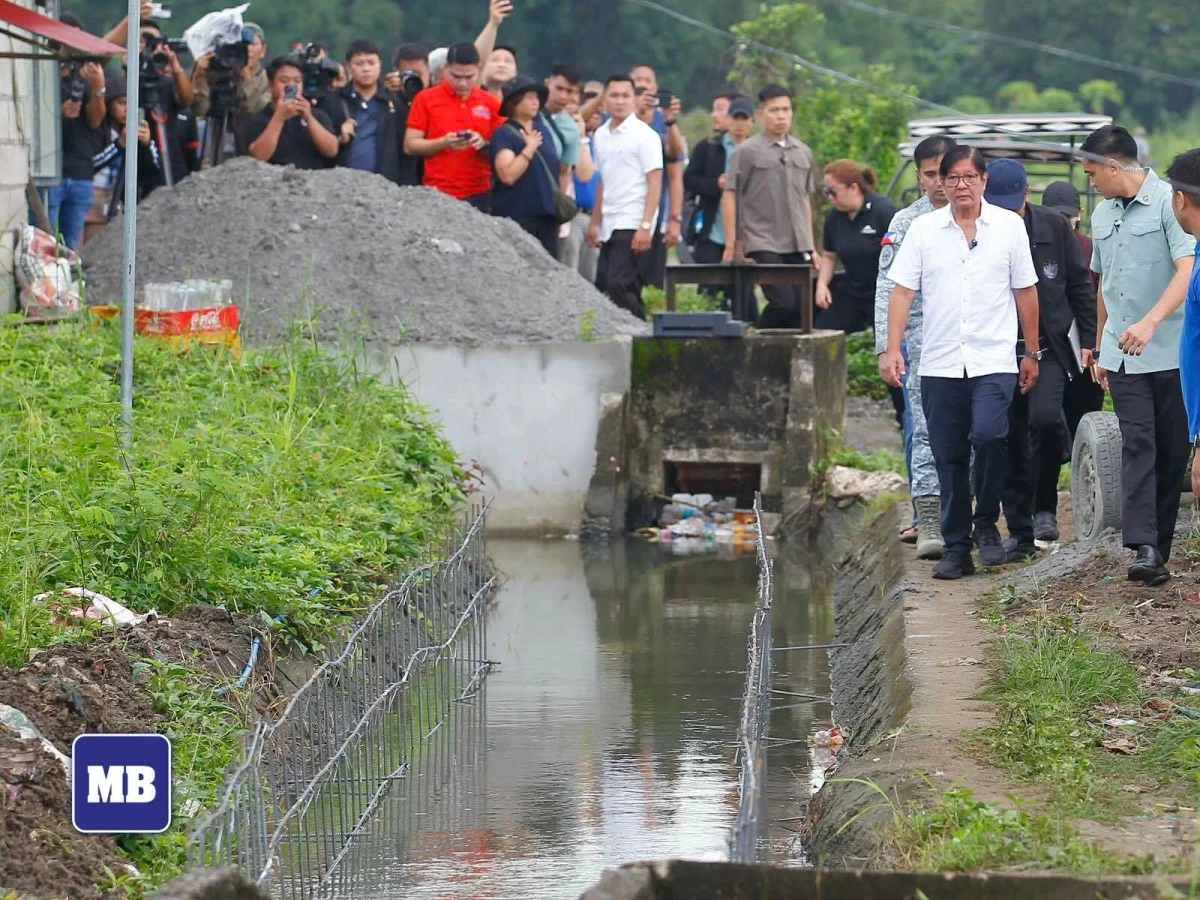
President Ferdinand R. Marcos Jr. leads the inspection of a riverwall in Barangay Piel, Baliuag, Bulacan which was tagged as a 'ghost project.' (Mark Balmores)
President Marcos has ordered several government agencies to significantly cut project costs for public infrastructure projects such as agricultural roads, hospitals, classrooms, and irrigation in an attempt to eradicate corruption.
After instructing the Department of Public Works and Highways (DPWH) to implement cost-cutting measures on projects, Marcos also ordered the same to the Department of Education(DepEd), Department of Agriculture (DA), Department of the Interior and Local Government (DILG), Department of Health (DOH), Department of Transportation (DOTr), and National Irrigation Administration (NIA).
Before departing for South Korea on Thursday, Oct. 30, Marcos told them to immediately follow the same pricing system as that of the DPWH.
This move, he said, is aimed at weeding out the bureaucracy of corruption.
“So, alongside our efforts to strengthen the Philippines’ regional foothold and attract investments, we continue to cleanse our bureaucracy of corruption, because only a transparent government can build a fair economy,” the President said before departing for Gyeongju to participate in the 32nd Asia-Pacific Economic Cooperation (APEC) Leaders’ Meeting and related activities.
"In this light, the DepEd, DA, DILG, DOH, DOTr, NIA, and all other relevant agencies shall immediately follow the same pricing system as that of the DPWH," he added.
Marcos said the DPWH is now aligning its project costs with real market prices and reducing these by up to 50 percent.
However, by reducing the project cost, the quality of the infrastructure projects will not be compromised, the President added.
"So, let me be clear: The quality of what we build will not be compromised. The only thing weakened will be corruption. This is the accountability that our citizens deserve," Marcos said.
"Last October 25, this Administration renewed a promise that guides all our actions: To guard every peso entrusted to us, and to return it to our people in the form of progress they can see and that they can feel. When funds are protected and spent with discipline, prices ease, opportunities grow, and communities thrive," Marcos added.
Before his departure to Malaysia for the 47th Association of Southeast Asian Nations (ASEAN) Summit and Related Summits on Oct. 25, the President directed the DPWH to cut construction material costs by up to 50 percent, saying the expected savings of at least P30 to P45 billion will be redirected to vital sectors such as health, education, and food.
"The savings we secure will go where they matter most: To programs that uplift families,
support livelihoods, and strengthen communities. Because when our people grow in capability and confidence, the nation grows with them," Marcos said.
"[From] a government that honors public trust, a nation that stands firm on integrity, this is our promise: A real change for every Filipino today and for generations to come," he added.

Related Tags

President Marcos infrastructure projects project cost APEC Leaders\' Meeting
ADVERTISEMENT
.most-popular .layout-ratio{ padding-bottom: 79.13%; } @media (min-width: 768px) and (max-width: 1024px) { .widget-title { font-size: 15px !important; } }

{{ articles_filter_1561_widget.title }}

.most-popular .layout-ratio{ padding-bottom: 79.13%; } @media (min-width: 768px) and (max-width: 1024px) { .widget-title { font-size: 15px !important; } }

{{ articles_filter_1562_widget.title }}

.most-popular .layout-ratio{ padding-bottom: 79.13%; } @media (min-width: 768px) and (max-width: 1024px) { .widget-title { font-size: 15px !important; } }

{{ articles_filter_1563_widget.title }}

{{ articles_filter_1564_widget.title }}

.mb-article-details { position: relative; } .mb-article-details .article-body-preview, .mb-article-details .article-body-summary{ font-size: 17px; line-height: 30px; font-family: "Libre Caslon Text", serif; color: #000; } .mb-article-details .article-body-preview iframe , .mb-article-details .article-body-summary iframe{ width: 100%; margin: auto; } .read-more-background { background: linear-gradient(180deg, color(display-p3 1.000 1.000 1.000 / 0) 13.75%, color(display-p3 1.000 1.000 1.000 / 0.8) 30.79%, color(display-p3 1.000 1.000 1.000) 72.5%); position: absolute; height: 200px; width: 100%; bottom: 0; display: flex; justify-content: center; align-items: center; padding: 0; } .read-more-background a{ color: #000; } .read-more-btn { padding: 17px 45px; font-family: Inter; font-weight: 700; font-size: 18px; line-height: 16px; text-align: center; vertical-align: middle; border: 1px solid black; background-color: white; } .hidden { display: none; }
function initializeAllSwipers() { // Get all hidden inputs with cms_article_id document.querySelectorAll('[id^="cms_article_id_"]').forEach(function (input) { const cmsArticleId = input.value; const articleSelector = '#article-' + cmsArticleId + ' .body_images'; const swiperElement = document.querySelector(articleSelector); if (swiperElement && !swiperElement.classList.contains('swiper-initialized')) { new Swiper(articleSelector, { loop: true, pagination: false, navigation: { nextEl: '#article-' + cmsArticleId + ' .swiper-button-next', prevEl: '#article-' + cmsArticleId + ' .swiper-button-prev', }, }); } }); } setTimeout(initializeAllSwipers, 3000); const intersectionObserver = new IntersectionObserver( (entries) => { entries.forEach((entry) => { if (entry.isIntersecting) { const newUrl = entry.target.getAttribute("data-url"); if (newUrl) { history.pushState(null, null, newUrl); let article = entry.target; // Extract metadata const author = article.querySelector('.author-section').textContent.replace('By', '').trim(); const section = article.querySelector('.section-info ').textContent.replace(' ', ' '); const title = article.querySelector('.article-title h1').textContent; // Parse URL for Chartbeat path format const parsedUrl = new URL(newUrl, window.location.origin); const cleanUrl = parsedUrl.host + parsedUrl.pathname; // Update Chartbeat configuration if (typeof window._sf_async_config !== 'undefined') { window._sf_async_config.path = cleanUrl; window._sf_async_config.sections = section; window._sf_async_config.authors = author; } // Track virtual page view with Chartbeat if (typeof pSUPERFLY !== 'undefined' && typeof pSUPERFLY.virtualPage === 'function') { try { pSUPERFLY.virtualPage({ path: cleanUrl, title: title, sections: section, authors: author }); } catch (error) { console.error('ping error', error); } } // Optional: Update document title if (title && title !== document.title) { document.title = title; } } } }); }, { threshold: 0.1 } ); function showArticleBody(button) { const article = button.closest("article"); const summary = article.querySelector(".article-body-summary"); const body = article.querySelector(".article-body-preview"); const readMoreSection = article.querySelector(".read-more-background"); // Hide summary and read-more section summary.style.display = "none"; readMoreSection.style.display = "none"; // Show the full article body body.classList.remove("hidden"); } document.addEventListener("DOMContentLoaded", () => { let loadCount = 0; // Track how many times articles are loaded const offset = [1, 2, 3, 4, 5, 6, 7, 8, 9, 10]; // Offset values const currentUrl = window.location.pathname.substring(1); let isLoading = false; // Prevent multiple calls if (!currentUrl) { console.log("Current URL is invalid."); return; } const sentinel = document.getElementById("load-more-sentinel"); if (!sentinel) { console.log("Sentinel element not found."); return; } function isSentinelVisible() { const rect = sentinel.getBoundingClientRect(); return ( rect.top < window.innerHeight && rect.bottom >= 0 ); } function onScroll() { if (isLoading) return; if (isSentinelVisible()) { if (loadCount >= offset.length) { console.log("Maximum load attempts reached."); window.removeEventListener("scroll", onScroll); return; } isLoading = true; const currentOffset = offset[loadCount]; window.loadMoreItems().then(() => { let article = document.querySelector('#widget_1690 > div:nth-last-of-type(2) article'); intersectionObserver.observe(article) loadCount++; }).catch(error => { console.error("Error loading more items:", error); }).finally(() => { isLoading = false; }); } } window.addEventListener("scroll", onScroll); });

Sign up by email to receive news.