






Manila Bulletin
 Lifestyle
Luminaries and Life
Long before he became the Father of Philippine Installation Art, Junyee's first brush with art began inside a morgue
Lifestyle
Luminaries and Life
Long before he became the Father of Philippine Installation Art, Junyee's first brush with art began inside a morgue
Lifestyle
Luminaries and Life
Long before he became the Father of Philippine Installation Art, Junyee's first brush with art began inside a morgue
Long before he became the Father of Philippine Installation Art, Junyee's first brush with art began inside a morgue
Published Oct 30, 2025 09:37 am
|
Updated Oct 30, 2025 05:04 pm


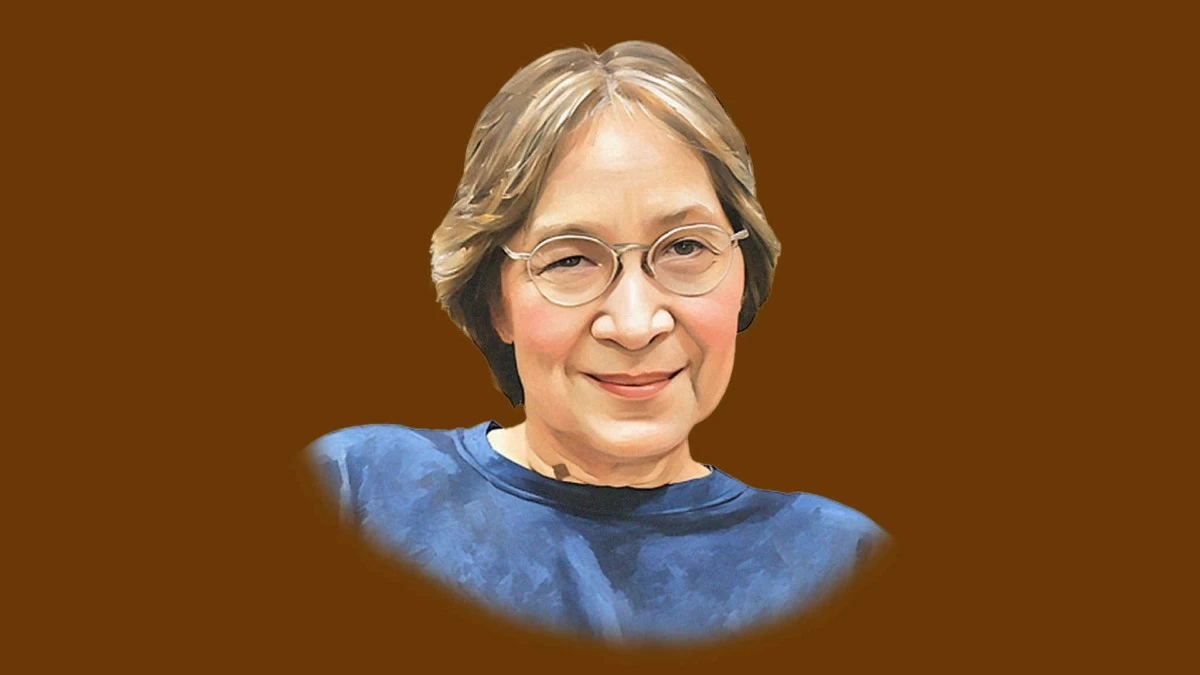
By Layeta P. Bucoy and Johannes L. Chua
There are artists who were born into the light—welcomed, encouraged, molded from comfort. Junyee was not one of them. His life as an artist began in the dark, in the one place no aspiring 17-year-old would willingly choose to stand—a morgue. Not a gallery, not an atelier, but a cold, cramped room where he was asked not to paint a canvas, but to “paint” on the face of a corpse.

Junyee
Before he became the country’s foremost installation artist, Junyee’s survival depended on a job most young artists today would never imagine accepting: He was a “makeup artist” for the dead. He remembers that first assignment clearly: An old woman on a steel table, her long black hair like something from folklore. He stood frozen at the doorway, terrified. But one thought was louder than fear: If he turned back, he would never become an artist.
What followed was not glamor, but grit. No bed, no certainty of meals, no validation, just endless nights in a funeral parlor, painting faces of strangers whose names he would never know. It was brutal, humbling, and sacred all at once. And it was here—in a place meant for endings—that Junyee’s beginning as an artist truly happened.
Manila Bulletin Lifestyle takes a closer look at the early inspiration, unlikely beginnings, and defining convictions of Junyee.
Growing up, you did not receive full support to pursue the arts (so, you decided to learn somewhere else). What was that moment or season in your life when you first realized that making art was non-negotiable—that you would do it no matter what?
I was in Grade 3, nine years old. I joined an art competition at our school. I just felt like I wanted to draw (a shark and a rose separated by the surface of an ocean). I enjoyed doing it. Eventually, it won first prize. At that time, the word “artist” had not entered my vocabulary. But I was certain it was the one thing I truly wanted to do.
You once survived by working as a makeup artist in a funeral parlor. Can you take us back to that time? What was going through your mind?
When the word “artist” first entered my vocabulary, I thought you had to earn a diploma to become one. So, I asked my businessman father to allow me to pursue fine arts in college. But he wanted me to become a businessman like him. We had a deal: I would work for his hotel (Palace Hotel) in Surigao City for a year. He was convinced that after experiencing running a business, I would abandon the desire to become an artist. He made it clear that if, after a year of working in the hotel, I would still insisted on studying fine arts, I wouldn’t receive any support from him. After three months of saving my earnings, I went to Cebu to enroll in San Carlos University. I thought it offered Fine Arts, but I was wrong.
After my savings got depleted, I had to look for a job. I was hired as a janitor for a funeral parlor. After a few weeks of working as a janitor, the owner told me that since I was a high school graduate, he was promoting me to a clerical position. I became in charge of following up on death certificates. After a few weeks, he informed me that he was told I was good at making art. He gave me some money and ordered me to buy the best materials. I was already thinking of the best kinds of paint and brushes when he added, “’Yung Max Factor.” It was then that I realized he wanted me to apply makeup to the dead. I held three jobs in that funeral parlor: janitor, clerk, and makeup artist.
How was that experience?
Life at the funeral parlor was difficult. I grew up with a yaya, an abundance of food (my father also owned a restaurant). I was everyone’s favorite. I had many friends. Then, all of a sudden, I had to sleep on pews—no pillows, no blankets, hounded by mosquitoes. When the chapel was occupied, kanya-kanyang diskarte sa pagtulog (each has their own way of sleeping)—in a coffin, on the floor, while sitting on a chair. We had no bedrooms. Our bathroom was an open space at the back of the funeral parlor. Our salary was less than enough to keep our souls together. At that time, a funeral parlor was a 24-hour business. You cannot predict when someone will die, when a cadaver will be brought to you. There was no definite time for work or sleep.
But I had to endure. As mentioned, at that time, I thought that to become an artist, one must earn a diploma. Since I knew my father wouldn’t support my dream, I had to support it myself.
Describe your first experience with the dead?
My first encounter with a cadaver was in the morgue. I was at the door. At the center was a table with the dead body of an old woman. She had long, black hair. I thought she looked like an aswang. When I was left alone with her, I couldn’t enter the morgue. I started crying.
Since working in the funeral parlor, I used to cry each night. But that was the worst crying I experienced. One side of my mind was telling me to go home, hindi ko na kaya (I can’t do this). I wouldn’t be able to apply makeup to the dead woman. But the other side of my mind was warning me: if I go home, I will end up like my father. I’ll be a businessman. And I’ll never become an artist.
Michelangelo has always been my idol. At 17, he was already dissecting cadavers. Then, it hit me. I was 17 too at that time. Michelangelo was dissecting cadavers illegally. At least in my case, I was not only able to legally apply makeup to the dead, but I was also going to get paid.
The realization didn’t erase the fear of approaching the cadaver. But at least it reminded me that my dream of becoming an artist was bigger than my fear. I finished the job poorly. But people had low standards when it came to how they wanted the dead to look. What I did was far more than enough for them. I was praised for doing a great job.
I took my job as simply painting. I thought, painting is the application of color on a surface. The dead’s face was the surface, and colors would come from the makeup products. After a while, I no longer felt I was struggling. I felt it was something which was very natural for me to do.
Was there ever a point where you questioned if this path was truly for you? What kept you moving, despite the lack of validation and stability?
Never. I had no doubts. As natural as breathing. At times, my momentum was affected by roadblocks or hurdles. There were struggles and trials, but I kept on driving.
When you went home, you discovered your father was dead. You became critical of his makeup. What emotions surfaced in that moment as both son and artist?
When I left home that night I went to Cebu, there was only silence between me and my father. When I went home, the silence became permanent. I saw my father’s remains, his makeup was badly done. It was obvious to me that the makeup artist did not care about my father’s appearance. That perhaps he only cared about completing another job. The following day, I saw him. I wasn’t able to contain my frustration. I grabbed a wooden stool nearby and was about to hit him on the head. Fortunately, my siblings prevented me.
Did that experience change the way you thought about art, impermanence, and purpose?
What I had was the urge to become an artist. I wasn’t thinking of purpose, I was only driven by the certainty that I would be making art for the rest of my life. I had to do it, like going to the toilet.
You are now considered the pioneer and foremost installation artist in the Philippines. Was there a specific turning point—a single work, encounter, or opportunity—that shifted your life as an artist forever?
There was no specific event, it was a slow process. When I was in college (University of the Philippines-Diliman), I observed that Filipino art was Western art. It was all we studied, all we knew, and all we created. I decided to search for what is Filipino art. I realized that all civilizations were influenced by their natural environment. So, I started working with what my immediate environment had to offer.

Junyee’s ‘Wood Things’ installation (Photo by Kiko del Rosario from Cultural Center of the Philippines Encyclopedia of Philippine Art)
Many artists make paintings or sculptures, but you chose space and nature as your medium. What drew you toward installation art specifically?
I tried imagining a scenario where we are not influenced by Western tradition. All I could imagine was to base our art tradition on our immediate natural environment. I started using materials from our natural environment. Then, I also tried to learn how birds make their nests, how the natives trap animals for food. I observed the flowering mangrove trees. In short, I looked in our own backyard because I wanted to believe that it was bereft of Western influence.
If you could speak to your younger self—back in that funeral parlor—what would you tell him?
I’ll tell him, “You know, you did fine. You did not surrender. Your ignorance about art—that you need a diploma to do it—sustained you. Art is not validated by any diploma or academic institution. You just do it. And you eventually did.”
What is your advice to those who dream of following the same path—to create art that is not just seen, but experienced, remembered, and felt in the soul?
First, don’t be afraid of what you’re doing. People may or may not appreciate it. But just keep on doing it. Second, making art is not about making business. It’s not about how you’d earn from it. If you start thinking of only earning from making art, you’ll be limited to what sells and what’s popular. If you earn from making art, well and good. If you’re recognized for making art, well and good. But if you make art because you only want to earn and be recognized, then you become more of a businessman than an artist.