ADVERTISEMENT

Implementation of 23 national education laws in BARMM needs legal clarity — EDCOM 2

DOJ, DBM guidance sought to address funding gaps in education and social programs

Published Oct 30, 2025 07:53 pm
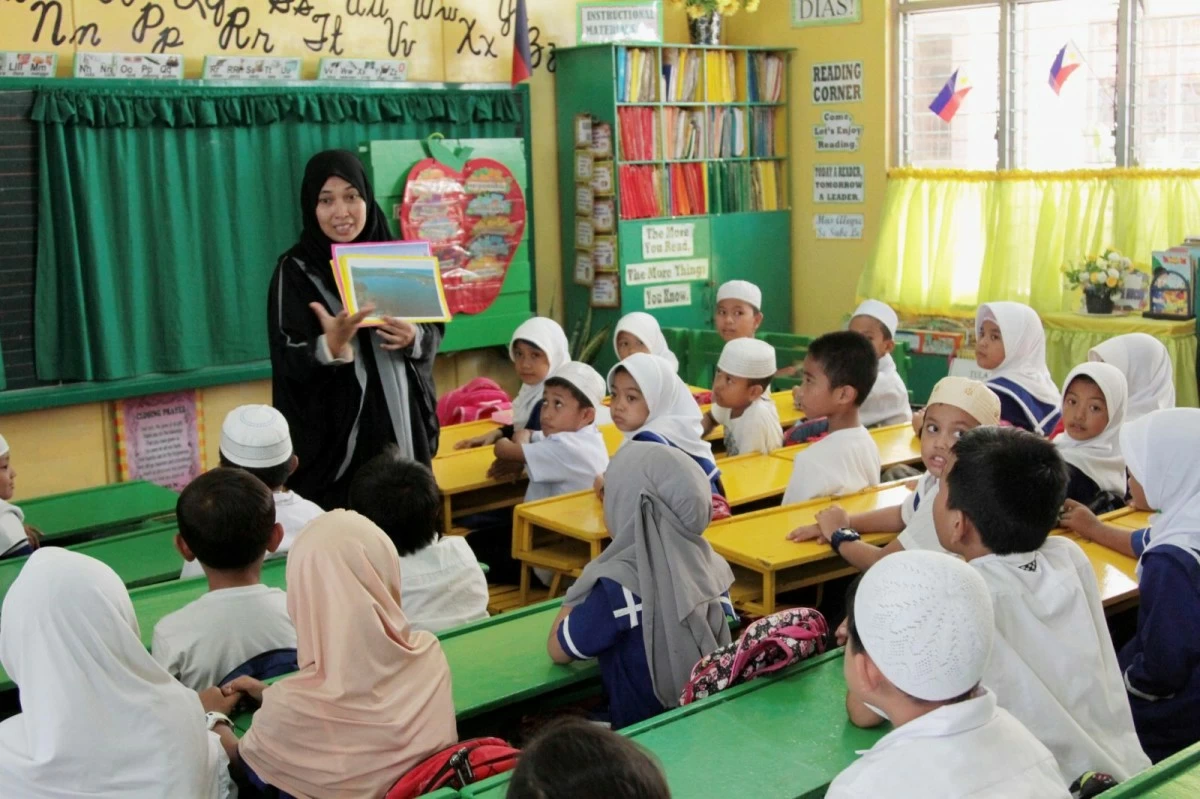
Amid funding overlaps and delays affecting key programs, the Second Congressional Commission on Education (EDCOM 2) has underscored the need to clarify the implementation of 23 national education laws in the Bangsamoro Autonomous Region in Muslim Mindanao (BARMM). DepEd / file photo
Amid “conflicting interpretations” that have caused funding delays for critical education and nutrition programs, the Second Congressional Commission on Education (EDCOM 2) on Thursday, October 30, underscored the urgent need to clarify how 23 national education laws are being implemented in the Bangsamoro Autonomous Region in Muslim Mindanao (BARMM).
In a coordination meeting held this week, EDCOM 2 emphasized the need for definitive legal guidance on whether national government agencies (NGAs) should continue directly funding education-related programs in BARMM, or if these are already covered under the region’s annual block grant.
The issue stems from ambiguities in the Bangsamoro Organic Law (Republic Act No. 11054), which states under Article VI, Section 13 that certain “national programs and projects,” such as the School Building Program, must remain funded by the National Government.

EDCOM 2 has called on the Department of Justice (DOJ) and the Department of Budget and Management (DBM) to issue legal guidance on how national education and social programs should be funded in BARMM to ensure the consistent delivery of services to learners in the region. (Courtesy of EDCOM 2)
However, EDCOM 2 pointed out that agencies differ in interpreting whether this provision also applies to other student-focused initiatives such as school feeding, scholarships, and teacher training.
As a result, some national programs have been withheld or inconsistently implemented, leading to potential gaps in essential services for learners in the Bangsamoro region, EDCOM 2 said.
Coordination challenges and funding overlaps
EDCOM 2 noted that coordination between NGAs and BARMM ministries remains largely “ad hoc and not institutionalized.”
This setup, the body said, makes it difficult to align budgets, track spending, and establish accountability mechanisms.
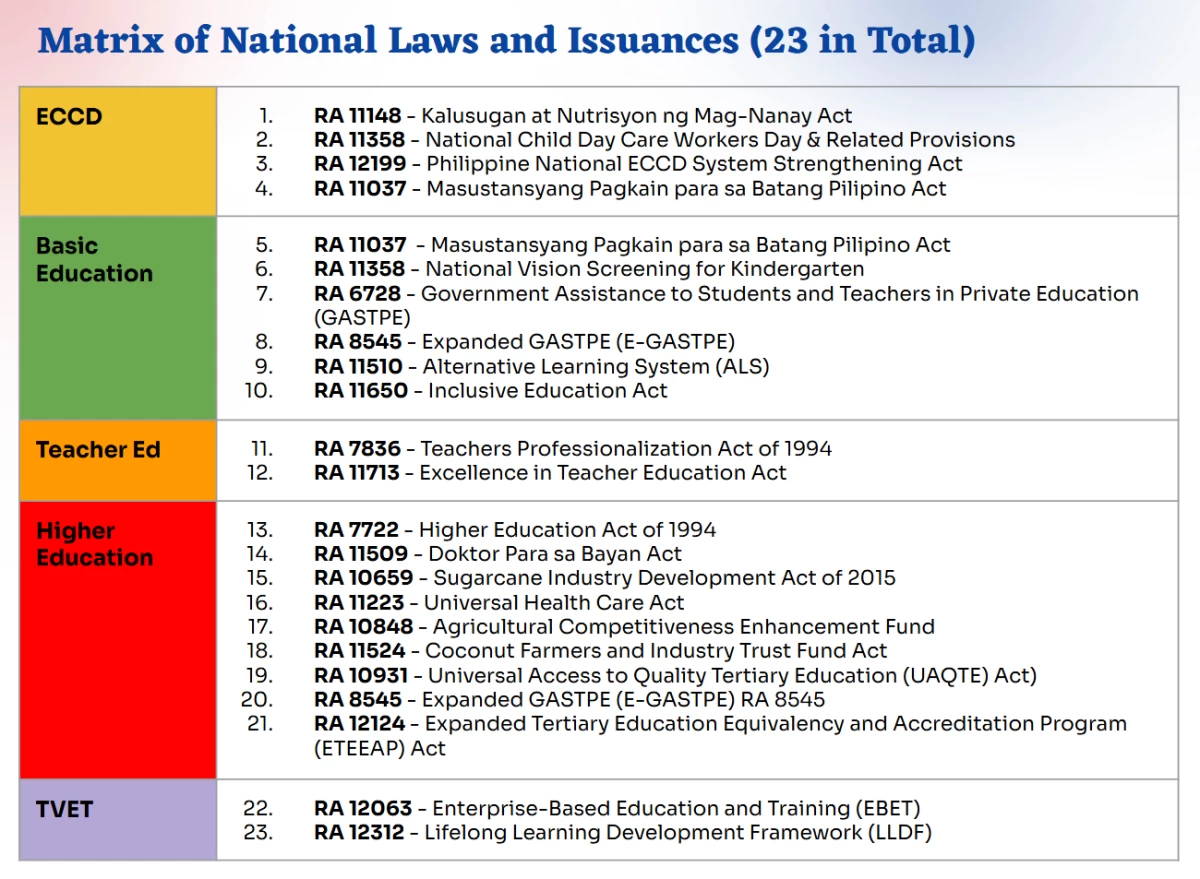
Currently, EDCOM 2 noted that 23 education-related national laws—covering areas from early childhood and basic education to teacher development and higher education—require clarification on how resources should be allocated and utilized within BARMM.
While some agencies, such as the Technical Education and Skills Development Authority (TESDA), have existing fund transfer arrangements with the Ministry of Basic, Higher, and Technical Education (MBHTE), they continue to face challenges with liquidation and reporting.
On the other hand, the Ministry of Social Services and Development (MSSD) shared a working model that has gained approval from the Department of Budget and Management (DBM).
Through a “modified disbursement system,” funds are released quarterly and automatically revert to the national government if unspent—ensuring fiscal transparency and program continuity.
Call for a joint accountability framework
To prevent overlapping expenditures and strengthen coordination, EDCOM 2 proposed the creation of a joint accountability framework that would align funding from the BARMM block grant, the Special Education Fund (SEF), and national budget allocations.
The Commission also requested the Department of Justice (DOJ) and the DBM to issue a formal legal opinion that can serve as a guiding interpretation for all stakeholders involved.
“This clarification is vital to avoid duplication, ensure consistent program delivery, and close the persistent resource gaps in BARMM’s education system,” EDCOM 2 emphasized.
Education and nutrition gaps in BARMM
EDCOM 2 warned that without clear funding mechanisms, ongoing learning losses and resource shortages in the region could worsen.
BARMM currently needs around 6,539 classrooms to meet basic education infrastructure requirements.
The region also faces pressing socio-economic challenges, including 34.3 percent stunting among children under five and 48.2 percent household food insecurity, according to data presented during the meeting.
Created under Republic Act No. 11899, EDCOM 2 is mandated to conduct a three-year comprehensive national assessment of the Philippine education system and recommend legislative and policy reforms to address systemic issues and improve education outcomes nationwide. 

Related Tags

EDCOM 2 BARMM education Bangsamoro Organic Law education funding Mindanao DepEd education laws Philippines Philippine education reforms
ADVERTISEMENT
.most-popular .layout-ratio{ padding-bottom: 79.13%; } @media (min-width: 768px) and (max-width: 1024px) { .widget-title { font-size: 15px !important; } }

{{ articles_filter_1561_widget.title }}

.most-popular .layout-ratio{ padding-bottom: 79.13%; } @media (min-width: 768px) and (max-width: 1024px) { .widget-title { font-size: 15px !important; } }

{{ articles_filter_1562_widget.title }}

.most-popular .layout-ratio{ padding-bottom: 79.13%; } @media (min-width: 768px) and (max-width: 1024px) { .widget-title { font-size: 15px !important; } }

{{ articles_filter_1563_widget.title }}

{{ articles_filter_1564_widget.title }}

.mb-article-details { position: relative; } .mb-article-details .article-body-preview, .mb-article-details .article-body-summary{ font-size: 17px; line-height: 30px; font-family: "Libre Caslon Text", serif; color: #000; } .mb-article-details .article-body-preview iframe , .mb-article-details .article-body-summary iframe{ width: 100%; margin: auto; } .read-more-background { background: linear-gradient(180deg, color(display-p3 1.000 1.000 1.000 / 0) 13.75%, color(display-p3 1.000 1.000 1.000 / 0.8) 30.79%, color(display-p3 1.000 1.000 1.000) 72.5%); position: absolute; height: 200px; width: 100%; bottom: 0; display: flex; justify-content: center; align-items: center; padding: 0; } .read-more-background a{ color: #000; } .read-more-btn { padding: 17px 45px; font-family: Inter; font-weight: 700; font-size: 18px; line-height: 16px; text-align: center; vertical-align: middle; border: 1px solid black; background-color: white; } .hidden { display: none; }
function initializeAllSwipers() { // Get all hidden inputs with cms_article_id document.querySelectorAll('[id^="cms_article_id_"]').forEach(function (input) { const cmsArticleId = input.value; const articleSelector = '#article-' + cmsArticleId + ' .body_images'; const swiperElement = document.querySelector(articleSelector); if (swiperElement && !swiperElement.classList.contains('swiper-initialized')) { new Swiper(articleSelector, { loop: true, pagination: false, navigation: { nextEl: '#article-' + cmsArticleId + ' .swiper-button-next', prevEl: '#article-' + cmsArticleId + ' .swiper-button-prev', }, }); } }); } setTimeout(initializeAllSwipers, 3000); const intersectionObserver = new IntersectionObserver( (entries) => { entries.forEach((entry) => { if (entry.isIntersecting) { const newUrl = entry.target.getAttribute("data-url"); if (newUrl) { history.pushState(null, null, newUrl); let article = entry.target; // Extract metadata const author = article.querySelector('.author-section').textContent.replace('By', '').trim(); const section = article.querySelector('.section-info ').textContent.replace(' ', ' '); const title = article.querySelector('.article-title h1').textContent; // Parse URL for Chartbeat path format const parsedUrl = new URL(newUrl, window.location.origin); const cleanUrl = parsedUrl.host + parsedUrl.pathname; // Update Chartbeat configuration if (typeof window._sf_async_config !== 'undefined') { window._sf_async_config.path = cleanUrl; window._sf_async_config.sections = section; window._sf_async_config.authors = author; } // Track virtual page view with Chartbeat if (typeof pSUPERFLY !== 'undefined' && typeof pSUPERFLY.virtualPage === 'function') { try { pSUPERFLY.virtualPage({ path: cleanUrl, title: title, sections: section, authors: author }); } catch (error) { console.error('ping error', error); } } // Optional: Update document title if (title && title !== document.title) { document.title = title; } } } }); }, { threshold: 0.1 } ); function showArticleBody(button) { const article = button.closest("article"); const summary = article.querySelector(".article-body-summary"); const body = article.querySelector(".article-body-preview"); const readMoreSection = article.querySelector(".read-more-background"); // Hide summary and read-more section summary.style.display = "none"; readMoreSection.style.display = "none"; // Show the full article body body.classList.remove("hidden"); } document.addEventListener("DOMContentLoaded", () => { let loadCount = 0; // Track how many times articles are loaded const offset = [1, 2, 3, 4, 5, 6, 7, 8, 9, 10]; // Offset values const currentUrl = window.location.pathname.substring(1); let isLoading = false; // Prevent multiple calls if (!currentUrl) { console.log("Current URL is invalid."); return; } const sentinel = document.getElementById("load-more-sentinel"); if (!sentinel) { console.log("Sentinel element not found."); return; } function isSentinelVisible() { const rect = sentinel.getBoundingClientRect(); return ( rect.top < window.innerHeight && rect.bottom >= 0 ); } function onScroll() { if (isLoading) return; if (isSentinelVisible()) { if (loadCount >= offset.length) { console.log("Maximum load attempts reached."); window.removeEventListener("scroll", onScroll); return; } isLoading = true; const currentOffset = offset[loadCount]; window.loadMoreItems().then(() => { let article = document.querySelector('#widget_1690 > div:nth-last-of-type(2) article'); intersectionObserver.observe(article) loadCount++; }).catch(error => { console.error("Error loading more items:", error); }).finally(() => { isLoading = false; }); } } window.addEventListener("scroll", onScroll); });

Sign up by email to receive news.