







Extra rise
The threat of increasing water levels
Published Oct 30, 2025 11:06 am


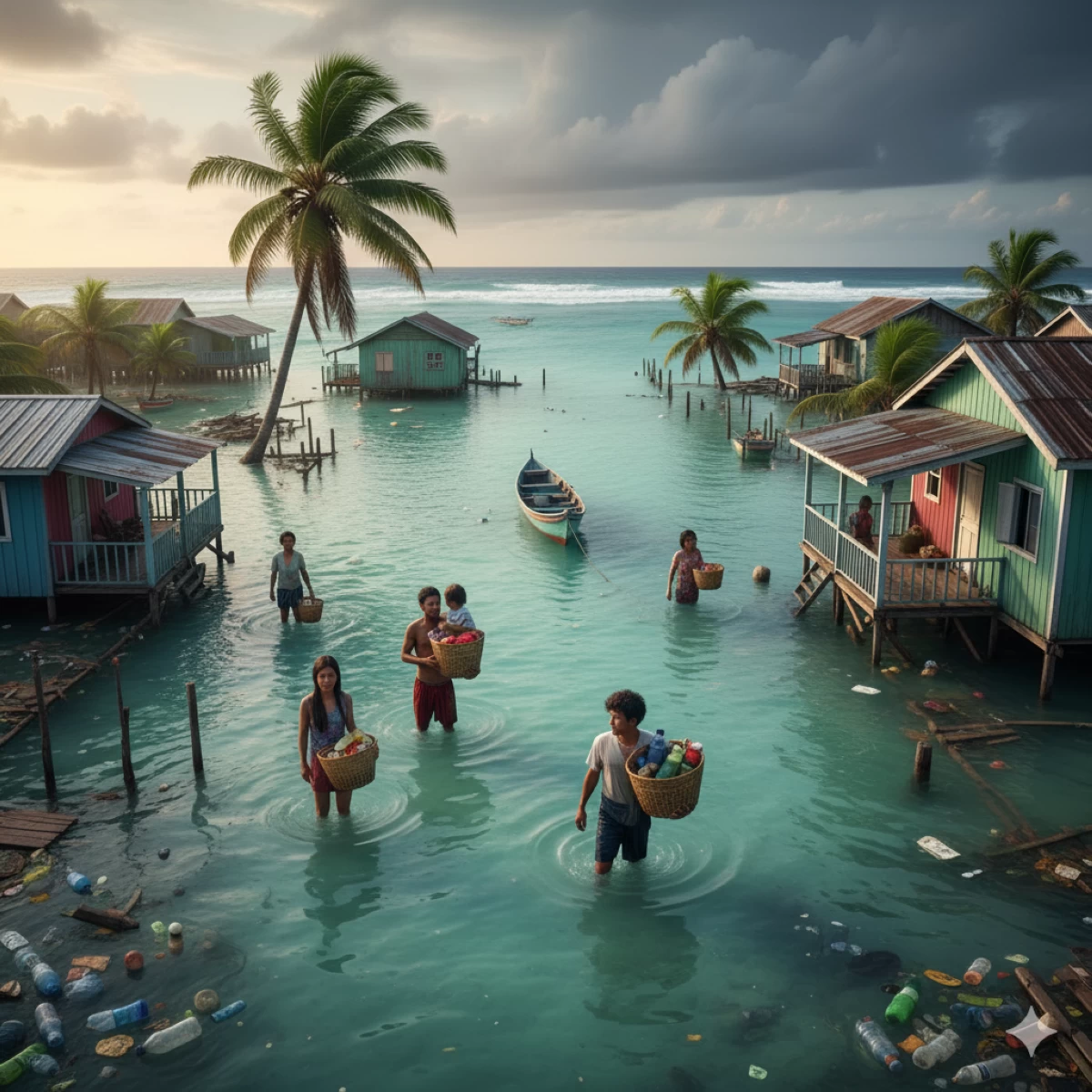
Image created by Gemini
Think of the temporary impact flooding brings in your life. It could damage your property, delay your travel time, and make you cancel plans. Consider what flooding causes nationwide, from human injury to loss of life, damage to structures like bridges and roads, disturbance in economic activities such as the transportation of goods, and more.
Now imagine the water not receding and permanently inundating where you live, where you work, or where you spend your vacations. Think of the temporary inconveniences of flooding being long-term.
Flooding is already contributing to land loss in many parts of the world. In a 2019 Insider article, journalist Talia Lakritz listed 11 cities that could possibly disappear by 2100 due to rising sea levels and land subsidence - both linked to climate change. The cities she named included Jakarta, Indonesia; Venice, Italy; Houston, Texas; and Bangkok, Thailand.
Lakritz explained that “some cities are sinking due to increasing sea levels slowly encroaching on their coasts, while others are sinking because of excessive groundwater pumping that creates a change in pressure and volume that causes land to sink.” She also noted how governments are adapting by building storm surge and flood barriers and developing relocation plans to move residents away from high-risk zones.
Created using Microsoft Copilot
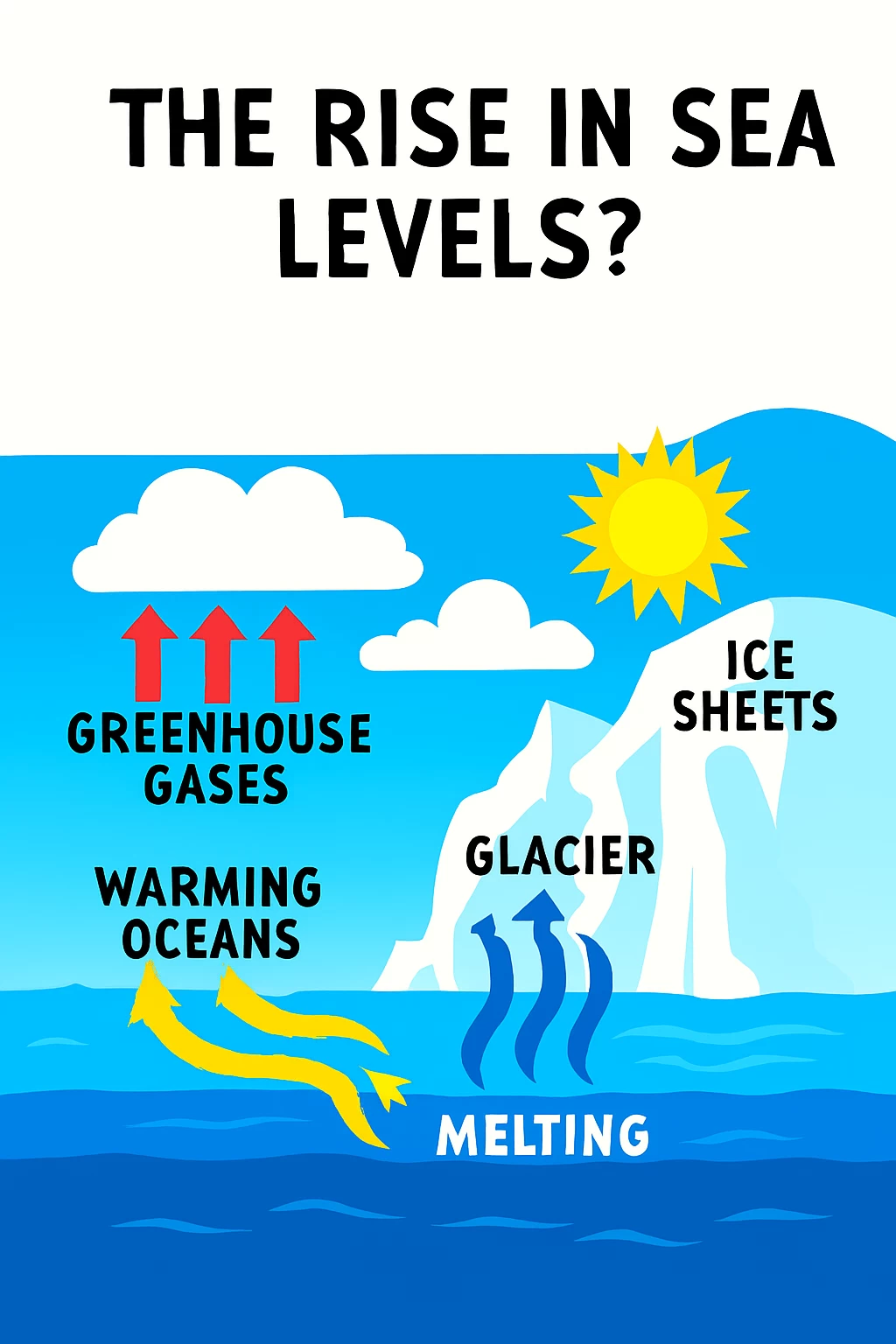
The rise in sea levels is the result of the consequences of climate change, specifically the melting of ice sheets and glaciers and the warming of the oceans. The latter is a result of the increase in greenhouse gases that trap heat that is then absorbed by the oceans. As the water gets warmer, it expands, causing a rise in ocean waters.
The United Nations describes rising sea levels as an “urgent and escalating threat” because of their wide-ranging economic, social and cultural consequences. In a 2024 UN Geneva article, Daniel Dickenson outlined the impacts of saltwater flooding: damage to coastal habitats and infrastructure, intrusion of saline water into agricultural land and fresh-water supplies, loss of homes and livelihoods among coastal communities including those working in tourism or owning coastal properties. For Filipinos, flooding often brings waterborne diseases, disruption to economic activity, and even injury or loss of life.
In the Philippines, parts of the coast have experienced sea-level rise at around five to seven millimeters per year. This is roughly double the global average of 2.8 to 3.6 millimeters per year. According to the Climate Change Commission, this elevated rate is driven in part by local factors and natural ocean patterns. The commission also reports that while the number of tropical cyclones entering the Philippine Area of Responsibility may not rise significantly, the intensity of these storms is expected to increase.
The WorldRiskIndex 2025 ranked the Philippines as the most disaster-prone country among 193 nations, with a risk score of 46.56. The report describes the country as having “high geographic fragmentation and high exposure to weather-related extremes”. For river and coastal flooding exposure, the provinces most at risk include Cagayan, Agusan del Norte, Pangasinan, Pampanga, Maguindanao, and Metro Manila. Pampanga and Pangasinan are identified as flat low-lying basins where water drains slowly, while Cagayan, Agusan del Norte and Pampanga are prone to rapid precipitation accumulation due to frequent typhoons. In contrast, provinces such as Marinduque, Laguna, Batanes and Sarangani may be less exposed, as they lack large river systems and feature smaller catchment zones and natural drainage that help mitigate flood risk.
“Extreme weather events are not only increasing in frequency but are also increasingly exceeding the capacities of existing protection systems,” the report concludes. “Successful coping strategies are based on the interplay of several factors: technological innovation, local capacity for action, and ecological resilience. Flood protection can no longer be regarded as an isolated technical task but must be understood as a societal challenge that equally encompasses spatial planning, ecosystem management, and social cohesion.”