






 Business
Trade & Industry
Tax exemption dangled for private sector donors to fill 105-day milk feeding gap
Business
Trade & Industry
Tax exemption dangled for private sector donors to fill 105-day milk feeding gap
Tax exemption dangled for private sector donors to fill 105-day milk feeding gap


The Philippine government has called on the private sector to help bridge the staggering 105-day gap in the country’s milk feeding program through donations in exchange for tax incentives.
The National Dairy Authority (NDA) launched on Wednesday, Oct. 29, a private sector-funded milk feeding program aimed at addressing child malnutrition while supporting the livelihood of local dairy farmers.
In partnership with the Bureau of Internal Revenue (BIR), the program allows companies to deduct 100 percent of their contributions from taxable income and enjoy full exemption from donor’s tax.
The milk feeding program was made tax-deductible after it was recognized by the Department of Economy, Planning, and Development (DEPDev) as a priority initiative under the National Priority Plan (NPP).
Under the Joint Administrative Order (JAO) for the program, NDA is authorized to receive donations, grants, and contributions from the private sector.
The BIR, in turn, will determine the propriety of donations, grants, or gifts to NDA pursuant to the Tax Code.
By providing these incentives, NDA said participating companies are “effectively turning every glass of milk shared into an investment in nation-building.”
NDA Administrator Marcus Antonius Andaya said private companies stepping in to contribute would help realize the objectives of the government’s milk feeding program.
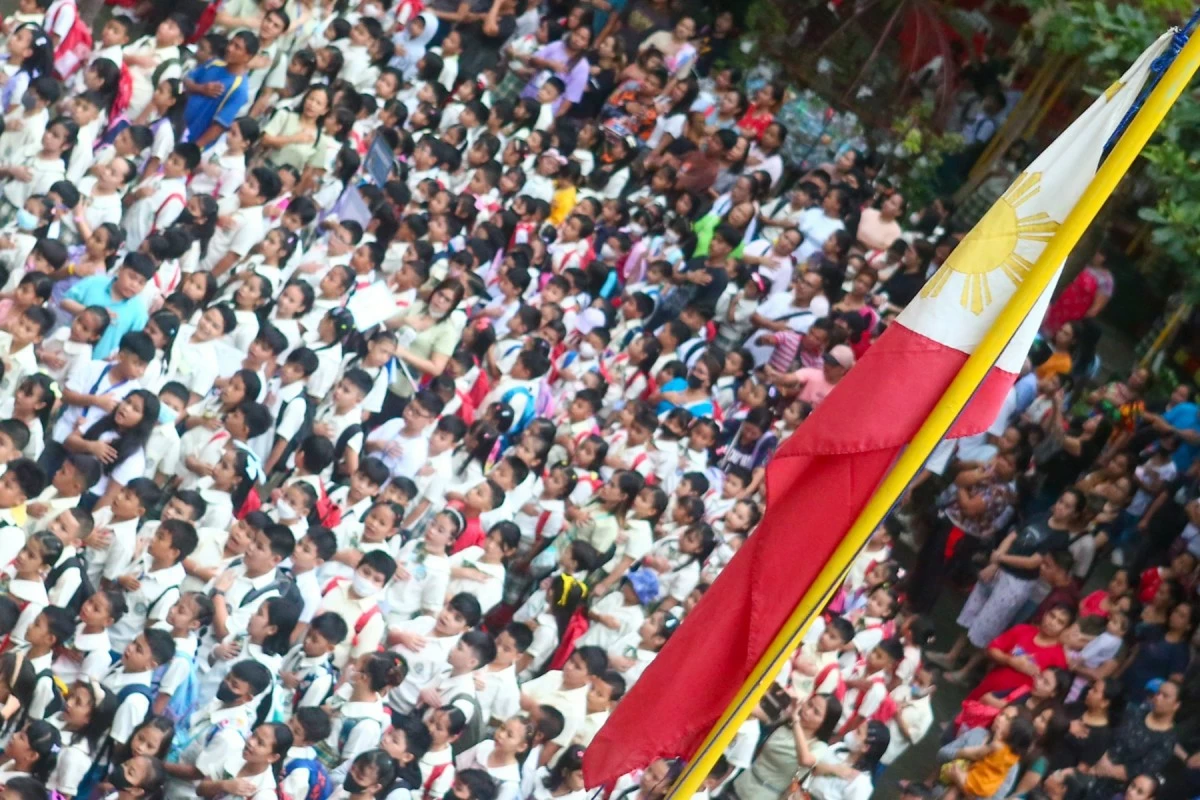
Under the Department of Education’s (DepEd) current feeding program, young students are eligible to receive meals for 120 days, but milk is served for only 15 of those days.
The National Nutrition Council (NNC) recommends serving milk to students for at least 120 days to help combat malnutrition.
Should the milk feeding program fail to run for 120 days, National Federation of Dairy Farmers and Stakeholders Association (Dairy NatFed) president Danilo Fausto said it would just be a “useless” effort for the government.
From the current proposed budget of around ₱3 billion, he said the program should be allocated as much as ₱12 billion to reach the 120-day benchmark.
“Budget is the question. Without the money, they cannot implement that number of days,” Fausto told reporters.
“They won’t give it. There’s no priority. The senators and congressmen don’t see the importance of dairy not only as a means of livelihood but also as nutrition for the stunted and malnourished children,” he added.
Citing the 2024 Functional Literacy, Education, and Mass Media Survey (FLEMMS), Andaya noted that 18 million Filipinos aged 10 to 64 are functionally illiterate—a problem linked to poor childhood nutrition.
He said the milk feeding program would not only curb malnourishment but also improve literacy and productivity.
“Malnutrition is the silent barrier to progress. If our children are well-nourished, our nation will be smarter and more productive,” said Andaya.
The official added that milk feeding is another key measure under the Marcos Jr. administration to increase farmers’ income, as the program will only use locally produced milk.
NDA estimates that a dairy cow can produce milk for 305 days, yet much of it ends up wasted due to limited market access and the short duration of feeding programs.
Several dairy companies have already lined up to participate in the initiative, with Asia Brewery Inc. President Michael Tan saying this has long been a clamor from the private sector.
“We want to address the gap. We’ve always been asking the government to help. Now, they’ve opened up private-sector participation,” said Tan.