







Marcos back in Manila after ASEAN Summit in Malaysia
Published Oct 29, 2025 08:47 am


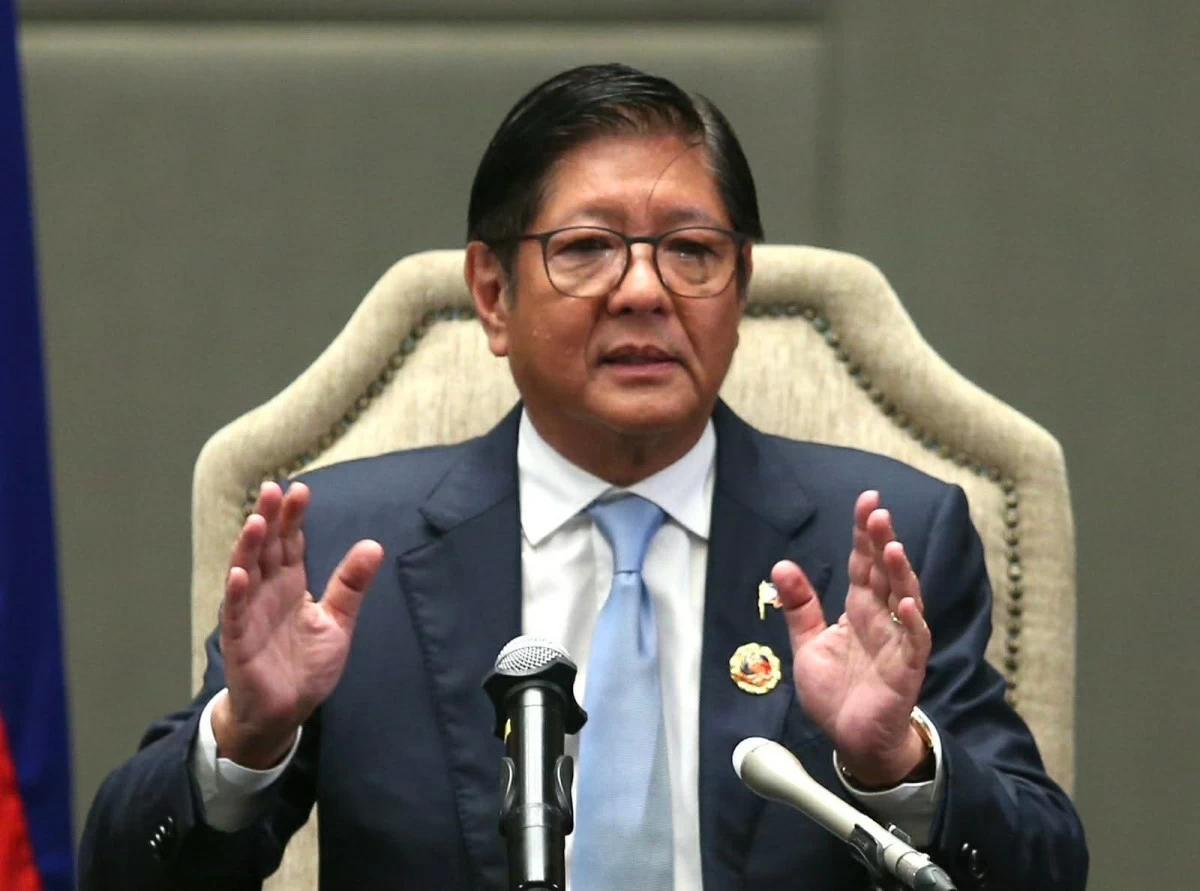
President Ferdinand ‘Bongbong’ Marcos Jr. speaks to the members of Philippine media following the conclusion of the 47th ASEAN Summit and Related Summits in Kuala Lumpur, Malaysia, on Oct. 28, 2025.(Mark Balmores/MANILA BULLETIN)
President Marcos is back in Manila after attending the 47th Association of Southeast Asian Nations (ASEAN) Summit in Kuala Lumpur, Malaysia, where he joined the official turnover ceremony of the ASEAN chairship for 2026 and discussed regional and global challenges, including the West Philippine Sea.
The President arrived at 2:55 a.m. at the Villamor Air Base in Pasay City on Wednesday, Oct. 29.
In a four-minute recorded arrival statement, Marcos described the ASEAN Summit as “opportunity to discuss among our fellow ASEAN Member States and partners how to navigate our future together amidst the various geopolitical and economic challenges that we face domestically, bilaterally, regionally, and globally.”
“We discussed significant international issues that emerging challenges that not only impact our peoples and our nation, but also the entire region, especially the West Philippine Sea,” he said.
“I reaffirmed that the Philippines will continue to remain firm, calm and resolute in defending our sovereignty, our sovereign rights and jurisdiction in the West Philippine Sea in accordance with, of course, international law,” Marcos furthered, adding that the Philippines will continue to work with countries that share the Philippines’ values on peace, stability, and economic progress.
Strengthening trade relations
During the summit, the President shared that he discussed with ASEAN leaders ways about “future-proofing our region through economic cooperation and sustainable growth.”
He attended discussions with the International Monetary Fund (IMF), the BRICS (Brazil, Russia, India, and China, with South Africa), and the G20, where he reaffirmed ASEAN’s collective commitment “to rules-based, open, inclusive, transparent, and non-discriminatory multilateral system.”
He also strengthened trade relations with external partners, upgrading the ASEAN Trade in Goods Agreement, amending the Free Trade Agreements (FTAs), and utilizing the Regional Comprehensive Economic Partnership (RCEP).
“At a time when the rules-based trading system faces significant challenges, these agreements will provide transparency, stability, and predictability – key foundations for building confidence among businesses and investors, and for sustaining ASEAN's role as a driver of regional and global growth,” Marcos said.
On the sidelines of the summit, the President also met with leaders from the United States, Japan, India, China, the Republic of Korea, the United Nations, New Zealand, and Australia.
“We reaffirmed our commitment to deepen bilateral relations and discussed cooperation on many fields of mutual interest, fields such as security and defense, maritime, climate action, trade, investment, agriculture, and people-to-people relations,” he added.
PH's 2026 chairship
At the end of the Summit, Malaysia—this year’s ASEAN host—also formally turned over the chairship of the regional bloc for 2026 to the Philippines.
In his video message, Marcos thanked the leaders for their support and expressed the Philippine delegation’s gratitude to Malaysia for being a “generous host” of the Summit and related meetings.
“As the 2026 Chair of ASEAN, the Philippines looks forward to building on the gains of Malaysia's inclusivity and sustainability theme and carry ASEAN forward as we, as is our theme, ‘Navigate our Future, Together’,” he said.