

ADVERTISEMENT

Embracing darkness: How I became a horror writer

Published Oct 29, 2025 05:27 pm
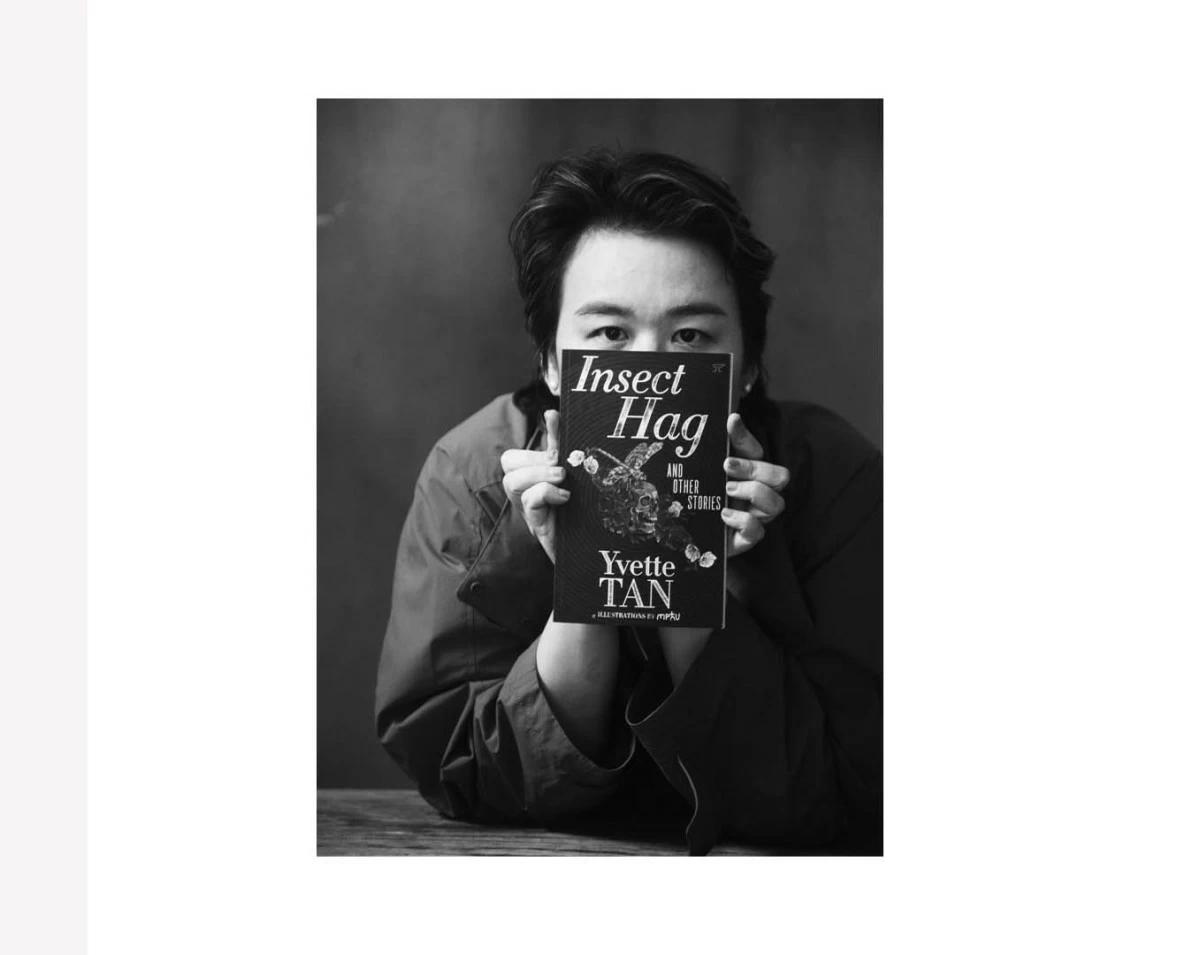
THE AUTHOR with her latest book 'Insect Hag and Other Stories'
As a horror writer, the question I get asked most is how I came to embrace the genre. I always have the same answer: I didn’t choose horror; horror chose me.
I’ve always been interested in the supernatural. Even though I grew up in Manila, I was raised in a way that I now realize may have reflected my maternal grandmother’s provincial roots: Visits to a hilot were common, and it was common to overhear adults talking about the supernatural as ifnit were gossip.
Pinoy pop culture was also filled with stories of the supernatural. Inday Badiday famously featured a woman who had given birth to a mudfish on her tv show “See True,” the film “Ninja Kids” taught me that you should wear your clothes inside out if your were lost in the woods to stop the spirits from getting you lost, and the episode “Ate” from “Shake, Rattle and Roll III” made me realize that sometimes, it is human selfishness that creates monsters.
I also read a lot. I found a book in the school library (I suspect it was a Maximo Ramos book on lower mythological creatures) that explained how aswangs came to be. I devoured books on the paranormal just because they were fun.
And before I knew it, all of this began appearing in my stories.
But I didn’t—and still don’t—write what most people consider “monsters” as evil. A childhood of being bullied by people who were “good” and “cool” just because I was considered weird and different gave me an early understanding of how cruel humans can be, and how they can easily manipulate others into thinking something is bad, just because it isn’t familiar. For example, in “Kulog,” which appears in my collection “Waking the Dead,” is about a child who befriends a kapre. When the creature tries to defend her against her abusive father, the neighboors see his monstruous appearance and chase him away, leaving the girl with her tormentor.
I also began to take interest in why monsters exist in the first place, and why humans are fascinated with the unknown. I learned that scary stories had several functions: They offered catharsis for their audiences, a place to experience heightened emotions safely. They were often reflections of society’s concerns. They could also be a way to discuss issues that are rarely examined, or even taboo. In “Seek Ye Whore,” the titular story of my third book, an American buys a mail order bride from the Philippines and is surprised to get her in parts that he has to assemble. Fully expecting a submissive Asian woman, he is (sometimes pleasantly) surprised to find that the parts, which begin moving as soon as he gets them, have a mind of their own.
I didn’t expect to become a writer. I was more than content being an avid reader, started writing the same reason many writers start: Nobody was writing the stories I wanted to read, so I had to do it myself. Publishing wasn’t even on my mind at that point, though of course, it was a dream of mine as well. This continues to inform the way I write today: I write the stories I want to read, and what I want to read is continuously changing. In my latest collection, “Insect Hag and Other Stories,” I go back to my earliest exposure to the supernatural, folk beliefs relegated to the realm of superstition and using them to examine human experiences that tend to be dismissed. In “Horror Vacui,” a man returns to his grandmother’s house in the province to find it overflowing with items that his grandmother refuses to throw away. He also begins to realize that there is something else in the house: a malignant presence that, in her extreme loneliness, his grandmother has welcomed as an “angel.” This was my way of examining both geriatric loneliness and the very Filipino tendency to hoard.
I don’t write to prescribe. I’m not here to spout morals, I’m here to entertain. I write to explore my curiosity about a topic, and to figure out how something supernatural could manifest in the world today. And though I say that I write for myself, I would be lying if I denied loving that my work has resonated with a lot of people. I am very, very grateful to my readers. I wouldn’t be where I am without them.
Every time someone tells me they enjoyed my book or that my story made them feel a certain way, I think of tiny Yvette, the girl who was isolated and bullied, and I tell her that she doesn’t have to hide anymore. Yes, people still think she’s weird, but this time, they love it.

Related Tags

YVETTE TAN SPOTLIGHT FEATURES
ADVERTISEMENT
.most-popular .layout-ratio{ padding-bottom: 79.13%; } @media (min-width: 768px) and (max-width: 1024px) { .widget-title { font-size: 15px !important; } }

{{ articles_filter_1561_widget.title }}

.most-popular .layout-ratio{ padding-bottom: 79.13%; } @media (min-width: 768px) and (max-width: 1024px) { .widget-title { font-size: 15px !important; } }

{{ articles_filter_1562_widget.title }}

.most-popular .layout-ratio{ padding-bottom: 79.13%; } @media (min-width: 768px) and (max-width: 1024px) { .widget-title { font-size: 15px !important; } }

{{ articles_filter_1563_widget.title }}

{{ articles_filter_1564_widget.title }}

.mb-article-details { position: relative; } .mb-article-details .article-body-preview, .mb-article-details .article-body-summary{ font-size: 17px; line-height: 30px; font-family: "Libre Caslon Text", serif; color: #000; } .mb-article-details .article-body-preview iframe , .mb-article-details .article-body-summary iframe{ width: 100%; margin: auto; } .read-more-background { background: linear-gradient(180deg, color(display-p3 1.000 1.000 1.000 / 0) 13.75%, color(display-p3 1.000 1.000 1.000 / 0.8) 30.79%, color(display-p3 1.000 1.000 1.000) 72.5%); position: absolute; height: 200px; width: 100%; bottom: 0; display: flex; justify-content: center; align-items: center; padding: 0; } .read-more-background a{ color: #000; } .read-more-btn { padding: 17px 45px; font-family: Inter; font-weight: 700; font-size: 18px; line-height: 16px; text-align: center; vertical-align: middle; border: 1px solid black; background-color: white; } .hidden { display: none; }
function initializeAllSwipers() { // Get all hidden inputs with cms_article_id document.querySelectorAll('[id^="cms_article_id_"]').forEach(function (input) { const cmsArticleId = input.value; const articleSelector = '#article-' + cmsArticleId + ' .body_images'; const swiperElement = document.querySelector(articleSelector); if (swiperElement && !swiperElement.classList.contains('swiper-initialized')) { new Swiper(articleSelector, { loop: true, pagination: false, navigation: { nextEl: '#article-' + cmsArticleId + ' .swiper-button-next', prevEl: '#article-' + cmsArticleId + ' .swiper-button-prev', }, }); } }); } setTimeout(initializeAllSwipers, 3000); const intersectionObserver = new IntersectionObserver( (entries) => { entries.forEach((entry) => { if (entry.isIntersecting) { const newUrl = entry.target.getAttribute("data-url"); if (newUrl) { history.pushState(null, null, newUrl); let article = entry.target; // Extract metadata const author = article.querySelector('.author-section').textContent.replace('By', '').trim(); const section = article.querySelector('.section-info ').textContent.replace(' ', ' '); const title = article.querySelector('.article-title h1').textContent; // Parse URL for Chartbeat path format const parsedUrl = new URL(newUrl, window.location.origin); const cleanUrl = parsedUrl.host + parsedUrl.pathname; // Update Chartbeat configuration if (typeof window._sf_async_config !== 'undefined') { window._sf_async_config.path = cleanUrl; window._sf_async_config.sections = section; window._sf_async_config.authors = author; } // Track virtual page view with Chartbeat if (typeof pSUPERFLY !== 'undefined' && typeof pSUPERFLY.virtualPage === 'function') { try { pSUPERFLY.virtualPage({ path: cleanUrl, title: title, sections: section, authors: author }); } catch (error) { console.error('ping error', error); } } // Optional: Update document title if (title && title !== document.title) { document.title = title; } } } }); }, { threshold: 0.1 } ); function showArticleBody(button) { const article = button.closest("article"); const summary = article.querySelector(".article-body-summary"); const body = article.querySelector(".article-body-preview"); const readMoreSection = article.querySelector(".read-more-background"); // Hide summary and read-more section summary.style.display = "none"; readMoreSection.style.display = "none"; // Show the full article body body.classList.remove("hidden"); } document.addEventListener("DOMContentLoaded", () => { let loadCount = 0; // Track how many times articles are loaded const offset = [1, 2, 3, 4, 5, 6, 7, 8, 9, 10]; // Offset values const currentUrl = window.location.pathname.substring(1); let isLoading = false; // Prevent multiple calls if (!currentUrl) { console.log("Current URL is invalid."); return; } const sentinel = document.getElementById("load-more-sentinel"); if (!sentinel) { console.log("Sentinel element not found."); return; } function isSentinelVisible() { const rect = sentinel.getBoundingClientRect(); return ( rect.top < window.innerHeight && rect.bottom >= 0 ); } function onScroll() { if (isLoading) return; if (isSentinelVisible()) { if (loadCount >= offset.length) { console.log("Maximum load attempts reached."); window.removeEventListener("scroll", onScroll); return; } isLoading = true; const currentOffset = offset[loadCount]; window.loadMoreItems().then(() => { let article = document.querySelector('#widget_1690 > div:nth-last-of-type(2) article'); intersectionObserver.observe(article) loadCount++; }).catch(error => { console.error("Error loading more items:", error); }).finally(() => { isLoading = false; }); } } window.addEventListener("scroll", onScroll); });

Sign up by email to receive news.