

ADVERTISEMENT

DBM pushes 4% cap on unprogrammed funds to curb budget inflation

Published Oct 29, 2025 05:00 pm

At A Glance

  • Imposing a cap on unprogrammed funds, with a limit preferably as low as four percent of the national budget, would set a boundary for Congress to refrain from inflating allocations for national projects.
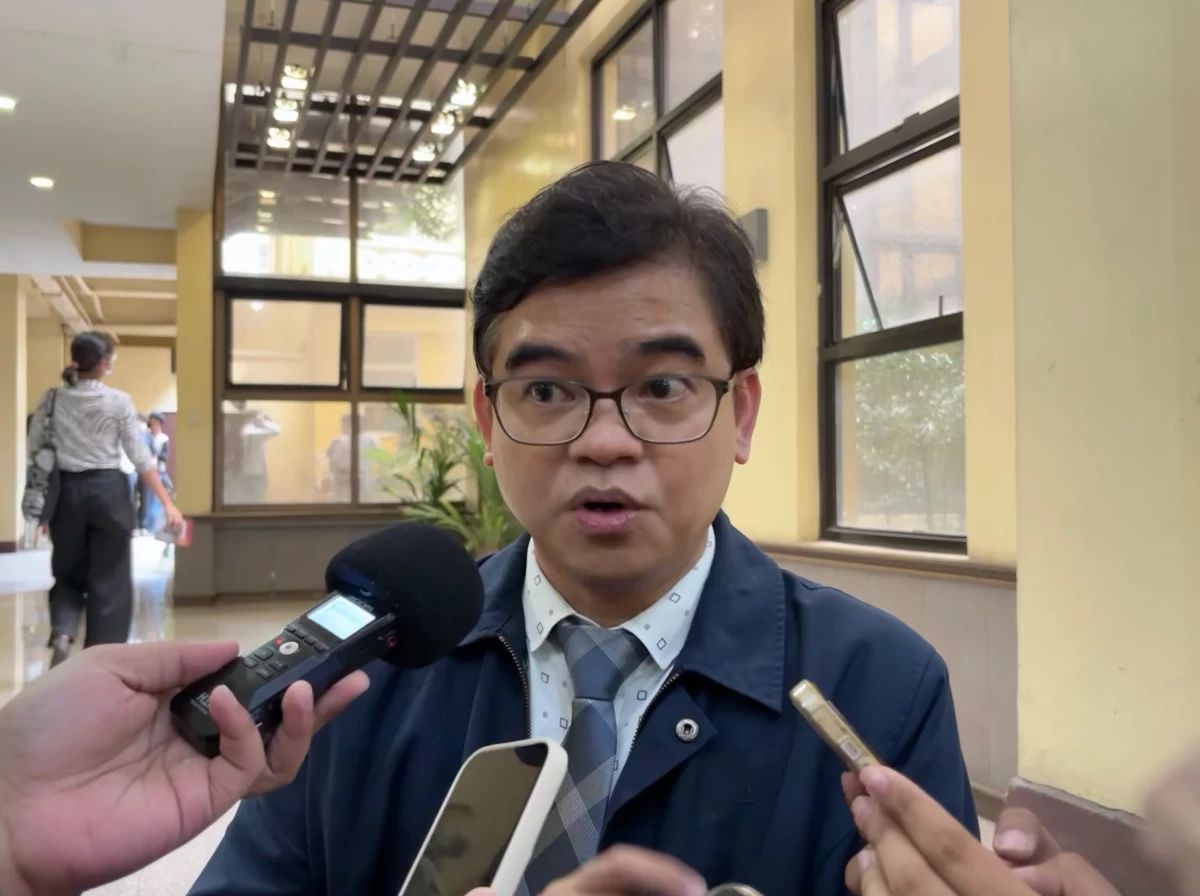
Imposing a cap on unprogrammed budgetary funds, with a limit preferably as low as four percent of the national budget, would set a boundary for Congress to refrain from inflating allocations for national projects.
Department of Budget and Management (DBM) Assistant Secretary Romeo Matthew T. Balanquit told reporters on the sidelines of the DBM’s 2025 Fiscal Policy Conference that unprogrammed appropriations (UAs) should be capped at around four to five percent of the national budget.
“It’s better if it’s lower. Actually, the value of UAs is really intended for foreign-assisted projects,” Balanquit said last Monday, Oct. 27.
According to Balanquit, foreign-assisted projects go through a lengthy approval process—from the Cabinet-level Investment Coordination Committee (ICC) to the Economic Development Council (EDC)—before getting the President’s nod.
Since these approvals often come after the annual national budget has been submitted to Congress, such projects may have no funding allocation for the following year, he said.
“That’s why it just makes sense that you put some standby funds for these kinds of projects, just in the event that they are approved later in the year,” Balanquit explained.
He, however, lamented that in the latter part of the budget process, UAs under the national budget often get doubled or tripled.
“That’s something we don’t have control over. But hopefully, under the law—if the Philippine budget code is pushed through—there will be a cap. It could be five or four percent, depending on the executive, and also if the legislative branch agrees with us,” Balanquit said.
Once enacted, the code will impose a limit on the level of UAs. “In that way, the legislative branch will have lower flexibility; they cannot just discretionarily increase it or triple it,” he added.
Under the proposed law, provisions on the UA cap and implementation readiness will be institutionalized, making the process more formal and legally binding.
The DBM official noted that the code is a priority bill as outlined in the Legislative-Executive Development Advisory Council (LEDAC). The DBM is pushing for the budget measure to be enacted within the current 20th Congress.
While the Senate has been a strong critic of UAs, Balanquit noted that Congress in general “has already expressed their desire to push for the [code].”
Under the existing cash budgeting system, Congress “can still make adjustments—like extending the validity of program execution to three years.”
“But under this code, we can clearly specify that any project funded by the national government should only last for one or two years. That way, all agencies will be compelled to submit only projects that are truly shovel-ready,” he explained.
UAs declined by 23.2 percent to ₱143.4 billion as of end-September from ₱186.6 billion in the same nine-month period in 2024.
Of the total, the Department of Public Works and Highways (DPWH) accounted for ₱58.8 billion, while the Department of Transportation (DOTr) accounted for ₱30.2 billion.
For the year, the government is targeting ₱158.7 billion worth of spending for UAs and expects it to increase to ₱249.9 billion next year, equivalent to only 3.7 percent of the proposed ₱6.793-trillion national budget for 2026.
To date, UAs have no set limit, but the DBM is keeping it below five percent of the national budget.
ADVERTISEMENT
.most-popular .layout-ratio{ padding-bottom: 79.13%; } @media (min-width: 768px) and (max-width: 1024px) { .widget-title { font-size: 15px !important; } }

{{ articles_filter_1561_widget.title }}

.most-popular .layout-ratio{ padding-bottom: 79.13%; } @media (min-width: 768px) and (max-width: 1024px) { .widget-title { font-size: 15px !important; } }

{{ articles_filter_1562_widget.title }}

.most-popular .layout-ratio{ padding-bottom: 79.13%; } @media (min-width: 768px) and (max-width: 1024px) { .widget-title { font-size: 15px !important; } }

{{ articles_filter_1563_widget.title }}

{{ articles_filter_1564_widget.title }}

.mb-article-details { position: relative; } .mb-article-details .article-body-preview, .mb-article-details .article-body-summary{ font-size: 17px; line-height: 30px; font-family: "Libre Caslon Text", serif; color: #000; } .mb-article-details .article-body-preview iframe , .mb-article-details .article-body-summary iframe{ width: 100%; margin: auto; } .read-more-background { background: linear-gradient(180deg, color(display-p3 1.000 1.000 1.000 / 0) 13.75%, color(display-p3 1.000 1.000 1.000 / 0.8) 30.79%, color(display-p3 1.000 1.000 1.000) 72.5%); position: absolute; height: 200px; width: 100%; bottom: 0; display: flex; justify-content: center; align-items: center; padding: 0; } .read-more-background a{ color: #000; } .read-more-btn { padding: 17px 45px; font-family: Inter; font-weight: 700; font-size: 18px; line-height: 16px; text-align: center; vertical-align: middle; border: 1px solid black; background-color: white; } .hidden { display: none; }
function initializeAllSwipers() { // Get all hidden inputs with cms_article_id document.querySelectorAll('[id^="cms_article_id_"]').forEach(function (input) { const cmsArticleId = input.value; const articleSelector = '#article-' + cmsArticleId + ' .body_images'; const swiperElement = document.querySelector(articleSelector); if (swiperElement && !swiperElement.classList.contains('swiper-initialized')) { new Swiper(articleSelector, { loop: true, pagination: false, navigation: { nextEl: '#article-' + cmsArticleId + ' .swiper-button-next', prevEl: '#article-' + cmsArticleId + ' .swiper-button-prev', }, }); } }); } setTimeout(initializeAllSwipers, 3000); const intersectionObserver = new IntersectionObserver( (entries) => { entries.forEach((entry) => { if (entry.isIntersecting) { const newUrl = entry.target.getAttribute("data-url"); if (newUrl) { history.pushState(null, null, newUrl); let article = entry.target; // Extract metadata const author = article.querySelector('.author-section').textContent.replace('By', '').trim(); const section = article.querySelector('.section-info ').textContent.replace(' ', ' '); const title = article.querySelector('.article-title h1').textContent; // Parse URL for Chartbeat path format const parsedUrl = new URL(newUrl, window.location.origin); const cleanUrl = parsedUrl.host + parsedUrl.pathname; // Update Chartbeat configuration if (typeof window._sf_async_config !== 'undefined') { window._sf_async_config.path = cleanUrl; window._sf_async_config.sections = section; window._sf_async_config.authors = author; } // Track virtual page view with Chartbeat if (typeof pSUPERFLY !== 'undefined' && typeof pSUPERFLY.virtualPage === 'function') { try { pSUPERFLY.virtualPage({ path: cleanUrl, title: title, sections: section, authors: author }); } catch (error) { console.error('ping error', error); } } // Optional: Update document title if (title && title !== document.title) { document.title = title; } } } }); }, { threshold: 0.1 } ); function showArticleBody(button) { const article = button.closest("article"); const summary = article.querySelector(".article-body-summary"); const body = article.querySelector(".article-body-preview"); const readMoreSection = article.querySelector(".read-more-background"); // Hide summary and read-more section summary.style.display = "none"; readMoreSection.style.display = "none"; // Show the full article body body.classList.remove("hidden"); } document.addEventListener("DOMContentLoaded", () => { let loadCount = 0; // Track how many times articles are loaded const offset = [1, 2, 3, 4, 5, 6, 7, 8, 9, 10]; // Offset values const currentUrl = window.location.pathname.substring(1); let isLoading = false; // Prevent multiple calls if (!currentUrl) { console.log("Current URL is invalid."); return; } const sentinel = document.getElementById("load-more-sentinel"); if (!sentinel) { console.log("Sentinel element not found."); return; } function isSentinelVisible() { const rect = sentinel.getBoundingClientRect(); return ( rect.top < window.innerHeight && rect.bottom >= 0 ); } function onScroll() { if (isLoading) return; if (isSentinelVisible()) { if (loadCount >= offset.length) { console.log("Maximum load attempts reached."); window.removeEventListener("scroll", onScroll); return; } isLoading = true; const currentOffset = offset[loadCount]; window.loadMoreItems().then(() => { let article = document.querySelector('#widget_1690 > div:nth-last-of-type(2) article'); intersectionObserver.observe(article) loadCount++; }).catch(error => { console.error("Error loading more items:", error); }).finally(() => { isLoading = false; }); } } window.addEventListener("scroll", onScroll); });

Sign up by email to receive news.