






Manila Bulletin
 Environment and Sustainability
Weaving hope, growing futures: Empowering the Higaonon tribe through sustainable livelihoods
Environment and Sustainability
Weaving hope, growing futures: Empowering the Higaonon tribe through sustainable livelihoods
Environment and Sustainability
Weaving hope, growing futures: Empowering the Higaonon tribe through sustainable livelihoods
Weaving hope, growing futures: Empowering the Higaonon tribe through sustainable livelihoods
By MBrand
Published Oct 28, 2025 05:21 pm


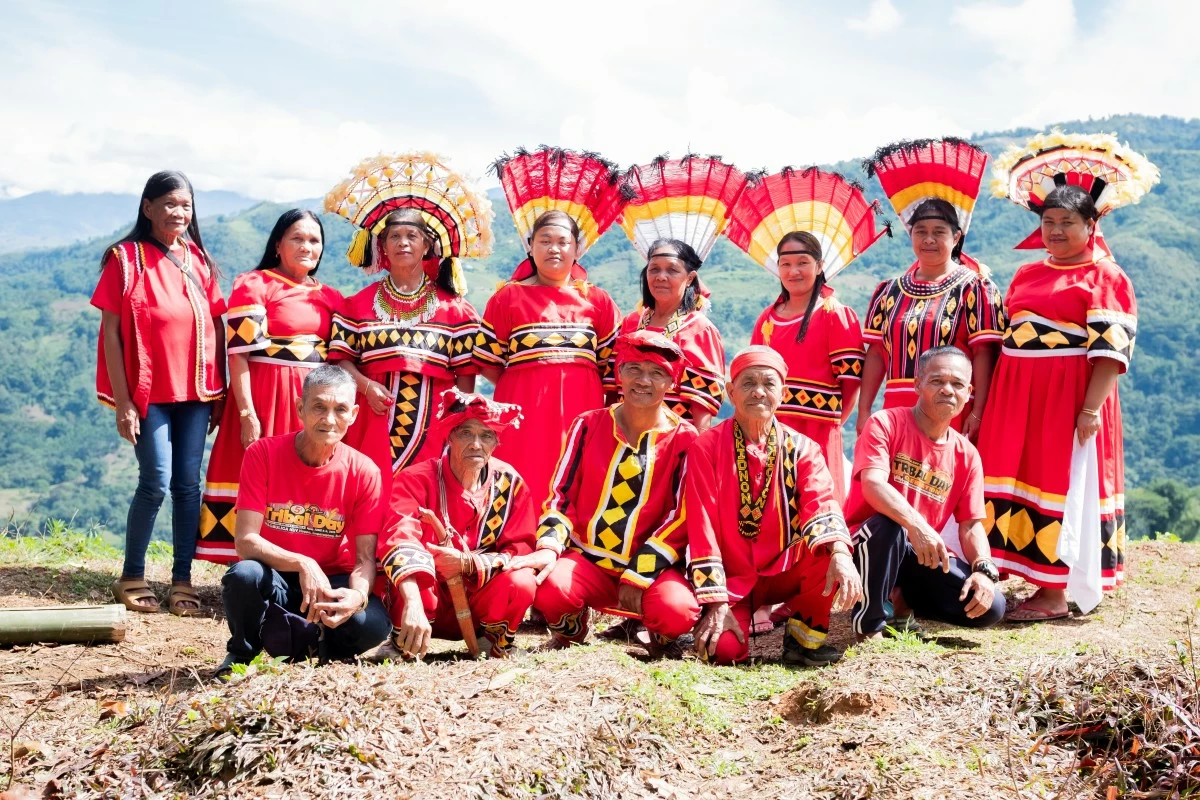
The Higaonon tribe's culture is deeply expressed through colorful garments and accessories that its members tirelessly craft.
A quiet day in Bukidnon in 2021 turned chaotic when a rumbling noise from a landslide ravaged the homes of a tribe in Brgy. Santiago, Manolo Fortich. Aboitiz Renewables Inc. (Aboitiz Renewables), the renewable energy arm of Aboitiz Power Corporation, immediately took action to help those affected by the disaster, putting them back on their feet and making their community spirit strong.
Aboitiz Renewables and the Higaonon worked together to find ways to help shield the community against future landslides. The solution? Planting bamboo in strategic areas to prevent soil erosion. With its strong and extensive root system, bamboo helps stabilize soil, especially on slopes. It can also restore degraded land.
Since it is also fast to grow and cultivate, the locals were quick and ingenious enough to realize the potential of bamboo, turning it into a new source of livelihood for the Higaonon tribe.
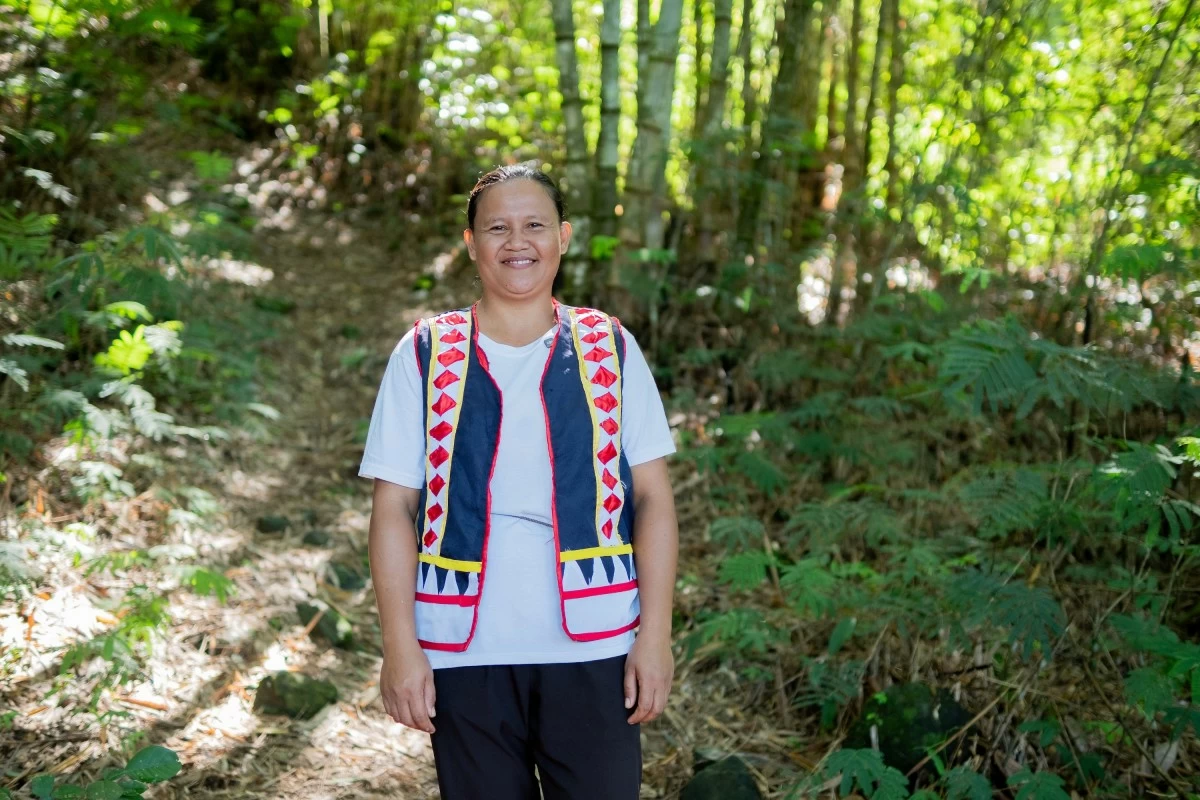
Noemie Buclasan tells Manila Bulletin how she now has steady work and consistent income thanks to the bamboo skilling and livelihood project of Aboitiz Renewables, Aboitiz Foundation, and TESDA.
Noemi Buclasan, 37, had relied on farming until the disaster tore through the barangay, burying their source of income and hope. Now, with bamboo, their community is earning more than they once did, while also contributing to an environmentally sustainable cause.
The initiative was formalized when Aboitiz Renewables, through its hydropower arm Hedcor Group, collaborated with the Technical Education and Skills Development Authority (TESDA) to train the members of the Higaonon tribe in bamboo propagation, processing, and treatment to craft products to sell.
“Kung walang training at partnership sa Hedcor, hindi namin malalaman ano [ang] importance ng bamboo. Sa amin kasi, ang bamboo ginagawang bahay at fences,” Buclasan said. (Without the training and partnership with Hedcor, we wouldn’t know the importance of bamboo. To us before, it’s only used for building houses and fences).
Building sustainability with bamboo
The TESDA training took three years across several phases, alongside the time it took for the bamboo to grow.
The first phase of the program began with the basics of nurturing and propagating bamboo. The second phase taught the community members how to transform it into sellable products, while the third and final phase focused on financial education and managing profits from the bamboo crafts.
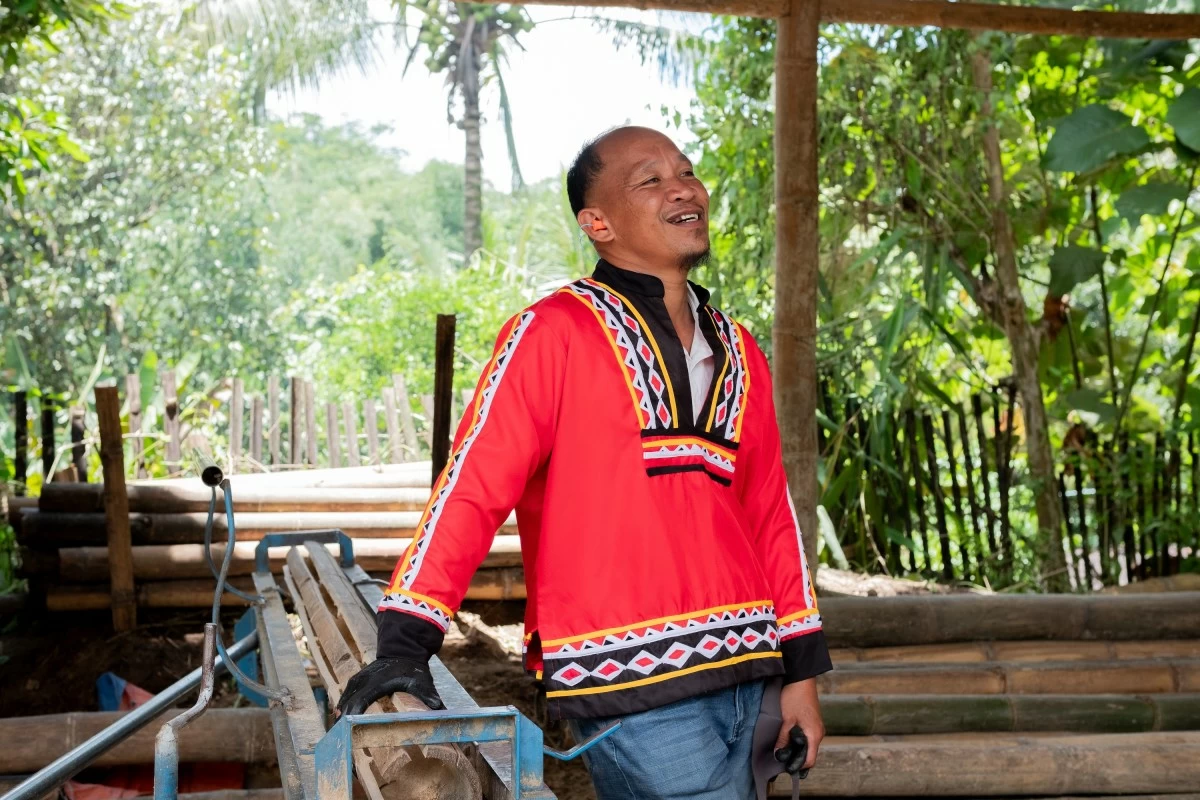
Raymond Carlos recounts the challenge of cutting and acquiring bamboo, especially as it can get entangled with the others, thereby requiring about four people to secure just one at a time.
Before it’s turned into a product, bamboo is treated with boiled water for four hours. The most challenging part, recounted Raymond Carlos, a member of the Santiago Diversified Farmers Association, is the cutting and acquiring of the tall grass, as they can get entangled with the others, taking four people to secure one bamboo at a time. They are then crafted into products like guitars, chessboards, and chairs.
Today, the tribe can earn around P26,000 per week. Confident in the locals’ skills, Aboitiz Renewables and the Aboitiz Foundation, donated a bamboo processing machine needed for the operation of the organization, easing the tribe members’ work and making them more efficient to boost their profits.
“Nag-eenjoy kami. Nakakatulong pa kami sa mga kababayan namin na walang livelihood. ‘Yung walang trabaho nabibigyan namin ng trabaho. Marami kasing walang trabaho at kita rito. Kaya masaya kami na dumating ‘yung kawayan, marami pala kaming matutulungan, hindi ‘yung kami lang,” Carlos told Manila Bulletin. (We're having fun. We’ve even helped our fellow residents who had no livelihood. We’ve given jobs to those unemployed. There are many unemployed people here who have no source of income. That’s why we're happy that the bamboo is here, we can help many people, not just us).
“Masaya kami nandito na ‘yung kawayan. Napapakinabangan namin ‘yung walang silbi nung una. Dati normal lang ito sa paningin namin. Pero pagdating ng Aboitiz at ng training, mahalaga pala talaga ito,” he added. (We are happy that the bamboo is here. We are able to use what had no use before. It used to look normal to us. But when Aboitiz and the training came, it turned out to be important.).
The tribe assured that what was given to them by Aboitiz Renewables — the livelihood and protection against landslides — will be cared for, especially as its members now appreciate the value of the plant.
“Para maipasa rin sa mga anak namin, pangangalagaan namin ‘yung binigay sa amin at papakinabangan nila. Kaya tinuturuan na rin namin sila ngayon pa lang, para rin hindi nila maisip na ang kawayan ay pang-bahay lang,” Carlos explained. (So that we can pass it on to our children, we’ll take care of what’s given to us and they can make use of it. That’s why we’re teaching them as early as now, so that they won’t think of bamboo as something that’s just for houses).
“Minsan dinadala namin ‘yung mga anak namin sa production houses para makita nila ‘yung process. Tinuturuan namin sila. Sa communities, tinuturuan naman namin na ‘wag abusuhin ‘yung bamboo shoots,” Noemie added. (Sometimes, we bring our children to production houses so they can see the process. We teach them. In the communities, we teach them not to abuse the bamboo shoots).
Bamboo from other farmers are also bought to be delivered to experts and bamboo engineers, helping not just the organization but also the academe.
One stitch at a time
Meanwhile, 63-year-old indigenous artisan Cherlie Tundanay was only 10 years old when she sewed her first garment. Five decades later, she still finds herself weaving for a living; this time with two new sewing machines, thanks to Aboitiz Renewables, Aboitiz Foundation, and TESDA.
Centuries’ worth of tradition of the Higaonon tribe rely on creating colorful garments and accessories. Amid the challenge to preserve Higaonon culture, they were provided with sewing training, materials for crafting accessories, and equipment to set up a sewing facility in their tribal hall in Impasugong, Bukidnon.
“Sa aming mga IP members, 19 po kami na nakapag-training sa TESDA. Tinuturuan ko sila kasi wala masyadong experience ang mga kasama ko. Mahalaga sa aming IPs ay mapalago pa ‘yung mga tela, maipagbili, para makabili kami ng tela,” Tundanay told Manila Bulletin. (Among our IP members, 19 were trained by TESDA. I teach them because our members don't have much experience. It's important for us IPs to transform these fabrics, sell them, so that we can buy more).
“Malaki ang pagpapasalamat ko sa AboitizPower kasi binigyan kami ng livelihood sa pamamagitan ng pag-training sa amin sa TESDA,” the elder master weaver said. (I’m very grateful to AboitizPower for giving us livelihood by training us at TESDA).
Tundanay, a resident of Barangay Guihean, said they were trained by TESDA for some days, teaching them the basics, as well as how to operate the sewing machines. It’s often her neighbors who buy her creations, including curtains, tribal attires, school uniforms, and sofa covers.
Tundanay told Manila Bulletin that the youth need to learn how to sew. Aside from being profitable, she said it also preserves the legacy of their people’s culture.
“Magtahi sila para matuto sila kung ano ang ginagawa ko [at] ng mga ninuno. Magtraining sila para pagdating ng araw, meron silang kabuhayan,” she said. (Let them sew so they can learn what I and our ancestors did. Let them train so that one day, they will have a livelihood).
She carries their culture, one rich in identity that must never be forgotten — kept together with every stitch. The likes of Tundanay help prove that creating clothes is both an artistic and sustainable pursuit, most appreciated in places where weaving has long been a way of life, even in almost-forgotten communities.
Indigenous artisan Cherlie Tundanay was only 10 years old when she sewed her first garment. Now, at 63, she is a master seamstress who shares her knowledge and skills with the next generation.
Weaving for the future
The Higaonon tribe's culture is deeply expressed through colorful garments and accessories that its members tirelessly craft. Today, 20 weavers continue the tradition, with four elder master weavers teaching the younger ones at Sitio Mintapud, Impasugong, Bukidnon.
Among the last weavers in her indigenous community, Luisa Bandahan, 62, grew up relying on weaving and bead-making as the family’s main source of income, which even funded some members’ bachelor’s degrees.
“Nagtuturo sila [master weavers], tapos sila po ang nagbibigay sa amin ng lakas ng loob para mag-transfer ng knowledge tungkol sa pagtatahi,” she expressed. (They [master weavers] teach us, and they’re the ones who give us the courage to pass on the knowledge about weaving).
Bandahan and her tribe firmly believe that people will find their way to their original designs. With new materials and training, the group is ever-eager to make its culture survive storms and last lifetimes.
Aboitiz Renewables provided materials for the tribe, including fabrics and beads, while TESDA taught the learners to sew, stitch, and weave.
“Maraming salamat sa Aboitiz sa walang-sawang suporta sa aming mga gusto, lalo na sa weaving at sa pangangalaga ng aming kalikasan. Mahirap siya gawin, kaya nagpapasalamat kami kay Aboitiz kasi natutulungan kami at ang aming elders. Nanatili pa rin ‘yung kalikasan at kultura dahil sa suporta ng Aboitiz,” Irene said. (Thank you so much to Aboitiz for endlessly supporting our wants, especially with weaving and taking care of nature. They’re difficult to create, that’s why we thank Aboitiz for helping us and our elders. Nature and culture are preserved because of the support of Aboitiz).
AboitizPower, through Aboitiz Renewables, manages and operates 22 run-of-river hydropower plants across the country. The company continues to hold the largest renewable energy portfolio in the country based on installed capacity under its operational control.
The inspiring stories of the workers and artisans of the Higaonon tribe show how empowerment through support and opportunity leads to renewed livelihoods and purpose. From the bamboo crafts to the fabrics that represent their heritage and identity, these initiatives by Aboitiz Renewables and Aboitiz Foundation encourage sustainability at the grassroots, filled with individuals who are more equipped to rebuild, reimagine, and rise again.
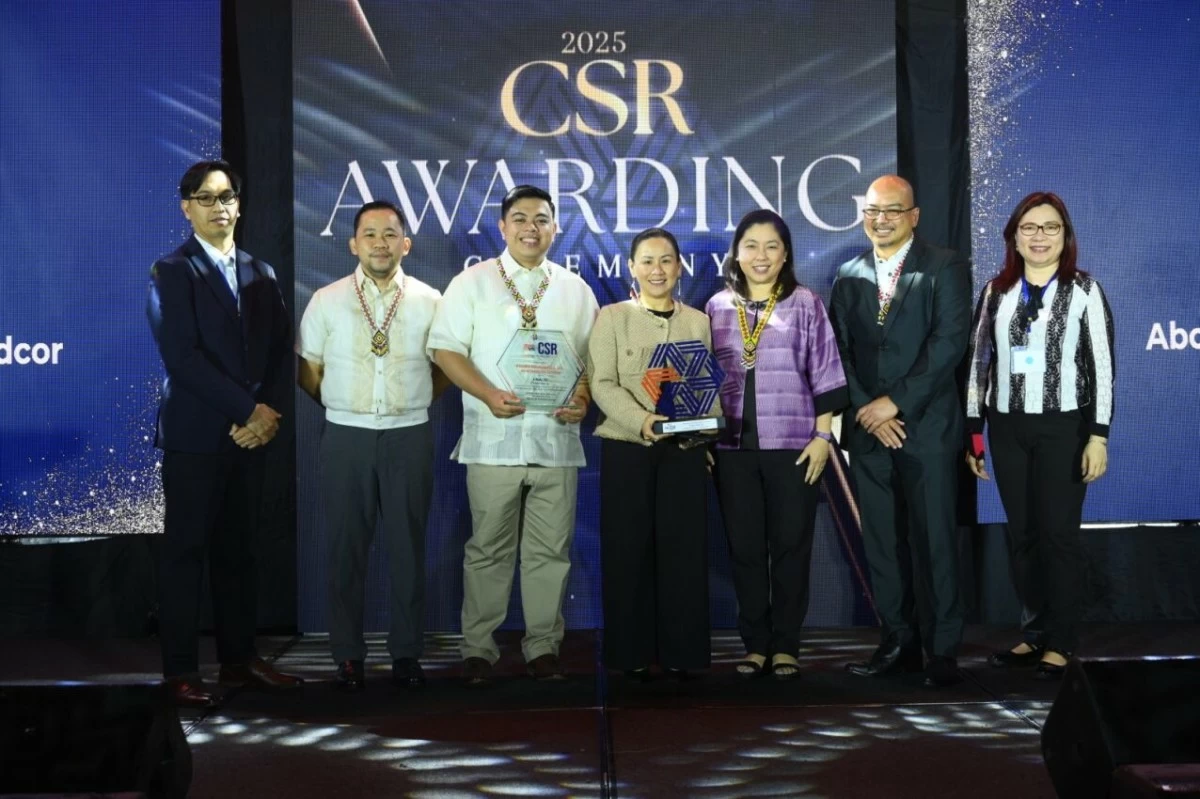
Aboitiz Renewables and the Aboitiz Foundation won the “Outstanding CSR Project for Arts and Culture” at the CSR Guilds Awards 2025 for “Project Tahi ‘Ta!”. Organized by the League of Corporate Foundations, it honors programs that create lasting, meaningful impact in communities across the country.