








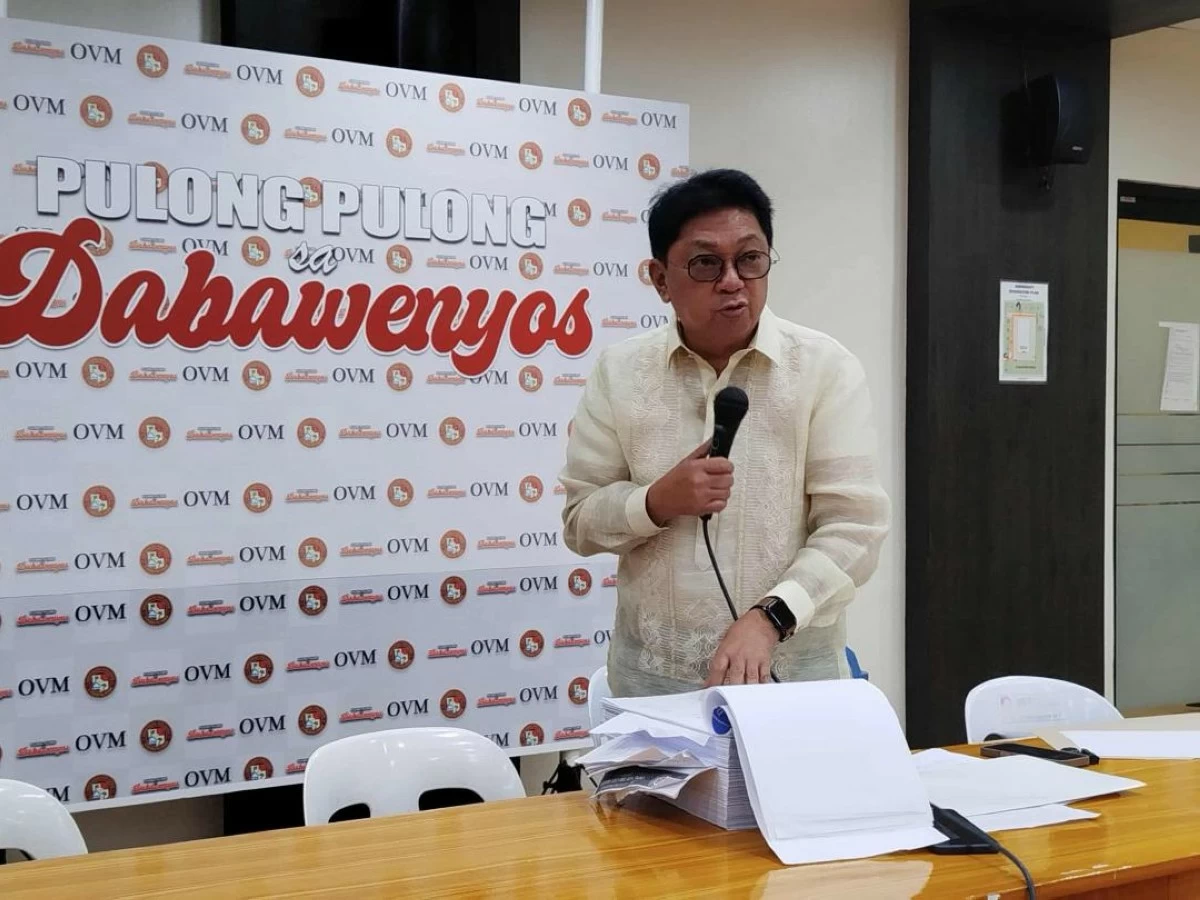
DAYANGHIRANG discusses the proposed P15.8-billion Davao City budget for 2026 during a media forum on Tuesday. (Photo via Ivy Tejano)
DAVAO CITY – The Davao City Council Committee on Finance, Ways and Means, and Appropriations has completed the review of the proposed P15.8-billion city budget for 2026, an increase of about P1.8 billion from last year’s P14-billion allocation.
Speaking before the Pulong-Pulong sa Dabawenyos media forum on Tuesday, Oct. 28, at the Sangguniang Panlungsod, committee chairperson Councilor Danilo Dayanghirang confirmed that the 2026 budget is P15,846,064,435.
Dayanghirang said the budget has been certified by the City Treasurer’s Office as available and collectible for the coming fiscal year.
Of the total amount, the councilor said, around 18 percent will go to general fund expenditures such as personnel services, while 20 percent will be allocated to the city’s development fund.
Under the 20 percent development fund, Dayanghirang said, the city must complete all projects within three years. “Failure to do so will result in the return of unspent funds to the general fund.”
He said the budget also supports general services, scholarships, health programs, personnel regularization, and financial assistance to national government offices operating in the city, such as regional and municipal trial courts.
“All departments have already presented their budget proposals during the committee hearing. We are now finalizing the committee report, which will move to the second reading soon,” Dayanghirang said.
He added that he will schedule two separate two-day budget deliberations before the final approval.
Dayanghirang emphasized the need to approve the 2026 budget before Dec. 31 to avoid reverting to the 2024 budget.
“The budget should be prospective. It must be approved this year so it can be implemented next year,” the councilor said.
He added that any unspent funds from the 2024 budget, once audited, will form part of Supplemental Budget No. 2 to continue projects not yet completed within the year.
Dayanghirang attributed the city’s budget increase to the Supreme Court Mandanas ruling, which expanded the share of local government units from national tax revenues.
“In the past, several devolved functions had no corresponding funding. The Mandanas ruling now ensures LGUs receive their full share,” he said.
Dayanghirang noted that Davao City’s economy remains strong, with a growth rate of about 7.5 percent, higher than the national average.
“The economy of the city is very vibrant. There are massive developments and increasing demand for services, especially in social programs,” Dayanghirang said.
He said one major program under review is the Davao Public Transport Modernization Project, or Davao Bus System, a joint initiative between the national and local governments.
Dayanghirang said the city closely monitors the implementation, particularly the national government’s funding counterpart, while preparing to open a new trust fund account to manage its contribution to the project.
“We are ready on our part. We are now looking at the national government’s commitment,” the councilor said.
Dayanghirang assured that the city remains financially stable and capable of sustaining its growth. “Davao City is stable. Our economy continues to grow, and we are managing our resources prudently,” he said.