ADVERTISEMENT

Holiday travel boom reflects resilience and vitality of Chinese economy

Published Oct 28, 2025 04:57 pm
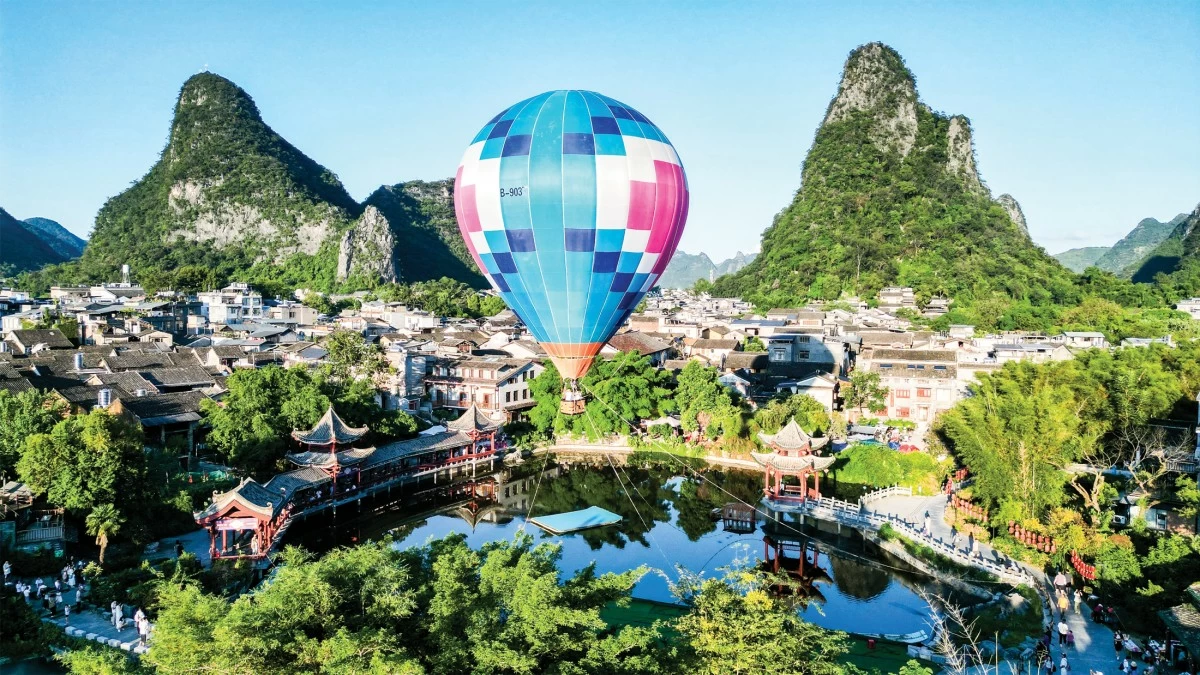
A hot air balloon carrying travelers ascends over a scenic area in Hezhou, south China’s Guangxi Zhuang autonomous region, Oct. 4, 2025. (Photo/Huang Xuhu)
By HE YIN
China’s recent National Day and Mid-Autumn Festival holiday underscored the strength of its consumer economy, with a surge in tourism and spending, signaling robust domestic demand and high-quality economic development.
According to China’s Ministry of Transport, cross-regional passenger trips reached approximately 2.43 billion nationwide, averaging 304 million trips per day, rising 6.3 percent year-on-year and hitting a record high. From packed highways and high-speed trains to bustling airports and cruise terminals, the sheer scale of mobility highlighted China’s dynamic infrastructure and population movement.
Outbound travel also flourished, with countries such as Singapore, Thailand, Malaysia, Kenya, South Africa, and Serbia introducing measures to attract Chinese tourists. This trend not only facilitated cultural exchange but also contributed to global economic recovery.
As Secretary-General of UN Tourism Zurab Pololikashvili noted, China remains a major source of outbound tourists and a key travel destination, making significant contributions to global tourism by driving both outbound and domestic travel.
Domestically, consumer spending remained resilient, with heightened activity across urban commercial hubs, rural guesthouses, and agritourism destinations. The holiday travel surge served as a clear indicator of rising consumer confidence, reflecting the sustained release of domestic consumption potential and injecting momentum into sectors such as tourism, accommodation, and catering.
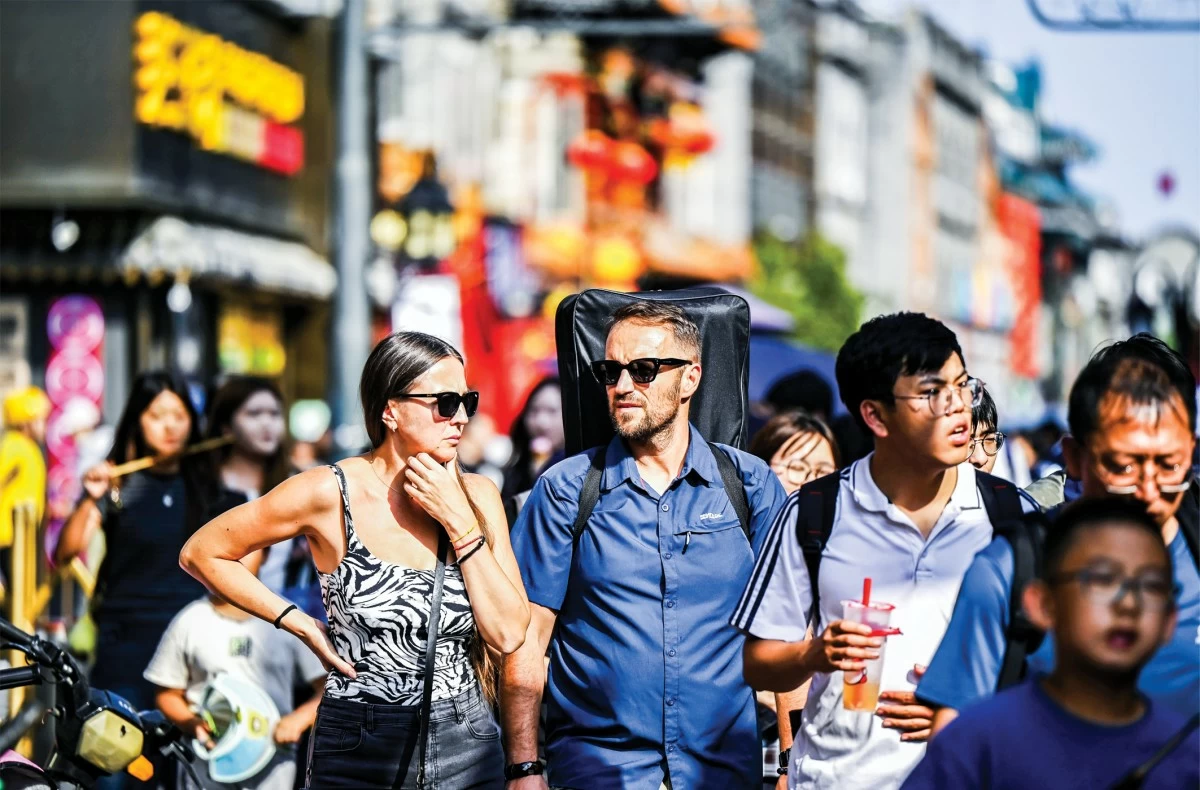
Chinese and international tourists explore Dashilan commercial zone of Qianmen Street in Beijing, Oct. 2, 2025. (Photo/Zhu Zhenqiang)
According to data from China’s Ministry of Commerce, during the holiday, key retail and catering enterprises reported a year-on-year sales increase of 2.7 percent during the holiday, underscoring the vitality of China’s consumer market.
As Bloomberg observed, China’s pivot toward service-led consumption coincides with rising demand for experiences, wellness, and value-for-money, positioning sectors such as aviation, tourism, duty-free shopping, and entertainment to benefit from this evolving trend.
Evolving consumer preferences reflected a growing appetite for diverse and immersive travel experiences. Beyond traditional sightseeing, travelers increasingly gravitate toward county tours, rural retreats, and tech-enhanced cultural exhibitions, signaling a shift in China’s tourism landscape toward personalization and innovation.
In Yangcun township of Longnan, east China’s Jiangxi province, an energetic “village basketball tournament” attracted large crowds, while in many parts of Jiangsu province in east China, sports events such as the “Jiangsu City Football League” sparked a surge in sports tourism. These activities underscore the rise of live-event-driven travel as a new consumption trend.
As observed by Brazilian news outlet Forum, the growing trend of Chinese people traveling to watch or participate in sports events has become a new driver of consumption and local development, turning sports into an economic engine.
The holiday travel boom underscores a growing sense of mutual connection. During this holiday, enthusiasm for “China travel” continued to soar, with data from travel platform Qunar indicating a more than 40 percent year-on-year increase in foreign travelers flying within the country on the first day of the holiday, spanning 70 cities nationwide. Increasingly, international visitors are engaging more deeply with Chinese culture - learning traditional embroidery in Suzhou, donning Han-style attire to experience the grandeur of the Tang dynasty in Xi’an, or experiencing the cyberpunk skyline of Chongqing. These moments of cultural immersion, where the ancient and the modern converge, offer a compelling portrait of contemporary China.
The vibrancy of the holiday economy reflects the strong momentum of China’s development. With resilient consumption, a commitment to openness, and a focus on innovation, China remains on course for high-quality growth, contributing stability and renewed vitality to the global economy.

Related Tags

WORLDNEWS
ADVERTISEMENT
.most-popular .layout-ratio{ padding-bottom: 79.13%; } @media (min-width: 768px) and (max-width: 1024px) { .widget-title { font-size: 15px !important; } }

{{ articles_filter_1561_widget.title }}

.most-popular .layout-ratio{ padding-bottom: 79.13%; } @media (min-width: 768px) and (max-width: 1024px) { .widget-title { font-size: 15px !important; } }

{{ articles_filter_1562_widget.title }}

.most-popular .layout-ratio{ padding-bottom: 79.13%; } @media (min-width: 768px) and (max-width: 1024px) { .widget-title { font-size: 15px !important; } }

{{ articles_filter_1563_widget.title }}

{{ articles_filter_1564_widget.title }}

.mb-article-details { position: relative; } .mb-article-details .article-body-preview, .mb-article-details .article-body-summary{ font-size: 17px; line-height: 30px; font-family: "Libre Caslon Text", serif; color: #000; } .mb-article-details .article-body-preview iframe , .mb-article-details .article-body-summary iframe{ width: 100%; margin: auto; } .read-more-background { background: linear-gradient(180deg, color(display-p3 1.000 1.000 1.000 / 0) 13.75%, color(display-p3 1.000 1.000 1.000 / 0.8) 30.79%, color(display-p3 1.000 1.000 1.000) 72.5%); position: absolute; height: 200px; width: 100%; bottom: 0; display: flex; justify-content: center; align-items: center; padding: 0; } .read-more-background a{ color: #000; } .read-more-btn { padding: 17px 45px; font-family: Inter; font-weight: 700; font-size: 18px; line-height: 16px; text-align: center; vertical-align: middle; border: 1px solid black; background-color: white; } .hidden { display: none; }
function initializeAllSwipers() { // Get all hidden inputs with cms_article_id document.querySelectorAll('[id^="cms_article_id_"]').forEach(function (input) { const cmsArticleId = input.value; const articleSelector = '#article-' + cmsArticleId + ' .body_images'; const swiperElement = document.querySelector(articleSelector); if (swiperElement && !swiperElement.classList.contains('swiper-initialized')) { new Swiper(articleSelector, { loop: true, pagination: false, navigation: { nextEl: '#article-' + cmsArticleId + ' .swiper-button-next', prevEl: '#article-' + cmsArticleId + ' .swiper-button-prev', }, }); } }); } setTimeout(initializeAllSwipers, 3000); const intersectionObserver = new IntersectionObserver( (entries) => { entries.forEach((entry) => { if (entry.isIntersecting) { const newUrl = entry.target.getAttribute("data-url"); if (newUrl) { history.pushState(null, null, newUrl); let article = entry.target; // Extract metadata const author = article.querySelector('.author-section').textContent.replace('By', '').trim(); const section = article.querySelector('.section-info ').textContent.replace(' ', ' '); const title = article.querySelector('.article-title h1').textContent; // Parse URL for Chartbeat path format const parsedUrl = new URL(newUrl, window.location.origin); const cleanUrl = parsedUrl.host + parsedUrl.pathname; // Update Chartbeat configuration if (typeof window._sf_async_config !== 'undefined') { window._sf_async_config.path = cleanUrl; window._sf_async_config.sections = section; window._sf_async_config.authors = author; } // Track virtual page view with Chartbeat if (typeof pSUPERFLY !== 'undefined' && typeof pSUPERFLY.virtualPage === 'function') { try { pSUPERFLY.virtualPage({ path: cleanUrl, title: title, sections: section, authors: author }); } catch (error) { console.error('ping error', error); } } // Optional: Update document title if (title && title !== document.title) { document.title = title; } } } }); }, { threshold: 0.1 } ); function showArticleBody(button) { const article = button.closest("article"); const summary = article.querySelector(".article-body-summary"); const body = article.querySelector(".article-body-preview"); const readMoreSection = article.querySelector(".read-more-background"); // Hide summary and read-more section summary.style.display = "none"; readMoreSection.style.display = "none"; // Show the full article body body.classList.remove("hidden"); } document.addEventListener("DOMContentLoaded", () => { let loadCount = 0; // Track how many times articles are loaded const offset = [1, 2, 3, 4, 5, 6, 7, 8, 9, 10]; // Offset values const currentUrl = window.location.pathname.substring(1); let isLoading = false; // Prevent multiple calls if (!currentUrl) { console.log("Current URL is invalid."); return; } const sentinel = document.getElementById("load-more-sentinel"); if (!sentinel) { console.log("Sentinel element not found."); return; } function isSentinelVisible() { const rect = sentinel.getBoundingClientRect(); return ( rect.top < window.innerHeight && rect.bottom >= 0 ); } function onScroll() { if (isLoading) return; if (isSentinelVisible()) { if (loadCount >= offset.length) { console.log("Maximum load attempts reached."); window.removeEventListener("scroll", onScroll); return; } isLoading = true; const currentOffset = offset[loadCount]; window.loadMoreItems().then(() => { let article = document.querySelector('#widget_1690 > div:nth-last-of-type(2) article'); intersectionObserver.observe(article) loadCount++; }).catch(error => { console.error("Error loading more items:", error); }).finally(() => { isLoading = false; }); } } window.addEventListener("scroll", onScroll); });

Sign up by email to receive news.