






Manila Bulletin
 Philippines
National
DepEd pushes long-term education reforms under Angara's leadership in EDCOM II review
Philippines
National
DepEd pushes long-term education reforms under Angara's leadership in EDCOM II review
Philippines
National
DepEd pushes long-term education reforms under Angara's leadership in EDCOM II review
DepEd pushes long-term education reforms under Angara's leadership in EDCOM II review
Published Oct 28, 2025 04:51 pm


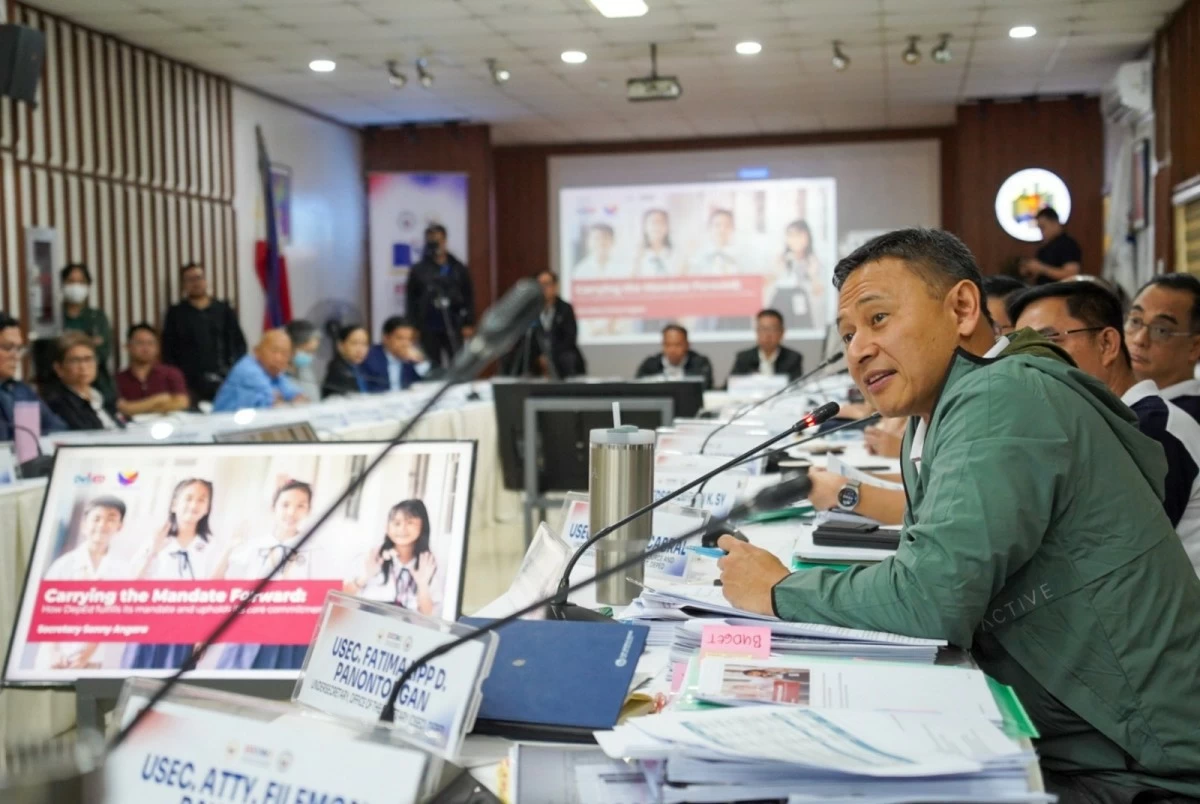
DepEd Secretary Sonny Angara leads the department’s push for long-term reforms during the EDCOM II hearing, highlighting new legislative priorities and the 10-year Quality Basic Education Development Plan to strengthen Philippine education governance. (DepEd photo)
Department of Education (DepEd) Secretary Sonny Angara on Tuesday, October 28, emphasized the need for long-term and systemic reforms in the country’s education sector as the agency appeared before the Second Congressional Commission on Education (EDCOM II) during a public hearing held at the Nemesio I. Yabut Integrated School in Taguig City.
The session centered on the review of the DepEd Charter under Republic Act No. 9155, which outlines the department’s governance framework and mandates.
The EDCOM II review aims to modernize existing education laws and align them with present-day challenges in policy implementation, resource management, and inter-agency coordination.
“Kailangan natin ng mga pangmatagalang solusyon para ayusin ang sistema ng edukasyon sa bansa (We need long-term solutions to fix the country’s education system),” Angara said. “Our reforms aim to make DepEd more focused, better resourced, and strategically aligned,” he added.
Legislative priorities for education reform
In his presentation, Angara detailed DepEd’s priority legislative measures designed to address long-standing gaps in implementation, financing, and teacher deployment. These include the expansion of the Special Education Fund (SEF) to enhance local education resources; expedited issuance of school site titles to accelerate infrastructure development; new Adopt-A-School provisions to strengthen private sector partnerships; the Teachers in Every Barrio Bill to ensure equitable teacher distribution across the country; and amendments to the Teachers Professionalization Act to modernize human resource systems and training pathways.
DepEd is also seeking amendments to the Masustansyang Pagkain para sa Batang Pilipino Act and the Expanded Government Assistance to Students and Teachers in Private Education (E-GASTPE) Law, which aim to expand feeding programs, transportation support, and learner subsidies to improve access and equity.
A 10-year roadmap for quality basic education
These initiatives form part of DepEd’s Quality Basic Education Development Plan (QBEDP) 2025–2035, a 10-year roadmap that envisions a high-performing, learner-centered, and resilient education system.
The plan seeks to address long-term challenges such as learning poverty, infrastructure backlogs, and teacher shortages.
Challenges: Unfunded mandates and coordination burdens
DepEd’s report to EDCOM II revealed that 49 education-related laws have expanded the department’s responsibilities since 1982, many with specific implementation mandates but insufficient funding.
This has contributed to resource constraints and systemic inefficiencies that hinder effective service delivery.
Moreover, the department currently sits in 261 inter-agency councils, which Angara said can stretch DepEd’s focus and resources across overlapping mandates.
“DepEd’s mandate will keep evolving,” Angara said. “But if we strengthen our foundations now—funding, governance, and inter-agency alignment—we can finally make the system work for every Filipino learner.”
EDCOM II review: Toward a stronger education governance framework
The EDCOM II hearings are part of a broader effort to reassess the country’s education governance framework, ensuring that institutions like DepEd are structurally and financially capable of fulfilling their mandates.
The commission’s findings are expected to inform proposed amendments to the Education Act of 1982, the Governance of Basic Education Act of 2001 (RA 9155), and other major education laws.
As Angara leads DepEd through this reform phase, the department reaffirms its commitment to build a stronger, more accountable, and learner-focused education system—one capable of meeting the needs of Filipino students in the next decade.