






Manila Bulletin
 Business
Trade & Industry
Corruption, US tariff uncertainty stall electronics investment
Business
Trade & Industry
Corruption, US tariff uncertainty stall electronics investment
Business
Trade & Industry
Corruption, US tariff uncertainty stall electronics investment
Corruption, US tariff uncertainty stall electronics investment
Published Oct 28, 2025 04:18 pm


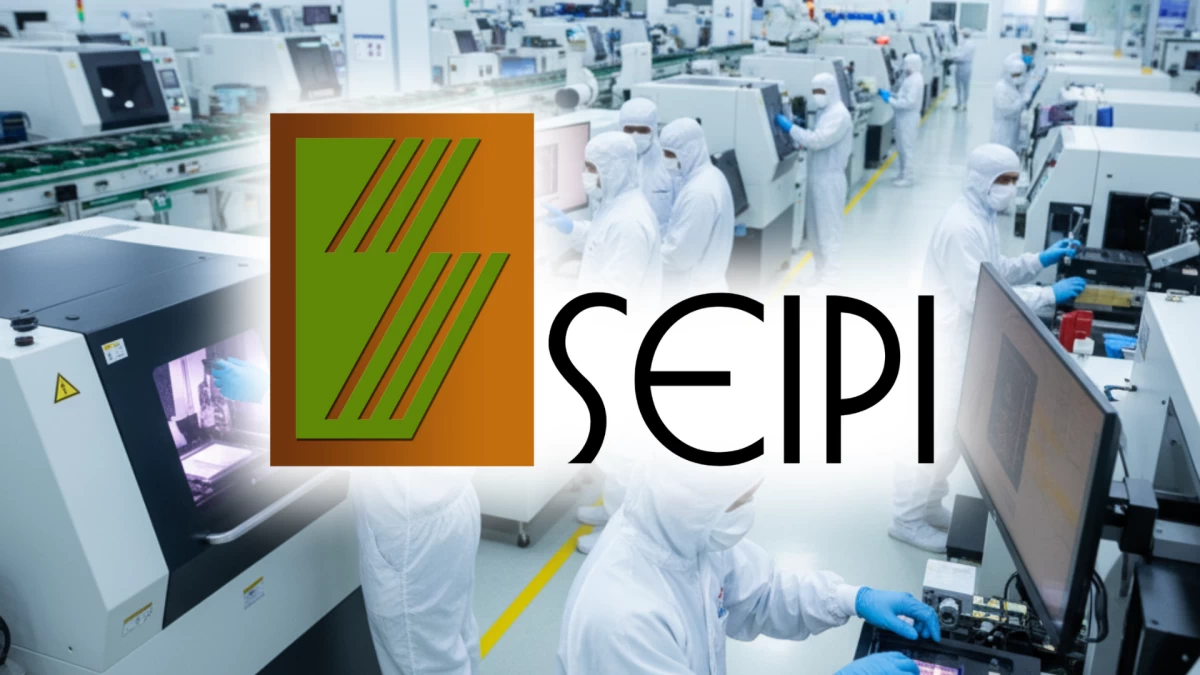
The ongoing corruption scandal in flood control projects and uncertainties in tariffs by the United States (US) are making investors hesitant to pour capital into the country’s electronics industry, according to a prominent industry group.
The Semiconductor and Electronics Industries in the Philippines Foundation Inc. (SEIPI), headed by its president, Danilo Lachica, said current investments in the industry are far short of what could have been achieved if not for these concerns.
Based on the latest data from the Philippine Economic Zone Authority (PEZA), 48 approved projects in semiconductor manufacturing services (SMS) and electronics manufacturing services (EMS) have been committed to be built in the country this year.
These projects, according to PEZA, are equivalent to ₱ 23.3 billion.
While these numbers are a positive development for the industry, Lachica said these investments “could have been bigger” if not for present uncertainties.
He noted that the current corruption scandal, for instance, has made one prospective investor hold off on its plans to expand its manufacturing business in the country.
“How are you going to get past this international concern about the Philippines in terms of protecting investments?” asked Lachica.
Investors, he said, were primarily concerned after South Korea ordered a pause to the implementation of a ₱28-billion loan that would have built hundreds of bridges in the country, reportedly due to corruption concerns about the project.
In subsequent statements, the Philippine government clarified that no such loan exists, noting that only exploratory talks had been held with South Korea regarding the project.
Still, Lachica said this has set a “precedent” among investors, making it appear that the business environment is in limbo due to corruption scandals.
On top of this, he said the Philippines’ inability to conclude a reciprocal trade agreement with the US is forcing investors to delay their plans.
The electronics industry has been pushing the government to negotiate a deal that would effectively shield the country’s top export from a tariff long threatened by US President Donald Trump.
Trump has been planning to impose tariffs—as high as 300 percent—on semiconductor imports, with exceptions for companies that manufacture in the US or have committed to doing so.
Should Trump proceed with this plan while no deal is in place, Lachica said there is a strong chance that investors would just inject their capital into countries with lower tariffs.
“That's why we're working with government to encourage them or request them to continue these negotiations,” he said.
Beyond investments, the unpredictable manner of the tariffs has prompted SEIPI to retain its projection of flat growth from last year’s electronic exports valued at $42.6 billion.
Nonetheless, Lachica said he still sees a chance for single-digit growth, given the strong performance of electronic exports this year.
In August, electronic exports amounted to $7.06 billion, a 4.6-percent jump from $6.75 billion in the same month last year, based on data from the Philippine Statistics Authority (PSA).
Of this, semiconductor exports accounted for 54.8 percent of the total.
From January to August, the total exports rose by 13 percent to $55.7 billion from $49.45 billion in the same period last year.
“If you look at the PSA numbers, it looks like we might look forward to that single-digit growth,” said Lachica, who noted that this could go from one percent to as high as nine percent.
“[But] even though I've seen that positive movement. I was hesitant to declare [that] we're going to grow because who knows what's going to happen with the US tariff,” he added.