







Moral renewal
Published Oct 27, 2025 12:05 am
|
Updated Oct 26, 2025 03:17 pm


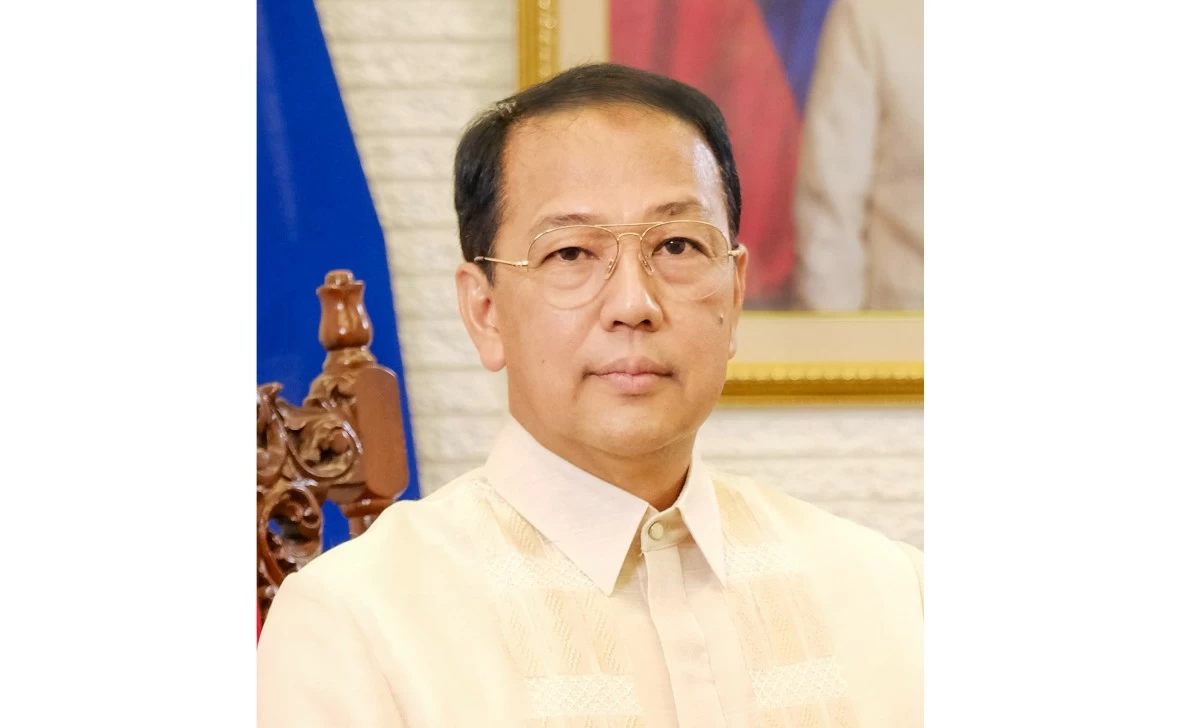
PEACE BY PEACE
I have worn a soldier’s uniform and have commanded men in battle. But the greatest lesson I’ve learned is that the most difficult battles are not won with bullets, but with humility, understanding, and dialogue. The truest battlefield lies within. Recently, I was reminded of this when I was invited and spoke before the Oblates of Mary Immaculate (OMI) in Kidapawan City, joining them as a fellow traveler on the long road to peace.
Their assembly’s theme was both timely and challenging: “Reimagining the Oblate Mission Amid Systemic Corruption.” It struck at the heart of the greatest obstacle to our nation’s progress and the most insidious threat to the peace we work so hard to build. Systemic corruption threatens to unravel everything. It diverts resources from our schools and hospitals, denies justice to the vulnerable, and erodes the very foundation of public trust. When people see that the systems meant to serve them are instead enriching a few, cynicism takes root, and the seeds of conflict are sown once more.
Systemic corruption is, at its heart, a failure of moral formation. It is a crisis of character that has permeated our institutions. As I shared with the Oblates, when a graduate of one of our fine Catholic institutions enters public service and falls into the trap of graft, we must ask: where did our formation fall short?
This is a time for deep national reflection. True reform cannot be imposed from the top down; it must be built from the inside out. It is a process of reforming systems that must start with oneself, then radiate outwards to one's family, organization, and ultimately, society at large. This personal transformation is the only antidote to corruption.
To achieve this, we must deepen the virtue that resists corruption. This is a journey that begins with sparking moral awareness or the ability to see right from wrong. From there, we must cultivate moral reasoning to navigate complex ethical challenges. This must be followed by mustering moral courage, the strength to act on our principles even when it is difficult. Only then can we truly embody moral virtue, where integrity becomes our first nature, always doing the right thing to do. This is the formation that matters. Forging leaders whose character is genuine, not merely a polished public image.
This difficult work is not for the government alone. It requires a synergy between the state and its people and the spirit between policy and moral principles.
I was deeply moved by the response of Fr. Gerry Gamaliel delos Reyes, the Provincial Superior of the OMI, who affirmed this shared mission.
He rightly noted that “the crisis we face as a nation is not only political or economic, but also moral and spiritual.” Fr. Gerry’s words are a powerful call to action. He said, “Your talk challenges us to make moral recovery not just a national slogan, but a daily commitment—to form consciences, to model integrity, and to help rebuild trust in our communities.”
This is precisely the partnership we need. Faith-based institutions are pillars in shaping the nation’s conscience, guiding individuals on that journey from awareness to virtue. This partnership also invites us to focus our shared mission where it is needed most: to work for and with the poorest of the poor, who bear the heaviest burden of corruption. This gives our moral renewal a profound and urgent purpose.
Peace is the shared work of the altar and the public square. Let us fight the battle against corruption with unwavering moral courage, starting from within ourselves. Let us rebuild our nation on the bedrock of integrity and regain the trust of our people, especially the most vulnerable.
It is the greatest legacy we can leave for our children.
(Secretary Carlito G. Galvez, Jr., is the presidential adviser on peace, reconciliation and unity.)