







How can we make antibiotics more affordable?
Advocating for the wellbeing of our patients
Published Oct 27, 2025 08:04 am


At A Glance
- I spoke about how an infection caused by highly resistant bacteria might as well be a death sentence if a patient cannot afford the correct antibiotics.
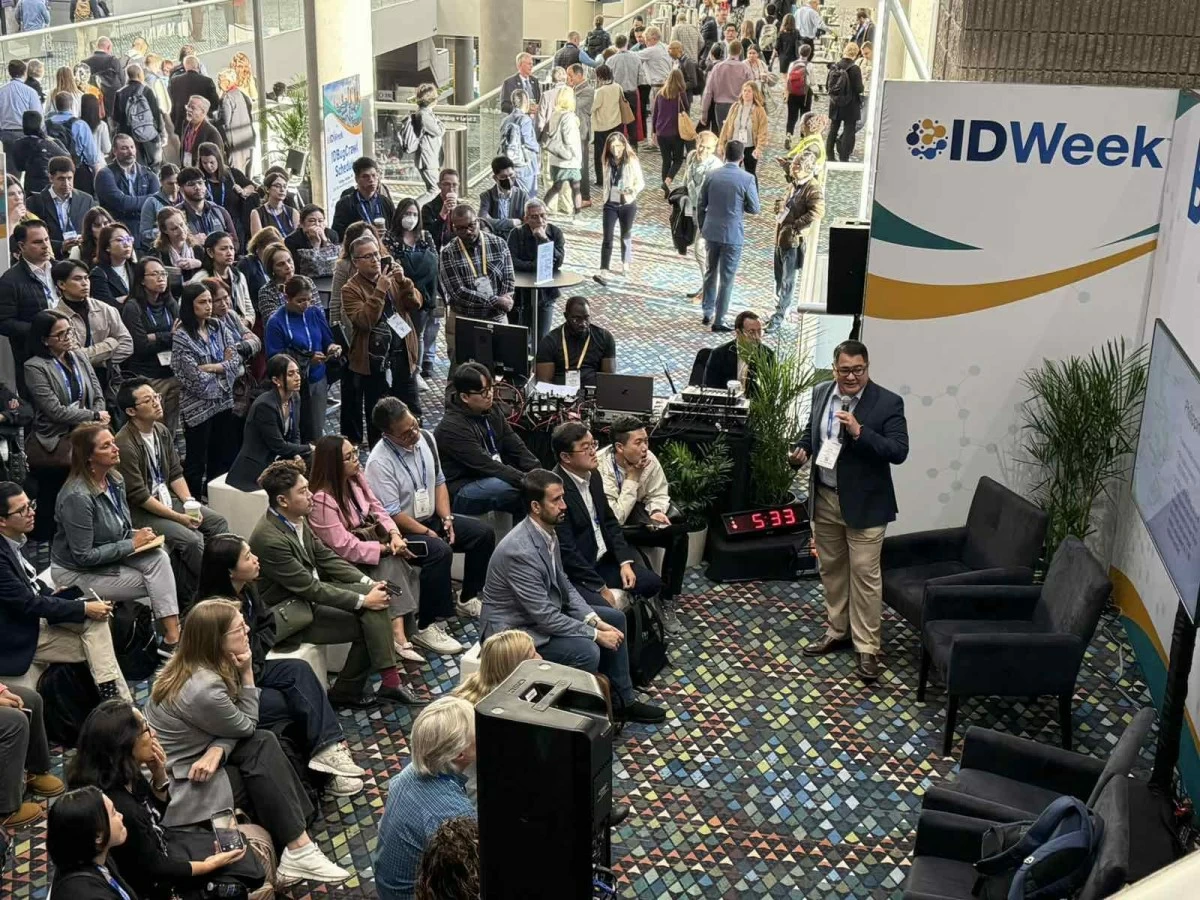
Every year, thousands of infectious disease doctors from around the world troop to IDWeek, the premier clinical infectious disease conference that is usually held in the US. I go to IDWeek for several reasons: to listen to the state-of-the-art lectures; to see old friends and network with potential collaborators; and to present our work. This year’s IDWeek was held in the city of Atlanta in the state of Georgia. Georgia is known as the Peach State and is in the southeast region of the US. Atlanta is the capital city of Georgia and is a major economic and transport hub. Atlanta is the birthplace of Martin Luther King Jr. and played a central role in the civil rights movement, leading to desegregation and ensuring voting rights for non-white minorities. It is home to the world’s busiest airport, and it is where the Coca-Cola company was founded.
This year, my laboratory at the Institute of Molecular Biology and Biotechnology had two posters accepted for presentation, and I had a talk on the BugHub World Stage. Presenting posters in international conferences is one of the best ways to disseminate scientific knowledge to our global colleagues, and our lab has been presenting annually at IDWeek (and its previous iteration, the Infectious Diseases Society of America (IDSA) Annual Conference) since 2012, except for the pandemic years. Our work on a portable HIV drug resistance test won the Innovation of the Year Award in 2023 in Boston, beating many US-based programs and technology incubators.

HEALTH ADVOCATES Grace Hernaez, RMT, and the author at their poster in IDWeek.
Our two posters were about the cost-effectiveness of using molecular diagnostics to make decisions about treating highly resistant bacteria, and a study looking at the molecular epidemiology of hepatitis C in the Philippines. I presented the first topic, where we found that a molecular test for carbapenem resistance allowed doctors to tailor the correct drug regimen for a patient, saving money in the long run despite the added cost of the test. The latter topic was presented by our medical technologist, Grace Hernaez, who works in our central laboratory at the National Institutes of Health. Two other posters from our institute were presented by our research faculty, Dr. Christian Franciso, along with his research associate, Stessi Marie Geganzo, dealing with the molecular mechanisms of resistance of the bacteria Klebsiella species.
The BugHub World Stage is a platform for talks that attendees propose to include in the program. It first started in 2022, and I’ve been lucky enough to present three times, including this year. The BugHub World Stage invites presenters to talk about aspects of infectious disease beyond the basic and clinical science and features speakers talking about advocacy work and useful information about laboratory and clinical practice.
My talk at BugHub this year dealt with equitable access to antibiotics, especially for very hard-to-treat infections. The title of my talk was “A Carbapenem-Resistant Infection in Resource-Limited Countries is a Death Sentence for the Poor: A Call to Action for More Affordable Antibiotics.” I spoke about how an infection caused by highly resistant bacteria might as well be a death sentence if a patient cannot afford the correct antibiotics. I presented the story of Juan, a made-up patient based on real patients we see at the Philippine General Hospital. Juan ended up with a carbapenem (one of the last-line antibiotics) resistant infection, which was not in the formulary of the hospital. The cost of a seven-day course of the preferred antibiotic combination for this resistant infection, ceftazidime-avibactam plus aztreonam, is nearly the same as the per capita income in the Philippines, i.e., what an average person in the Philippines earns in a year. Since these antibiotics are currently not part of the national formulary, they will not be routinely covered by the government and will need to be paid for out of pocket.
Given this scenario, there is no way someone like Juan can afford to be adequately treated for his infection, and his risk of dying without proper antibiotics is more than 50 percent. I then spoke about how we can advocate for our patients in different ways.
I cited the experience in making HIV drugs more affordable. Back in 2007, Brazil could not come to an agreement with a drug company on an acceptable price for the antiretroviral drug efavirenz. Faced with the deaths of thousands of its citizens with HIV, Brazil invoked its national sovereignty and broke the patent for the drug. They were promptly taken to court by the drug manufacturer, but the ensuing public relations fallout was tremendous. Imagine denying indigent patients a life-saving drug because you won’t be making enough money as a reason to sue a sovereign nation that was just trying to save the lives of its people. This eventually compelled the drug manufacturer to work out a settlement, and other makers of antiretroviral drugs followed suit. For instance, our current antiretroviral drug regimen of dolutegravir, lamivudine, and tenofovir typically costs $700/month in richer countries. Because of the activism of HIV advocates, the current cost of this regimen in the Philippines and other low and lower-middle-income countries is about $75 per year.
The HIV experience is an example of how powerful advocacy programs can be when it comes to access to life-saving drugs. I ended my talk by giving a framework of the drug ecosystem where doctors and patient advocates can exert their influence and persuade governments and drug companies to work together to save lives. The talk was very well received, and the audience was at overflow capacity. I believe this kind of work very much resonates with doctors, and I saw more than a few in the audience nodding their heads as I pointed out the inequities and proposed the solutions.
As I write this in the airport on my way home, I am very grateful for all the things I learned from IDWeek. I also reconnected with colleagues from all over the world and discussed potential collaborations with them. Presenting our work in international fora is always a point of pride because it proves that the scientific work we do is on par with research being done in richer and more scientifically advanced countries. Finally, the excellent reception of my advocacy talk highlights the global character of infectious disease physicians who care deeply for their patients and want them to have access to effective and affordable antibiotics.