ADVERTISEMENT

Suspects arrested over the theft of crown jewels from Paris' Louvre museum

Published Oct 26, 2025 09:57 pm
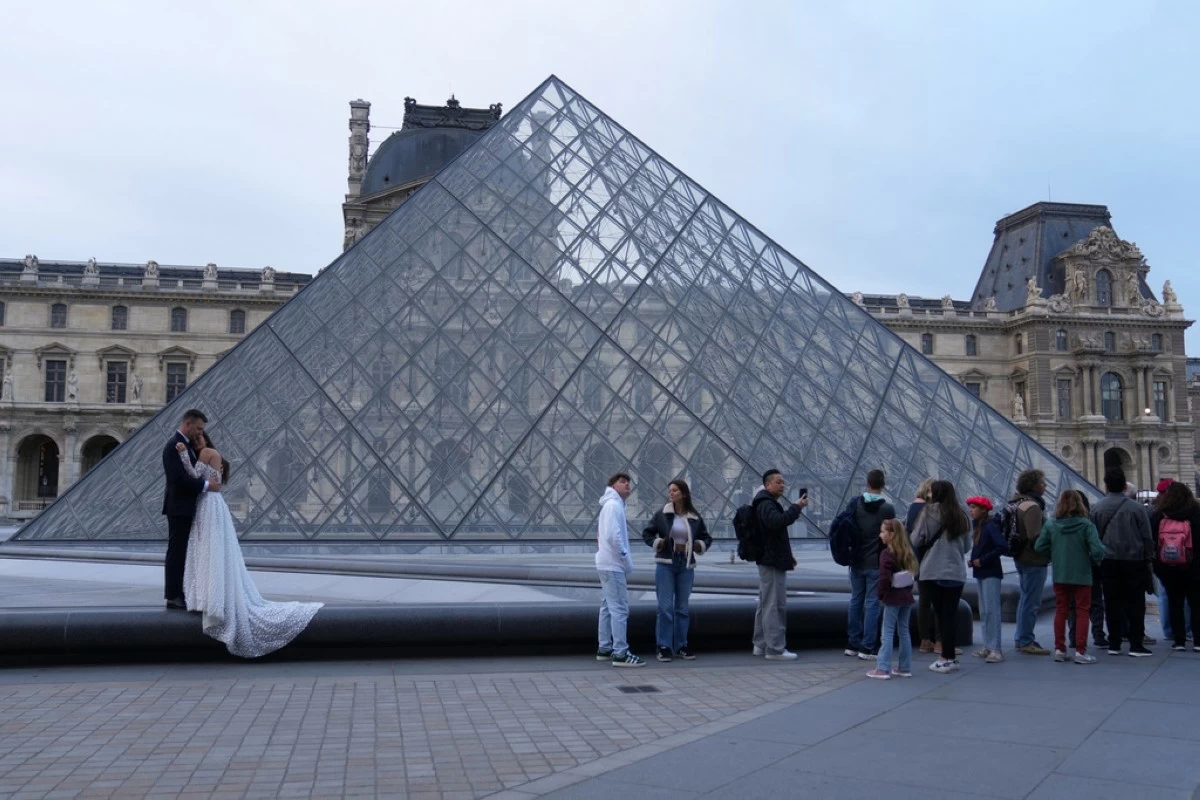
A wedding couple hugs as visitors queue to enter the Louvre museum three days after historic jewels were stolen in a daring daylight heist, Wednesday, Oct. 22, 2025 in Paris. (AP Photo/Thibault Camus)
PARIS — Suspects have been arrested in connection with the theft of crown jewels from Paris’ Louvre museum, the Paris prosecutor said on Sunday, a week after the heist that stunned the world.
The prosecutor said that investigators made the arrests on Saturday evening, adding that one of the men taken into custody was preparing to leave the country from Paris Charles de Gaulle Airport.
French media BFM TV and Le Parisien newspaper earlier reported that two suspects had been arrested and taken into custody. Paris prosecutor Laure Beccuau did not confirm the number of arrests and did not say whether any jewels had been recovered.
Thieves took less than eight minutes last Sunday morning to steal jewels valued at 88 million euros ($102 million) from the world’s most-visited museum. French officials described how the intruders used a basket lift to scale the Louvre’s façade, forced open a window, smashed display cases and fled. The museum’s director called the incident a “terrible failure.”
Beccuau said investigators from a special police unit in charge of armed robberies, serious burglaries and art thefts made the arrests. In her statement, she rued the premature leak of information, saying it could hinder the work of over 100 investigators “mobilized to recover the stolen jewels and apprehend all of the perpetrators.” Beccuau said further details will be unveiled after the suspects’ custody period ends.
French Interior Minister Laurent Nunez praised “the investigators who have worked tirelessly, just as I asked them to, and who have always had my full confidence.”
The Louvre reopened earlier this week after one of the highest-profile museum thefts of the century stunned the world with its audacity and scale.
The thieves slipped in and out, making off with some of France’s crown jewels — a cultural wound that some compared to the burning of Notre Dame Cathedral in 2019.
The thieves escaped with a total of eight objects, including a sapphire diadem, necklace and single earring from a set linked to 19th-century queens Marie-Amélie and Hortense.
They also took an emerald necklace and earrings tied to Empress Marie-Louise, Napoleon Bonaparte’s second wife, as well as a reliquary brooch. Empress Eugénie’s diamond diadem and her large corsage-bow brooch — an imperial ensemble of rare craftsmanship — were also part of the loot.
One piece — Eugénie’s emerald-set imperial crown with more than 1,300 diamonds — was later found outside the museum, damaged but repairable.
News of the arrests was met with relief by Louvre visitors and passersby on Sunday.
“It’s important for our heritage. A week later, it does feel a bit late, we wonder how this could even happen — but it was important that the guys were caught,” said Freddy Jacquemet.
“I think the main thing now is whether they can recover the jewels," added Diana Ramirez. “That’s what really matters.”

Related Tags

World news
ADVERTISEMENT
.most-popular .layout-ratio{ padding-bottom: 79.13%; } @media (min-width: 768px) and (max-width: 1024px) { .widget-title { font-size: 15px !important; } }

{{ articles_filter_1561_widget.title }}

.most-popular .layout-ratio{ padding-bottom: 79.13%; } @media (min-width: 768px) and (max-width: 1024px) { .widget-title { font-size: 15px !important; } }

{{ articles_filter_1562_widget.title }}

.most-popular .layout-ratio{ padding-bottom: 79.13%; } @media (min-width: 768px) and (max-width: 1024px) { .widget-title { font-size: 15px !important; } }

{{ articles_filter_1563_widget.title }}

{{ articles_filter_1564_widget.title }}

.mb-article-details { position: relative; } .mb-article-details .article-body-preview, .mb-article-details .article-body-summary{ font-size: 17px; line-height: 30px; font-family: "Libre Caslon Text", serif; color: #000; } .mb-article-details .article-body-preview iframe , .mb-article-details .article-body-summary iframe{ width: 100%; margin: auto; } .read-more-background { background: linear-gradient(180deg, color(display-p3 1.000 1.000 1.000 / 0) 13.75%, color(display-p3 1.000 1.000 1.000 / 0.8) 30.79%, color(display-p3 1.000 1.000 1.000) 72.5%); position: absolute; height: 200px; width: 100%; bottom: 0; display: flex; justify-content: center; align-items: center; padding: 0; } .read-more-background a{ color: #000; } .read-more-btn { padding: 17px 45px; font-family: Inter; font-weight: 700; font-size: 18px; line-height: 16px; text-align: center; vertical-align: middle; border: 1px solid black; background-color: white; } .hidden { display: none; }
function initializeAllSwipers() { // Get all hidden inputs with cms_article_id document.querySelectorAll('[id^="cms_article_id_"]').forEach(function (input) { const cmsArticleId = input.value; const articleSelector = '#article-' + cmsArticleId + ' .body_images'; const swiperElement = document.querySelector(articleSelector); if (swiperElement && !swiperElement.classList.contains('swiper-initialized')) { new Swiper(articleSelector, { loop: true, pagination: false, navigation: { nextEl: '#article-' + cmsArticleId + ' .swiper-button-next', prevEl: '#article-' + cmsArticleId + ' .swiper-button-prev', }, }); } }); } setTimeout(initializeAllSwipers, 3000); const intersectionObserver = new IntersectionObserver( (entries) => { entries.forEach((entry) => { if (entry.isIntersecting) { const newUrl = entry.target.getAttribute("data-url"); if (newUrl) { history.pushState(null, null, newUrl); let article = entry.target; // Extract metadata const author = article.querySelector('.author-section').textContent.replace('By', '').trim(); const section = article.querySelector('.section-info ').textContent.replace(' ', ' '); const title = article.querySelector('.article-title h1').textContent; // Parse URL for Chartbeat path format const parsedUrl = new URL(newUrl, window.location.origin); const cleanUrl = parsedUrl.host + parsedUrl.pathname; // Update Chartbeat configuration if (typeof window._sf_async_config !== 'undefined') { window._sf_async_config.path = cleanUrl; window._sf_async_config.sections = section; window._sf_async_config.authors = author; } // Track virtual page view with Chartbeat if (typeof pSUPERFLY !== 'undefined' && typeof pSUPERFLY.virtualPage === 'function') { try { pSUPERFLY.virtualPage({ path: cleanUrl, title: title, sections: section, authors: author }); } catch (error) { console.error('ping error', error); } } // Optional: Update document title if (title && title !== document.title) { document.title = title; } } } }); }, { threshold: 0.1 } ); function showArticleBody(button) { const article = button.closest("article"); const summary = article.querySelector(".article-body-summary"); const body = article.querySelector(".article-body-preview"); const readMoreSection = article.querySelector(".read-more-background"); // Hide summary and read-more section summary.style.display = "none"; readMoreSection.style.display = "none"; // Show the full article body body.classList.remove("hidden"); } document.addEventListener("DOMContentLoaded", () => { let loadCount = 0; // Track how many times articles are loaded const offset = [1, 2, 3, 4, 5, 6, 7, 8, 9, 10]; // Offset values const currentUrl = window.location.pathname.substring(1); let isLoading = false; // Prevent multiple calls if (!currentUrl) { console.log("Current URL is invalid."); return; } const sentinel = document.getElementById("load-more-sentinel"); if (!sentinel) { console.log("Sentinel element not found."); return; } function isSentinelVisible() { const rect = sentinel.getBoundingClientRect(); return ( rect.top < window.innerHeight && rect.bottom >= 0 ); } function onScroll() { if (isLoading) return; if (isSentinelVisible()) { if (loadCount >= offset.length) { console.log("Maximum load attempts reached."); window.removeEventListener("scroll", onScroll); return; } isLoading = true; const currentOffset = offset[loadCount]; window.loadMoreItems().then(() => { let article = document.querySelector('#widget_1690 > div:nth-last-of-type(2) article'); intersectionObserver.observe(article) loadCount++; }).catch(error => { console.error("Error loading more items:", error); }).finally(() => { isLoading = false; }); } } window.addEventListener("scroll", onScroll); });

Sign up by email to receive news.