






Manila Bulletin
 Philippines
National
The question is when: Ridon urges Remulla to probe timeline of Martires' reversal on Villanueva case
Philippines
National
The question is when: Ridon urges Remulla to probe timeline of Martires' reversal on Villanueva case
Philippines
National
The question is when: Ridon urges Remulla to probe timeline of Martires' reversal on Villanueva case
The question is when: Ridon urges Remulla to probe timeline of Martires' reversal on Villanueva case
Published Oct 24, 2025 01:30 pm


At A Glance
- Ombudsman Jesus Crispin "Boying" Remulla must examine the exact timeline that led to his predecessor, retired Ombudsman Samuel Martires' July 31, 2019 reversal of the dismissal order against Senator Joel Villanueva.
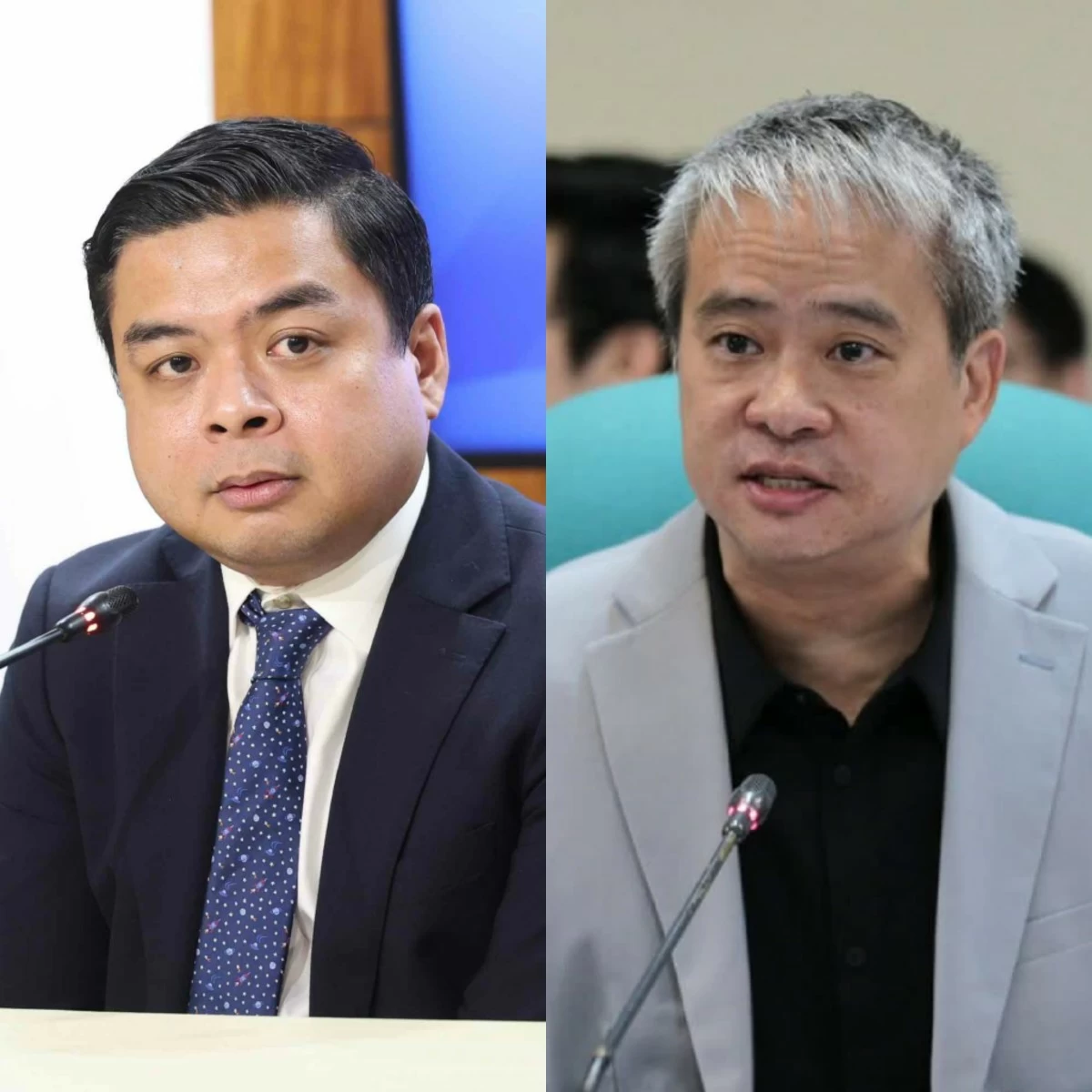
Bicol Saro Party-list Rep. Terry Ridon (left), Senator Joel Villanueva (PPAB, Facebook)
Ombudsman Jesus Crispin "Boying" Remulla must examine the exact timeline that led to his predecessor, retired Ombudsman Samuel Martires’ July 31, 2019 reversal of the dismissal order against Senator Joel Villanueva.
Thus, said Bicol Saro Party-list Rep. Terry Ridon, who reckoned Friday, Oct. 13 that the key lies in when the lawmaker actually sought reconsideration.
“We urge Ombudsman Remulla to look deeper into these timelines, in order to finally settle the questions surrounding Senator Villanueva’s Ombudsman case,” Ridon, a lawyer from the University of the Philippines (UP) and chairman of the House Committee on Public Accounts, said.
“With Ombudsman Jesus Crispin Remulla calling the reversal of the dismissal of Senator Joel Villanueva’s grave misconduct case a ‘secret and surprise decision', the most important question at this point is this — When did Senator Joel Villanueva actually file his motion for reconsideration (MR)?” Ridon said.
In 2016, then-Ombudsman Conchita Carpio-Morales found Villanueva liable for grave misconduct for misusing P10 million in Priority Development Assistance Funds (PDAF) for a ghost livelihood project in Compostela Valley.
Ridon, the overall chairman of the House Infrastructure Committee, cited contemporaneous records and reportage in raising the issue.
“According to 2016 news reports, Senator Villanueva said that he had already filed his [MR] in November 2016, and that he was leaving the enforcement request to the discretion of the then Senate President,” he said.
The party-list solon also noted, “The December 5, 2016 Senate Journal also stated that Senator Villanueva had filed his MR within the ten-day period prescribed under Ombudsman rules.”
Ridon added that a Dec. 14, 2016 report quoted Morales acknowledging the MR’s existence: “They said they are waiting for the resolution of the motion for reconsideration. So, we’ll cross the bridge when we get to it,” Morales said, referring to the Senate.
“However, the supposed Motion for Reconsideration was never resolved by Ombudsman Morales within the prescribed period of five days from its submission,” Ridon said.
“If the MR had indeed been filed in November 2016, it should have already been resolved by December 2016.”
“Furthermore, even if one assumes it was duly filed, Ombudsman Morales still had one year and eight months—until her retirement on July 26, 2018—to act upon it,” noted Ridon.
“Had Ombudsman Morales resolved the MR within that substantially extended period, Ombudsman Samuel Martires would not have been given the opportunity to act on it much later, on July 31, 2019.
“On the other hand, if the MR was filed out of time, then Ombudsman Martires had absolutely no discretion to entertain or resolve it in 2019, as the dismissal would have already been final and executory as early as 2016,” Ridon pointed out.