ADVERTISEMENT

The price we have to pay for corruption

Published Oct 24, 2025 12:01 am  |  Updated Oct 23, 2025 03:19 pm
There are few crimes more devastating than corruption—crimes that silently bleed a nation dry.
The recent revelation by Finance Secretary Ralph Recto that the Philippines could have secured an A- credit rating from S&P Global Ratings, if not for the corruption-riddled flood control budget, is a moral indictment of a nation still trapped in the grip of self-inflicted wounds.
An A- rating would have been more than just a badge of fiscal discipline for the country that is trying to keep the economy afloat. It would have meant lower borrowing costs, more investor confidence, more jobs, and a stronger peso. It would have sent a mes-sage to the world that the Philippines is a country maturing beyond its history of graft and mismanagement. Instead, we are left with what-ifs—because once again, greed has drowned hope.
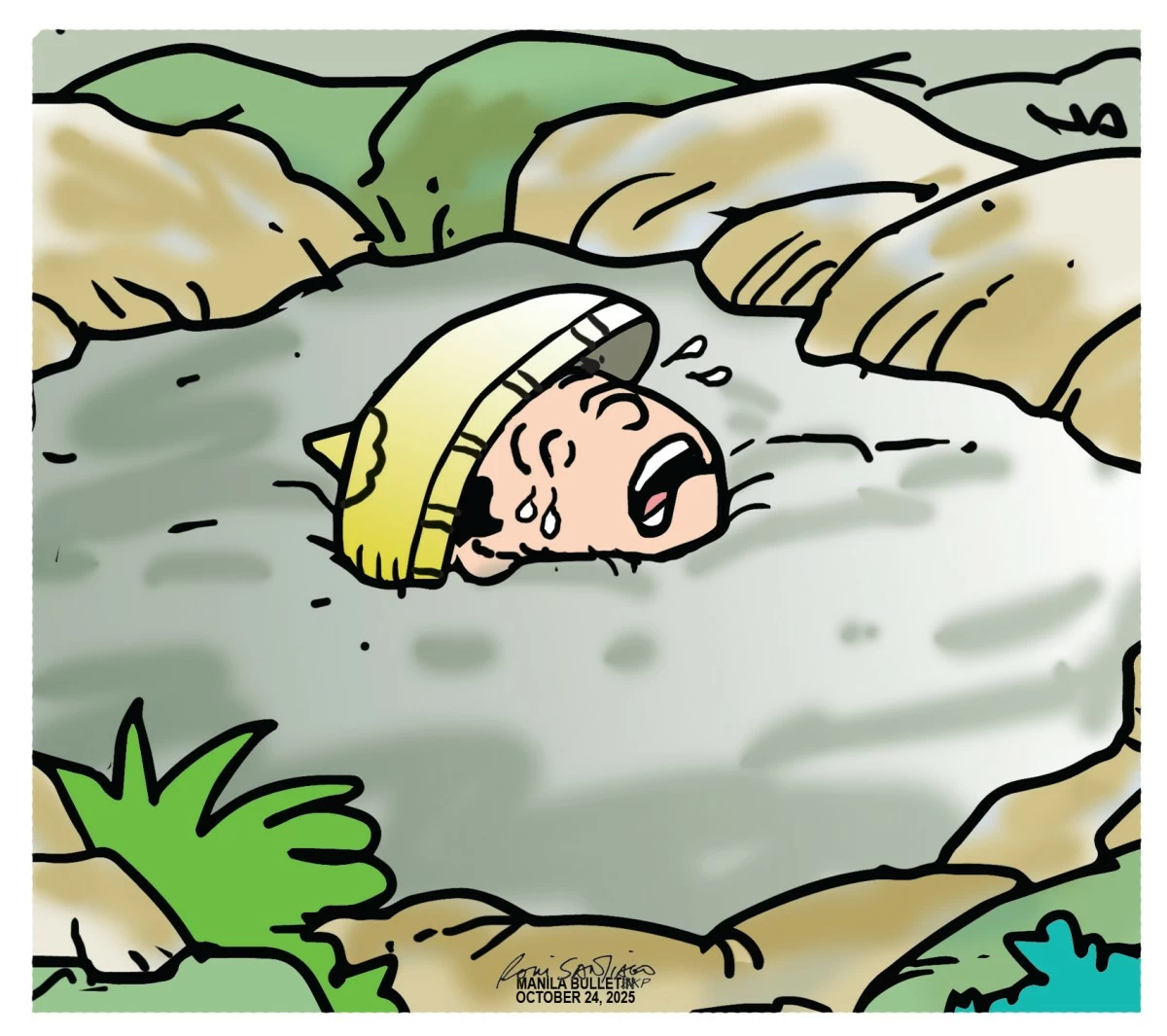
Every peso lost to corruption is not just money gone. It means a bridge unbuilt, a class-room unlit, a family left in the dark. When public funds meant for flood control are si-phoned into private pockets, it is not only infrastructure that collapses—it is trust. The floodwaters that submerge homes in the lowlands are nothing compared to the moral floods that have long washed over this nation’s conscience.
Corruption is visible in the potholes that never get filled despite multi-million budgets. It is felt in the sleepless nights of families who lose their homes to floods that could have been prevented. It is heard in the sighs of honest workers who pay their taxes only to see the fruits of their labor rot in the pockets of the powerful.
If governance is the art of serving people, then corruption is the art of betraying them. The Marcos administration, through Secretary Recto’s admission, must take this as a wake-up call—not merely to improve fiscal governance for the sake of ratings agen-cies, but to redeem the country’s moral standing. Governance reform cannot be cos-metic; it must be surgical. It requires transparency in project implementation, full public disclosure of infrastructure spending, and the institutional courage to prosecute—even political allies.
The private sector, too, must abandon its comfortable silence. Many corrupt deals thrive not because of the government alone, but because of businessmen who feed the beast. Integrity must no longer be an optional cost of doing business. It must be the on-ly way of doing business. Companies must adopt strict compliance systems, refuse to engage in bribery, and speak out when competitors gain unfair advantage through cor-ruption. The private sector has the power to cleanse markets if it chooses ethics over expedience.
But at the heart of this crisis lies a question for every Filipino: Why do we tolerate this? Why do we shrug off corruption as if it were a cultural inevitability? Change will not come from the top if apathy remains at the base. Citizens must demand accountability, not only during elections but every day after. Every receipt we question, every irregular-ity we report, every whistle we blow. These are acts of patriotism no less powerful than waving the flag.
Those behind corruption must look beyond the luxury they have amassed and see the lives they have diminished. They must see that what they steal is not just money. It is the country’s future. The difference between a nation that thrives and one that merely survives lies not in its natural resources or foreign loans, but in the moral fiber of its people.
If we are to build a nation worthy of our children, we must first build a government—and a citizenry—worthy of trust. Only then will the Philippines rise, not just in credit rat-ings, but in conscience.
Because every act of corruption is an act of betrayal. And every act of integrity is an act of nation-building.
ADVERTISEMENT
.most-popular .layout-ratio{ padding-bottom: 79.13%; } @media (min-width: 768px) and (max-width: 1024px) { .widget-title { font-size: 15px !important; } }

{{ articles_filter_1561_widget.title }}

.most-popular .layout-ratio{ padding-bottom: 79.13%; } @media (min-width: 768px) and (max-width: 1024px) { .widget-title { font-size: 15px !important; } }

{{ articles_filter_1562_widget.title }}

.most-popular .layout-ratio{ padding-bottom: 79.13%; } @media (min-width: 768px) and (max-width: 1024px) { .widget-title { font-size: 15px !important; } }

{{ articles_filter_1563_widget.title }}

{{ articles_filter_1564_widget.title }}

.mb-article-details { position: relative; } .mb-article-details .article-body-preview, .mb-article-details .article-body-summary{ font-size: 17px; line-height: 30px; font-family: "Libre Caslon Text", serif; color: #000; } .mb-article-details .article-body-preview iframe , .mb-article-details .article-body-summary iframe{ width: 100%; margin: auto; } .read-more-background { background: linear-gradient(180deg, color(display-p3 1.000 1.000 1.000 / 0) 13.75%, color(display-p3 1.000 1.000 1.000 / 0.8) 30.79%, color(display-p3 1.000 1.000 1.000) 72.5%); position: absolute; height: 200px; width: 100%; bottom: 0; display: flex; justify-content: center; align-items: center; padding: 0; } .read-more-background a{ color: #000; } .read-more-btn { padding: 17px 45px; font-family: Inter; font-weight: 700; font-size: 18px; line-height: 16px; text-align: center; vertical-align: middle; border: 1px solid black; background-color: white; } .hidden { display: none; }
function initializeAllSwipers() { // Get all hidden inputs with cms_article_id document.querySelectorAll('[id^="cms_article_id_"]').forEach(function (input) { const cmsArticleId = input.value; const articleSelector = '#article-' + cmsArticleId + ' .body_images'; const swiperElement = document.querySelector(articleSelector); if (swiperElement && !swiperElement.classList.contains('swiper-initialized')) { new Swiper(articleSelector, { loop: true, pagination: false, navigation: { nextEl: '#article-' + cmsArticleId + ' .swiper-button-next', prevEl: '#article-' + cmsArticleId + ' .swiper-button-prev', }, }); } }); } setTimeout(initializeAllSwipers, 3000); const intersectionObserver = new IntersectionObserver( (entries) => { entries.forEach((entry) => { if (entry.isIntersecting) { const newUrl = entry.target.getAttribute("data-url"); if (newUrl) { history.pushState(null, null, newUrl); let article = entry.target; // Extract metadata const author = article.querySelector('.author-section').textContent.replace('By', '').trim(); const section = article.querySelector('.section-info ').textContent.replace(' ', ' '); const title = article.querySelector('.article-title h1').textContent; // Parse URL for Chartbeat path format const parsedUrl = new URL(newUrl, window.location.origin); const cleanUrl = parsedUrl.host + parsedUrl.pathname; // Update Chartbeat configuration if (typeof window._sf_async_config !== 'undefined') { window._sf_async_config.path = cleanUrl; window._sf_async_config.sections = section; window._sf_async_config.authors = author; } // Track virtual page view with Chartbeat if (typeof pSUPERFLY !== 'undefined' && typeof pSUPERFLY.virtualPage === 'function') { try { pSUPERFLY.virtualPage({ path: cleanUrl, title: title, sections: section, authors: author }); } catch (error) { console.error('ping error', error); } } // Optional: Update document title if (title && title !== document.title) { document.title = title; } } } }); }, { threshold: 0.1 } ); function showArticleBody(button) { const article = button.closest("article"); const summary = article.querySelector(".article-body-summary"); const body = article.querySelector(".article-body-preview"); const readMoreSection = article.querySelector(".read-more-background"); // Hide summary and read-more section summary.style.display = "none"; readMoreSection.style.display = "none"; // Show the full article body body.classList.remove("hidden"); } document.addEventListener("DOMContentLoaded", () => { let loadCount = 0; // Track how many times articles are loaded const offset = [1, 2, 3, 4, 5, 6, 7, 8, 9, 10]; // Offset values const currentUrl = window.location.pathname.substring(1); let isLoading = false; // Prevent multiple calls if (!currentUrl) { console.log("Current URL is invalid."); return; } const sentinel = document.getElementById("load-more-sentinel"); if (!sentinel) { console.log("Sentinel element not found."); return; } function isSentinelVisible() { const rect = sentinel.getBoundingClientRect(); return ( rect.top < window.innerHeight && rect.bottom >= 0 ); } function onScroll() { if (isLoading) return; if (isSentinelVisible()) { if (loadCount >= offset.length) { console.log("Maximum load attempts reached."); window.removeEventListener("scroll", onScroll); return; } isLoading = true; const currentOffset = offset[loadCount]; window.loadMoreItems().then(() => { let article = document.querySelector('#widget_1690 > div:nth-last-of-type(2) article'); intersectionObserver.observe(article) loadCount++; }).catch(error => { console.error("Error loading more items:", error); }).finally(() => { isLoading = false; }); } } window.addEventListener("scroll", onScroll); });

Sign up by email to receive news.