







QC gov't launches Circularity Hub in Payatas
Published Oct 24, 2025 11:48 am


The Quezon City Government officially opened the QC-ANTHILL Circularity Hub at the Payatas Controlled Disposal Facility on Thursday, Oct. 23.
The LGU aims to promote sustainability, innovation, and circular economy practices.
The program is in partnership between the local government and ANTHILL Fabric Gallery, a Cebu-based social and cultural enterprise, that aims to transform textile waste into valuable products while providing livelihood opportunities to local artisans and weavers.
The new facility supports community-based upcycling, sustainable design, and circular economy education, all of which align with Quezon City’s zero-waste and inclusive livelihood goals.
It is equipped with weaving looms, cutting machines, and a production and showroom area where artisans can turn discarded textile scraps into new fabrics and items.
During the launch, 20 artisans from Payatas were formally introduced.
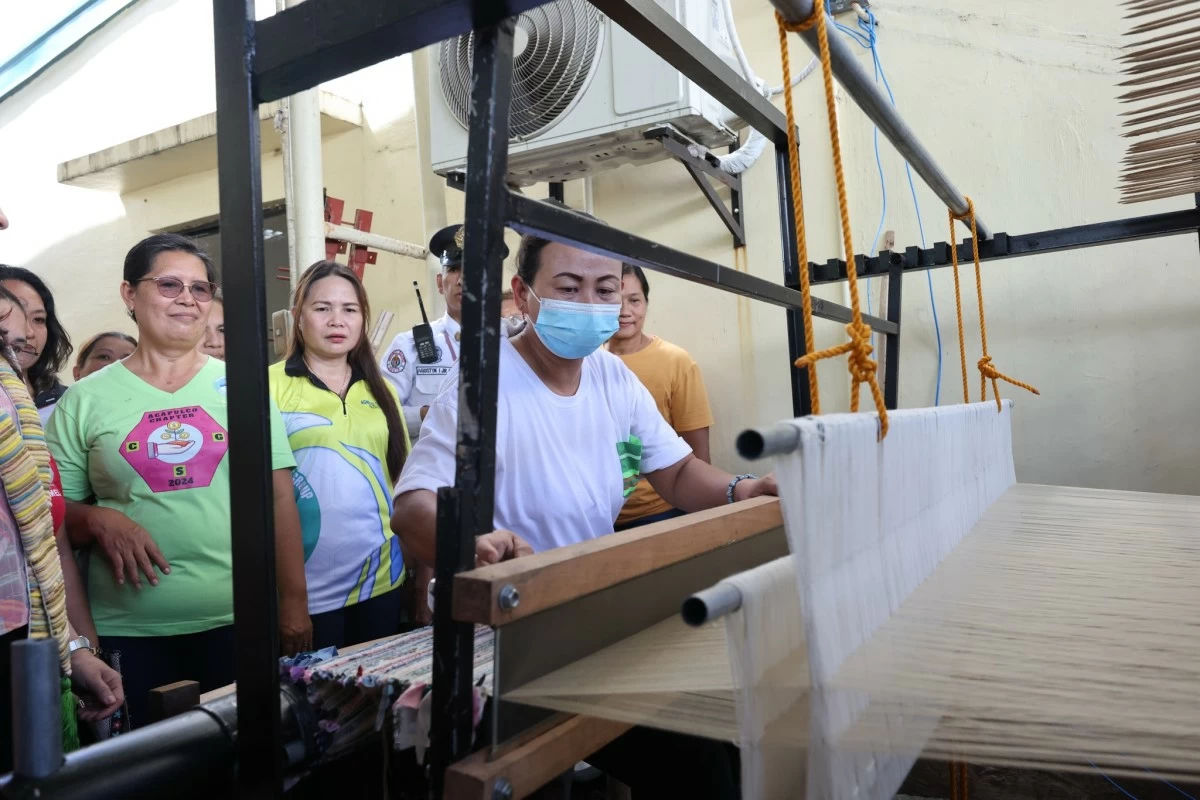
A woman demonstrates how to weave during the launch of the Circulatory hub (Quezon City government)
They will undergo a comprehensive three-month training program with daily compensation. After training, ten participants will proceed to a six-month probationary period before being absorbed for full-time employment.
The Bureau of Jail Management and Penology (BJMP) was also tasked with engaging Persons Deprived of Liberty (PDLs) in sorting textile waste for the hub, thereby extending the program’s social inclusion efforts.
The project, established through a memorandum of understanding, is jointly implemented by the city’s Climate Change and Environmental Sustainability Department (CCESD) and the Small Business and Cooperatives Development and Promotions Office (SBCDPO), in partnership with ANTHILL Fabric Gallery. It also receives support from Maybank Foundation and Pilipinas Shell Foundation, Inc.
Mayor Joy Belmonte emphasized that the initiative represents more than just waste reduction—it is an inclusive approach to sustainability and livelihood creation.
“Textile waste is often overlooked but it’s one of the fastest-growing types of urban waste. Through the Circularity Hub, we’re proving that sustainability can be both creative and empowering,” Mayor Belmonte said. “By giving these scraps new life through the hands of our Payatas weavers, we’re turning waste into opportunity and livelihood,” she said.
She also urged businesses to explore how they can contribute to the city’s circular economy efforts.
“We call on our business community, especially those based in Quezon City, to explore how textile circular solutions can be part of your supply chains. Let’s work together to upcycle textile waste and turn it into something useful, so we can help build a greener and more responsible city,” she added.