






Manila Bulletin
 Business
The Economy
Political instability, graft probe expected to hit Philippine investment hard
Business
The Economy
Political instability, graft probe expected to hit Philippine investment hard
Business
The Economy
Political instability, graft probe expected to hit Philippine investment hard
Political instability, graft probe expected to hit Philippine investment hard
Published Oct 23, 2025 04:30 pm
|
Updated Oct 23, 2025 01:30 pm


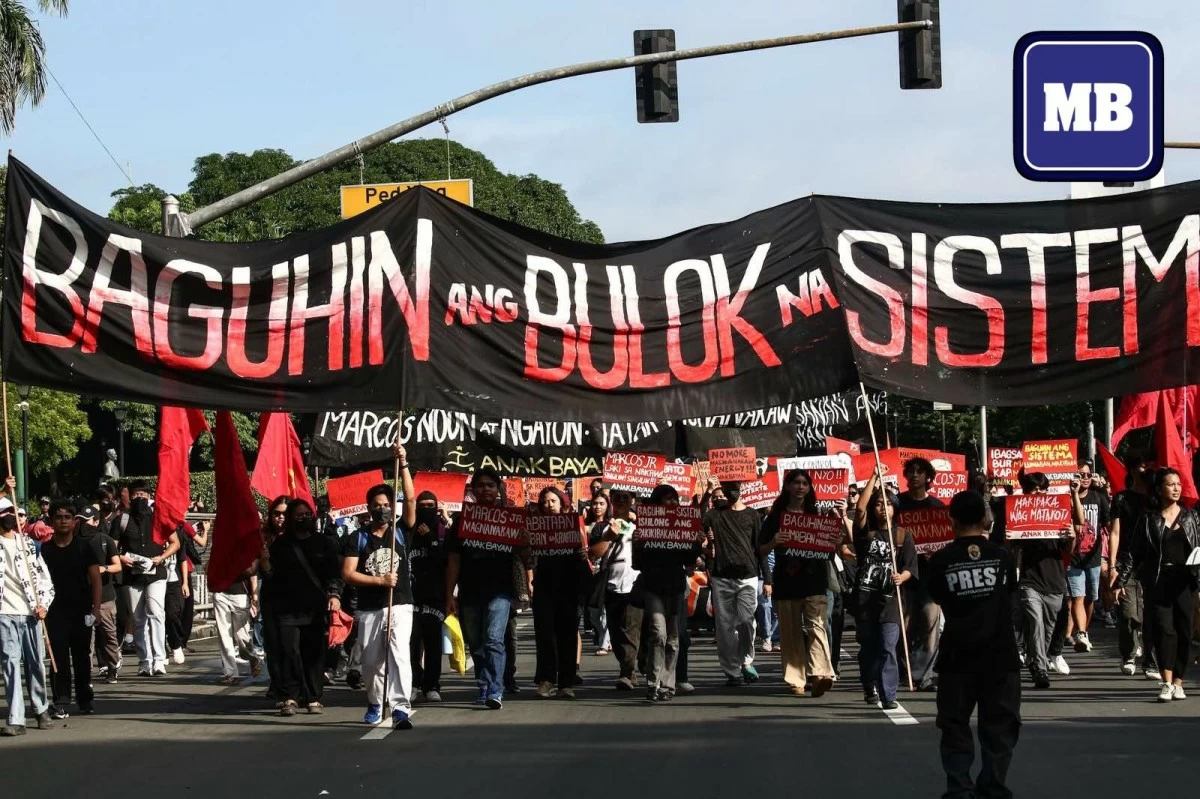
Protesters from various groups stage a rally against corruption in flood control projects at Luneta Park in Manila last Sept. 21.
They urged the government to hold officials and contractors accountable for billions lost to anomalous projects. (Photo by John Louie Abrina I MB)
Business confidence and investment in the country are expected to take a hit as the government escalates anti-corruption efforts, with the ongoing scandal potentially causing firms to postpone projects, according to London-based think tank Capital Economics.
In a report dated Oct. 22, Jason Tuvey, Capital Economics deputy chief economist for emerging markets, stated that the government could ramp up investigations into corruption spanning multiple sectors, beyond just infrastructure.
Nonetheless, the think tank cautioned that increased political instability and concerns about potential corruption charges could lead companies to delay investment plans.
The think tank cited data from Brazil and South Africa, where investment declined following major corruption scandals that broke out in 2014 and 2016, respectively, with a sharper drop observed in Brazil.
The think tank cautioned that individuals may hold off on buying major assets, such as land or property, while those with illicit gains could move funds abroad, potentially leading to a surge in capital outflows and putting pressure on the currency.
“The government could also try to clamp down on ostentatious public sector consumption,” the think tank said, noting that it could weigh on demand for luxury goods or services.
Earlier, National Socioeconomic Planner Arsenio M. Balisacan urged Filipino consumers to opt for homegrown products over imported luxury goods, asserting that money spent locally boosts the economy more quickly than money sent overseas.
“I like it if there’s a slowdown in those areas [luxury spending] because these are very import-dependent anyway. The value added is low,” Balisacan told reporters on the sidelines of the European Chamber of Commerce of the Philippines’ (ECCP) European-Philippine Business Dialogue (EPDB) last week.
“All these luxury imports do not really generate much economic activity. If our consumers are shifting to locally produced goods that are not as luxurious as Lexus, then it creates more economic activity,” Balisacan noted.
Spending on luxury imports sends most of the money overseas, with only a thin slice retained through retail or taxes. Buying local products, however, circulates income among domestic producers, workers, and suppliers, boosting value created at home.
The think tank also noted that the Philippine government could use economic measures, such as demonetization, as a tool to combat corruption.
However, Manila Bulletin reported that Bangko Sentral ng Pilipinas (BSP) Governor Eli M. Remolona Jr. described the call to ban ₱1,000 and ₱500 bills as “a tantalizing proposal, but it’s not so simple. To me, it’s like the saying, you cut off your nose just to spite your face. You’re doing more damage than it’s worth.”
He said banning the highest peso bills is not straightforward, noting that other countries struggled with similar moves. He added that the ₱1,000 note is widely used, which means it holds significant value for the public.
“For a small inconvenience to flood [control] contractors, you’re going to make life hard for many people. We’re still looking at it — we haven’t decided yet. But if you think about it, banning [the ₱1,000 bills] is not going to stop these guys.”
The think tank also emphasized that the full effects of the corruption scandal and accompanying protests in the Philippines remain unclear due to the limited evidence available.
“Investment is one area that could be particularly affected, both by the uncertainty caused by the scandal but also because the government has paused projects whilst investigations are carried out,” the think tank said.
(Ricardo M. Austria)
(Ricardo M. Austria)