







Passage of Magna Carta for Barangays a must--Speaker Dy
Published Oct 23, 2025 03:44 pm


At A Glance
- House Speaker Faustino "Bojie" Dy III is championing the passage of a long-overdue Magna Carta for Barangays that will finally give barangay officials the recognition, dignity, and compensation they rightfully deserve as full-fledged government employees, not volunteers.
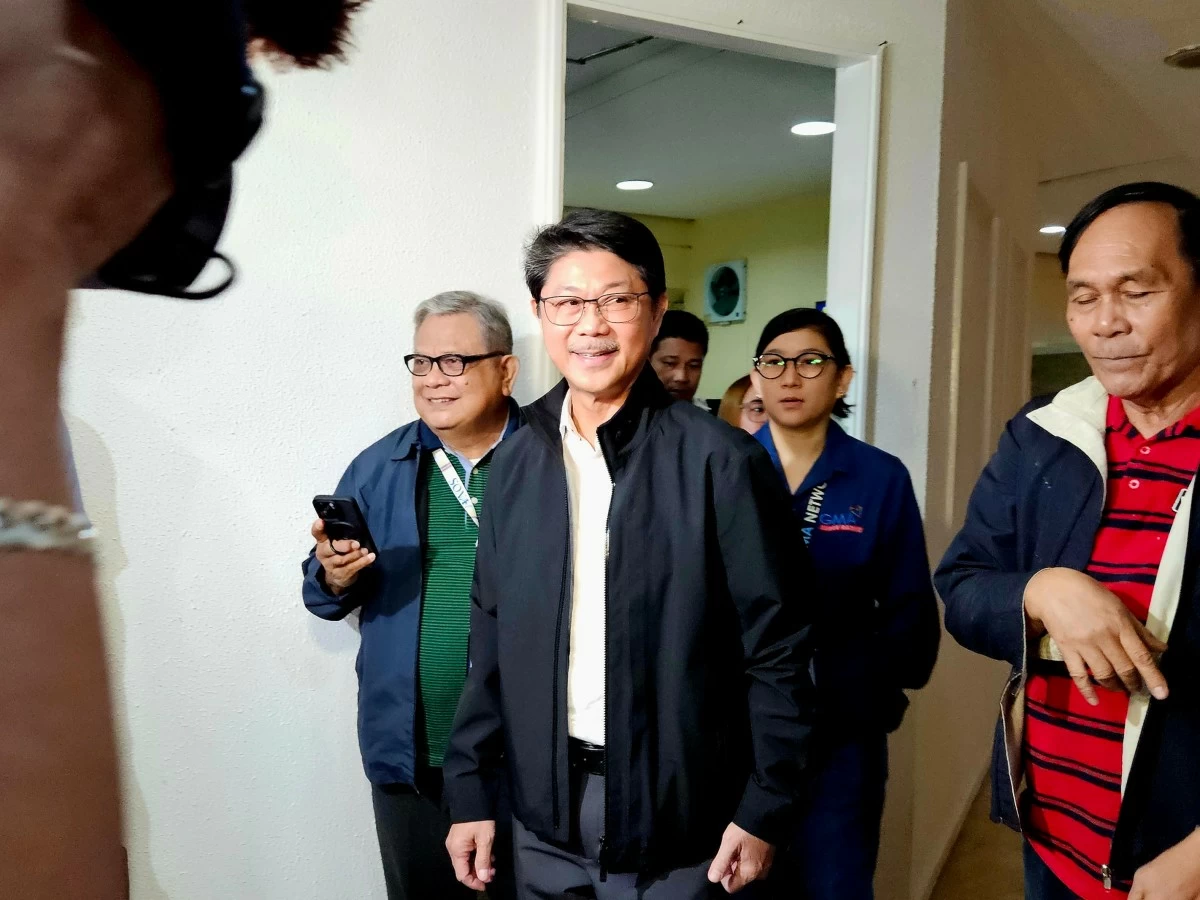
House Speaker Faustino “Bojie” Dy III (Ellson Quismorio/ MANILA BULLETIN)
House Speaker Faustino “Bojie” Dy III is championing the passage of a long-overdue Magna Carta for Barangays that will finally give barangay officials the recognition, dignity, and compensation they rightfully deserve as full-fledged government employees, not volunteers.
Speaking before over 2,000 local leaders during the recent Liga ng mga Barangay sa Pilipinas National Congress, Dy said the measure is one of the eight legislative priorities of the House of Representatives and a key part of his commitment to strengthen the foundations of grassroots governance.
“Muli ko pong gustong sabihin sa inyo at iparating sa bawat isa sa inyo na amin pong ipaglalaban ang Magna Carta para po sa ating mga barangay (Once again, I want to say to you and convey to each one of you that we will fight for the Magna Carta for our barangays),” declared Dy, Isabela's 6th district congressman.
A former barangay executive himself, Dy is the author of House Bill (HB) No. 3533, which seeks to establish the Magna Carta for Barangays and formally recognize barangay officials as regular government employees entitled to fixed salaries, full benefits, and retirement security.
The bill, along with several similar proposals, is now pending before the House Committee on Local Government.
In his speech, Dy said barangay officials bear the heaviest burdens of public service, often responding to emergencies 24/7, mediating disputes, and comforting grieving families while implementing national and local programs with limited resources and modest pay.
He noted that barangay leaders perform executive, legislative and judicial functions at once—as implementers of projects, lawmakers in their respective councils, and peacekeepers through the Lupong Tagapamayapa.
Yet despite these roles, Dy said barangay officials continue to receive token allowances instead of regular salaries.
“Hanggang ngayon, hindi po natin matawag ang ating mga sarili o ating mga barangay kung ano ba talaga ang kalagayan at katayuan ninyo sa ating gobyerno (Until now, we cannot truly define ourselves or our barangays—what your real status and standing are in our government),” Dy said.
“Kayo ba ay talagang totohanang nagtatrabaho sa ating gobyerno o voluntary pa rin ang inyo pong mga gawain? (Are you truly working as part of the government, or are your duties still considered voluntary?)” he asked the attendees.
HB No.3533 seeks to recognize the Punong Barangay, Sangguniang Barangay members, Barangay Secretary and Barangay Treasurer as regular government employees entitled to fixed salaries, insurance, medical and dental coverage, retirement benefits, and other fringe benefits.
Under the proposed law, the Punong Barangay will receive a salary equivalent to that of a Sangguniang Bayan member of his municipality or city while Sangguniang Barangay members will receive 80 percent of that rate. The Barangay Secretary and Treasurer, on the other hand, will receive 75 percent.
Cities and municipalities will be given up to six months from its approval to determine funding sources and enact local ordinances implementing the new salary structure.
The bill also guarantees essential services in every barangay by mandating the construction or maintenance of at least one deep well for every 1,000 residents to ensure clean, safe drinking water, and by requiring that public transportation be available daily so that no community is left isolated or disconnected.
To strengthen fiscal autonomy, the Magna Carta mandates the automatic release of each barangay’s share of national taxes, the direct transfer of road and bridge maintenance funds to its general fund, and a 25 percent share of all real property taxes collected within its jurisdiction.
It also provides that 10 percent of all other taxes, fees and charges collected from residents and businesses within a barangay be remitted to the barangay.
The measure likewise includes a provision for barangay scholarship grants, requiring every barangay to sponsor at least one student annually for any bachelor’s degree, covering tuition, fees and allowances for books, transportation, and other necessities.
It also mandates that barangay residents be given priority in employment for government construction and development projects within their communities.