






Manila Bulletin
 Business
Trade & Industry
Gov't to auction 50 idle mining assets starting next month
Business
Trade & Industry
Gov't to auction 50 idle mining assets starting next month
Business
Trade & Industry
Gov't to auction 50 idle mining assets starting next month
Gov't to auction 50 idle mining assets starting next month
Published Oct 23, 2025 01:02 pm


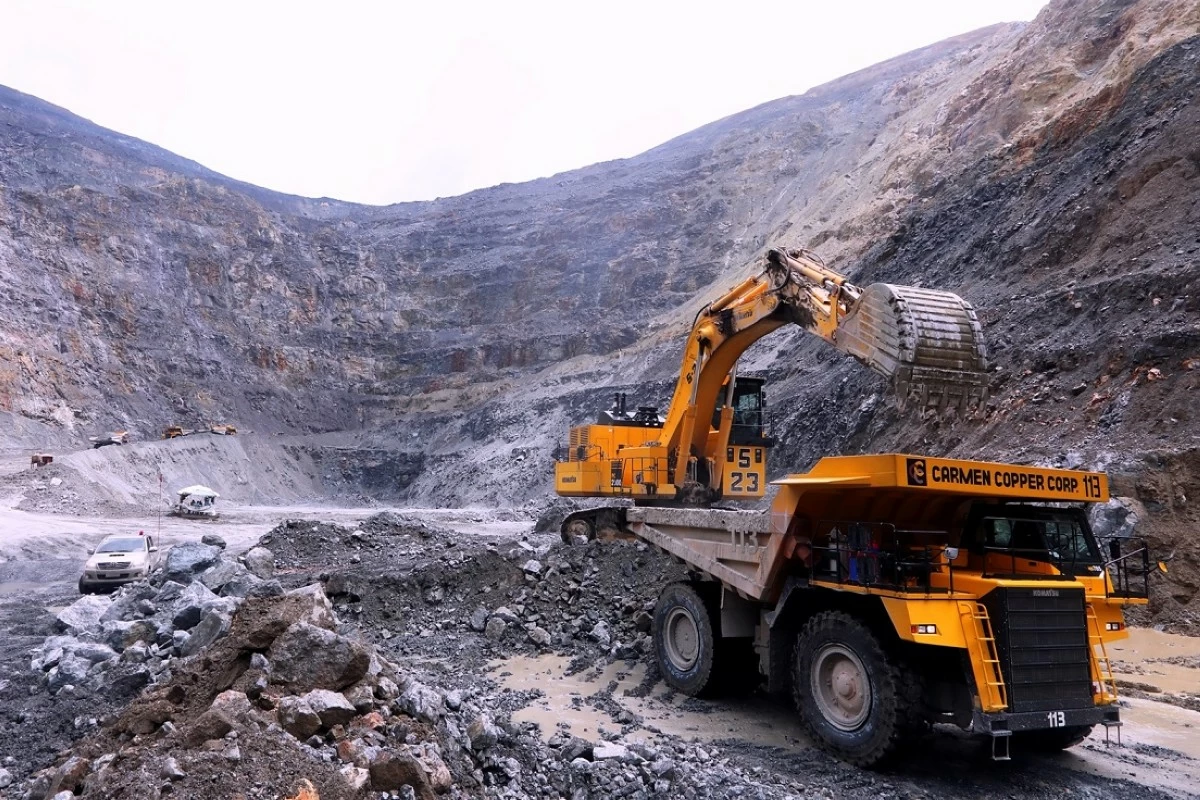
The Department of Environment and Natural Resources (DENR) will begin auctioning off about 50 idle mining assets nationwide to the private sector as early as next month, in line with the government’s efforts to maximize the country’s vast natural resources.
DENR Undersecretary Carlos Primo David said the department is finalizing an administrative order to provide the guidelines of the auction, which will cover mines with cancelled or expired permits.
The list of mining assets would include those with cancelled or expired exploration permits (EPs), mineral production agreements (MPAs), and financial or technical assistance agreements (FTAAs), among others.
David said this totals to around 50 idle mining assets across the country, with actual locations to be announced at the annual Mine Safety and Environment Conference in Baguio City next month.
He noted that each site will be packaged with a prospectus, covering all the necessary information and details of the project, which will make it easier for companies to find the asset they would like to invest in.
Following the announcement, the government will immediately begin the auction through a competitive selection process.
Unlike a competitive bidding process that awards projects to the lowest or highest qualified bidder, a mining asset under a competitive selection process would go to the firm with the strongest technical and financial capacity.
The auction process is expected to accommodate local firms, including those with partnerships with foreign entities.
“We open everything, 50 of them initially, so that we can select not only the best offer for the government, but also the best companies that will operate,” said David on the sidelines of the 2025 Mining Philippines International Conference and Exhibition.
David said the DENR is introducing this new policy to overhaul the current “first-come, first-served” policy in obtaining permits and licenses for mining activities, as embodied in the Philippine Mining Act of 1995.
This policy, he said, has prompted companies to simply hold on to their assets and later try to sell them, rather than developing them to kick-start operations.
“What we want are companies taking these assets and actually developing them,” he added.
Under this new process, David said the winning bidder would have second thoughts about opting out of developing the asset, since, apart from wasting capital, the award would also have a defined period.
The 50 mining assets can span “anywhere from tens of thousands to tens of millions,” depending on the asset, he said.
“Some assets are for exploration, so there's a big risk. Some are proven reserves, so it's a bit high,” said David.
The official said the draft guidelines for the auction have now been submitted to DENR Secretary Raphael Lotilla for his approval.
To complement this, the DENR is also working to secure an executive order (EO) on the critical minerals framework, which is set to “clarify some of the regulations” in the Philippine Mining Act.
Expected to be issued in the first quarter of 2026, the EO aims to enhance the protection of mining investments against adverse policy shifts, such as retroactive amendments to local ordinances.
Meanwhile, the DENR is also planning to implement a policy that would institute an alternative registration system for small-scale miners, majority of whom are still undocumented.
Currently, the Bangko Sentral ng Pilipinas (BSP) does not transact with unregistered miners. Because of this, many choose to sell their gold through the black market, leaving the government without potential tax revenues.
Industry estimates show that around 70 percent of the country’s total gold output comes from illegal or small-scale miners.
David said these reforms would help the mining industry reach its target of contributing two percent of the country’s gross domestic product (GDP) by 2028. The industry currently accounts for a measly 0.5 percent.
“These regulations are part of a bigger overall strategy of the department to unlock the natural resources of the country,” he noted.