








TAN
DAVAO CITY – The Department of Tourism-11 is closely monitoring the tourism situation in the Davao region, particularly Davao Oriental, a key coastal tourism area, following the recent doublet earthquakes.
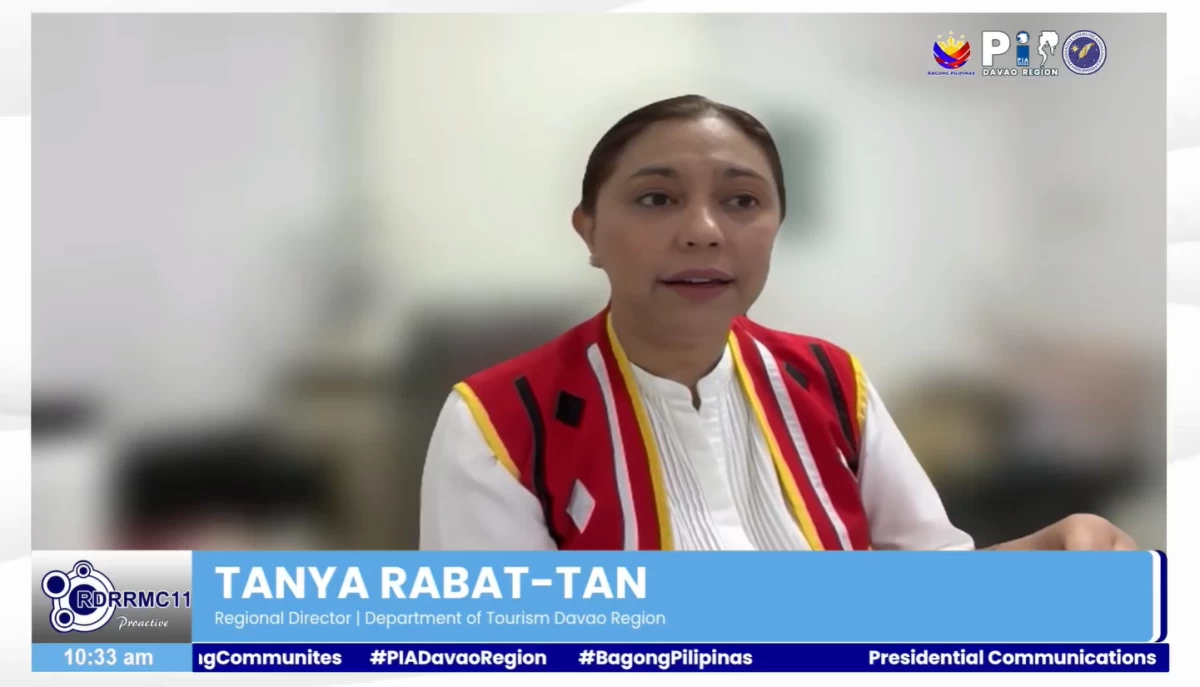
DOT-11 Regional Director Tanya Rabat-Tan, during the Regional Disaster Risk Reduction and Management Council-11 press briefing via Zoom on Thursday, Oct. 23, said they have been coordinating with local government units and tourism offices to assess the condition of sites and ensure the welfare and safety of tourists and workers.
About two months ago, the DOT-11 launched the Davao Adventure Challenge Season 2, a year-long program designed to promote Davao as the premier adventure tourism hub in the country and Southeast Asia.
With the program, Tan said that they required the participants to coordinate and consult with concerned LGUs or tourism offices in the tourist sites before undertaking any challenge.
“For example, those planning to trek Mount Apo should consult the City Tourism Office to know if the site is open or restricted, so the office or the concerned LGU could assist them,” Tan said.
Tan said the DOT uses the program to market and promote tourist sites in various regional areas, including Davao City. She assured tourists that event organizers would advise them on whether it is good to go.
She said the department’s monitoring efforts intensified after the doublet quakes struck the region, especially in Davao Oriental, where many beach resorts and coastal tourism establishments were affected.
“We are also monitoring our tourism workers since many of them were affected, as well as tourists who were displaced during the recent two earthquakes,” Tan said.
Tan added that their office immediately coordinated with LGUs through local tourism officers to gather information on the extent of the impact and assist affected individuals.
She said to support those tourism workers who temporarily lost their jobs or income, they implemented the “Bayanihan sa Bukas na may Pag-asa sa Turismo” with the Department of Social Welfare and Development.
“When workers were affected due to the closure of some establishments, we provided them alternative livelihoods through various training, such as in baking and bread making training,” Tan said.
Aside from the livelihood training, she added that workers, such as tour guides, boatmen, and operators affected by the disaster, will receive cash aid from the DSWD-11.
DOT-11 recorded 2,035 tourism workers across the value chain – including tour guides, boatmen, and operators – affected by the quake as of their latest count.
Tan said they are also conducting psychosocial support training for affected workers in collaboration with the Department of Health and the provincial government.
Davao Oriental provincial information officer and lawyer Lovella Fe Tacder confirmed that while tourism activities were initially halted in some areas, operations in Banay-Banay town have resumed.
“Authorities already lifted the suspension on all tourism-related activities. Our tourism staff also underwent training under the Incident Command System, ensuring preparedness in future emergencies,” Tacder said.
Randy Loy, head of the Davao de Oro Provincial Disaster Risk Reduction Management Office, said they are still assessing the impact but have not suspended any tourism activities.
Davao City DRRMO representative Agnes Padinas said the city implemented work and class suspensions after the earthquake.
In Davao del Norte, Provincial DRRMO head Glenda Delideli said they have yet to receive information about the DACS activities related to tourism in the province.
DOT-11 assured that they remain committed to helping the local tourism industry recover by ensuring site readiness, worker welfare, and sustainable livelihood assistance in the aftermath of the disaster.