







Alexis Marga's enchanted 'Garden of Origin'
Childhood memories and dreams come to life through sculpted frames and paintings
By S.C. Fojas


At A Glance
- The paintings in the exhibit, which are oil on linen, are stories of fantasy, referencing fairy tales, first pets, flowers, and imaginary creatures.
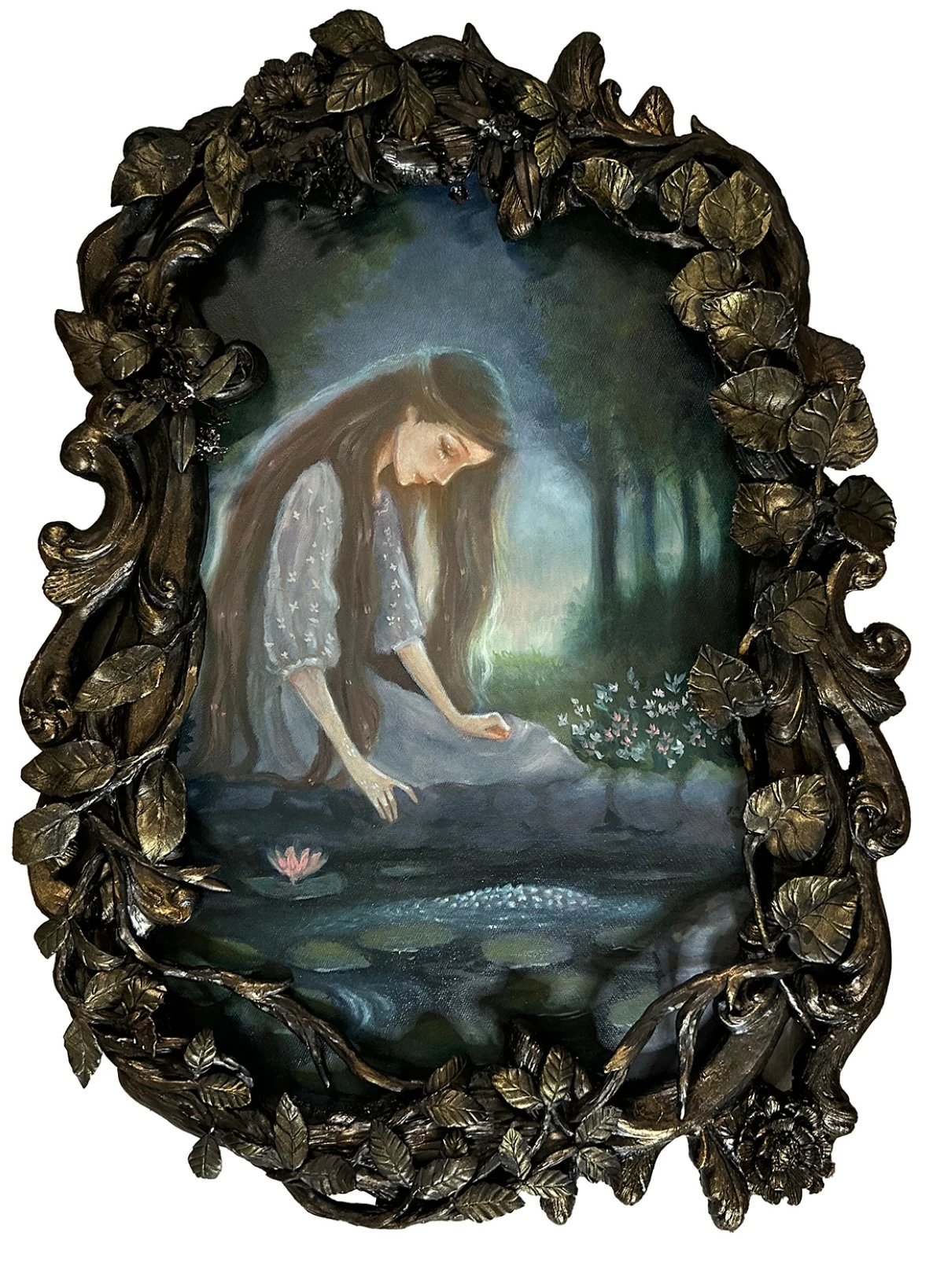
It is a liminal space where beauty coexists with unease and nostalgia collides with strangeness. Alexis Marga’s “The Garden of Origin” is a nostalgic yet wondrous atmosphere.
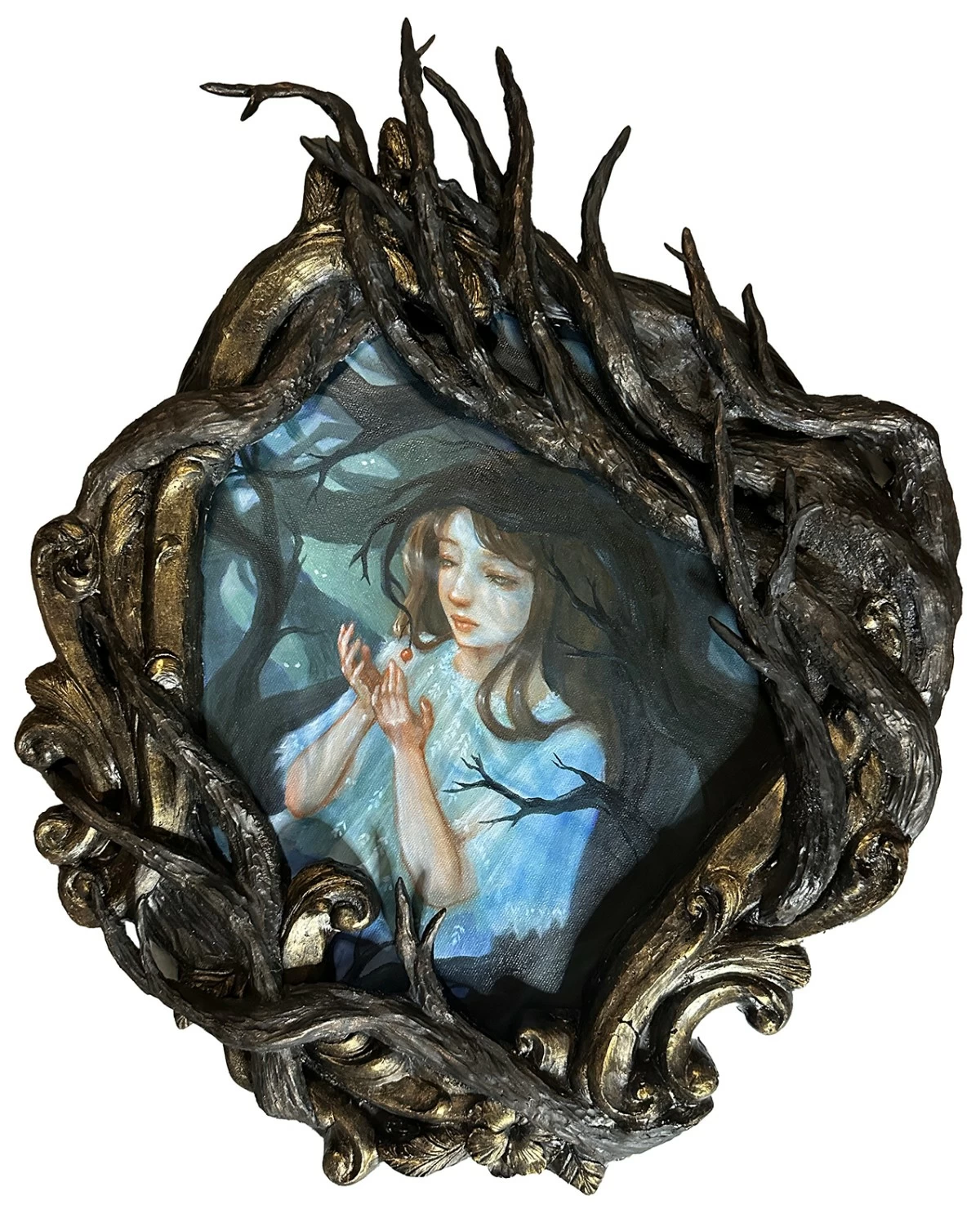
The exhibit, featuring paintings on linen with sculpted frames of epoxy and resin, is deeply rooted in Alexis’ personal history. She explains that the series “mainly focused on my own experiences as a child, my memories combined with the memories of my daydreams, particularly when I was eight years old and we moved from the city to the province of Bulacan.”
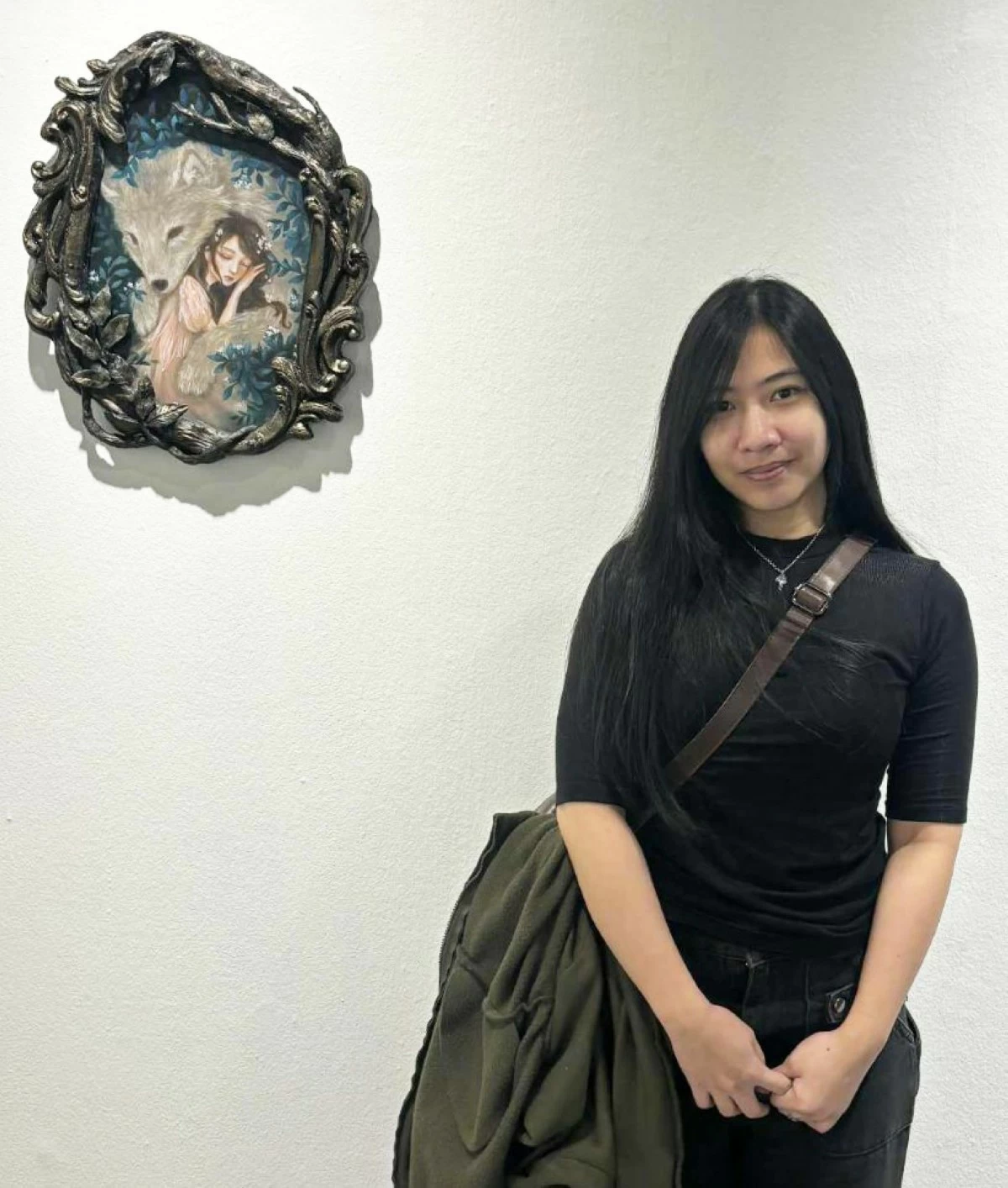
Alexis was born in the city where the sun rose and set on “buildings all gray and gloomy,” but her life changed when her family moved to her grandfather’s lot. This place, filled with untrimmed grass, colorful flowers, trees, and thorny vines, became what she calls her “garden of origin.”
“I call it my ‘garden of origin’ because my grandfather’s lot seemed to me an enchanted garden in contrast to the gloom of the city, and because here was when I felt ‘awake’ in both my imagination and the real world,” Alexis shares.
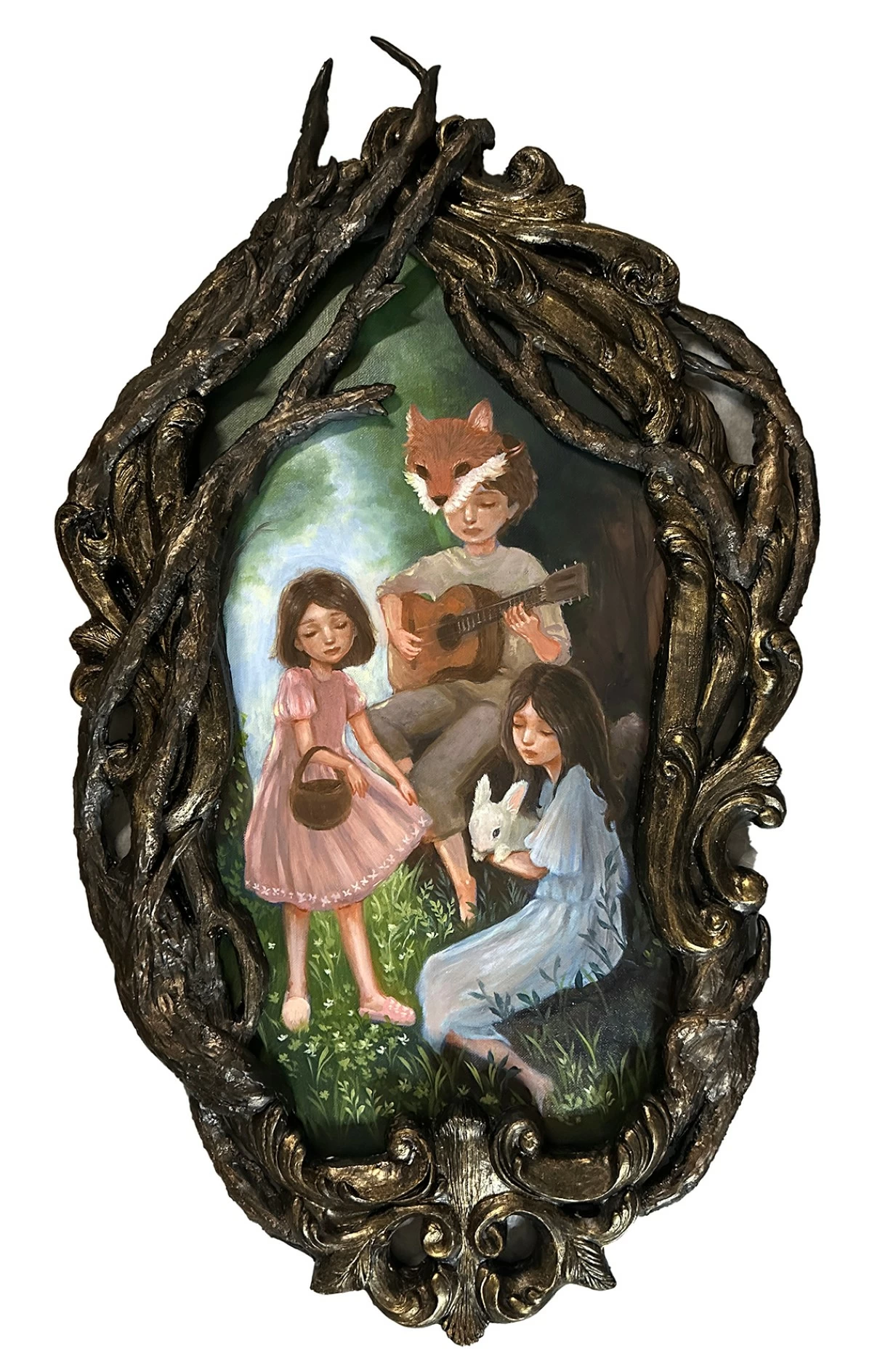
The paintings in the exhibit, which are oil on linen, are stories of fantasy, referencing fairy tales, first pets, flowers, and imaginary creatures. The composition juxtaposes childhood innocence with the enigmatic recesses of the human psyche. While offering a sense of “perpetual bliss and comfort,” Alexis notes that some pieces “hint at concepts of loss and departure. Because the garden, like childhood, is a temporary place.”
The sculpted frames and the process
Alexis, who merges techniques from classical painting with influences from Japanese anime and Western folk tales, also incorporates sculpture to extend the narratives of her paintings.
“Sculpting gave me more freedom to create the pieces as I envisioned them,” she says. “I use it to extend the narrative of the paintings and compose the pieces in any form or shape.” These intricate, nature-inspired frames are described as “magic mirrors” that resemble “shrouded ruins and the overgrowth of leaves, a representation of time.”
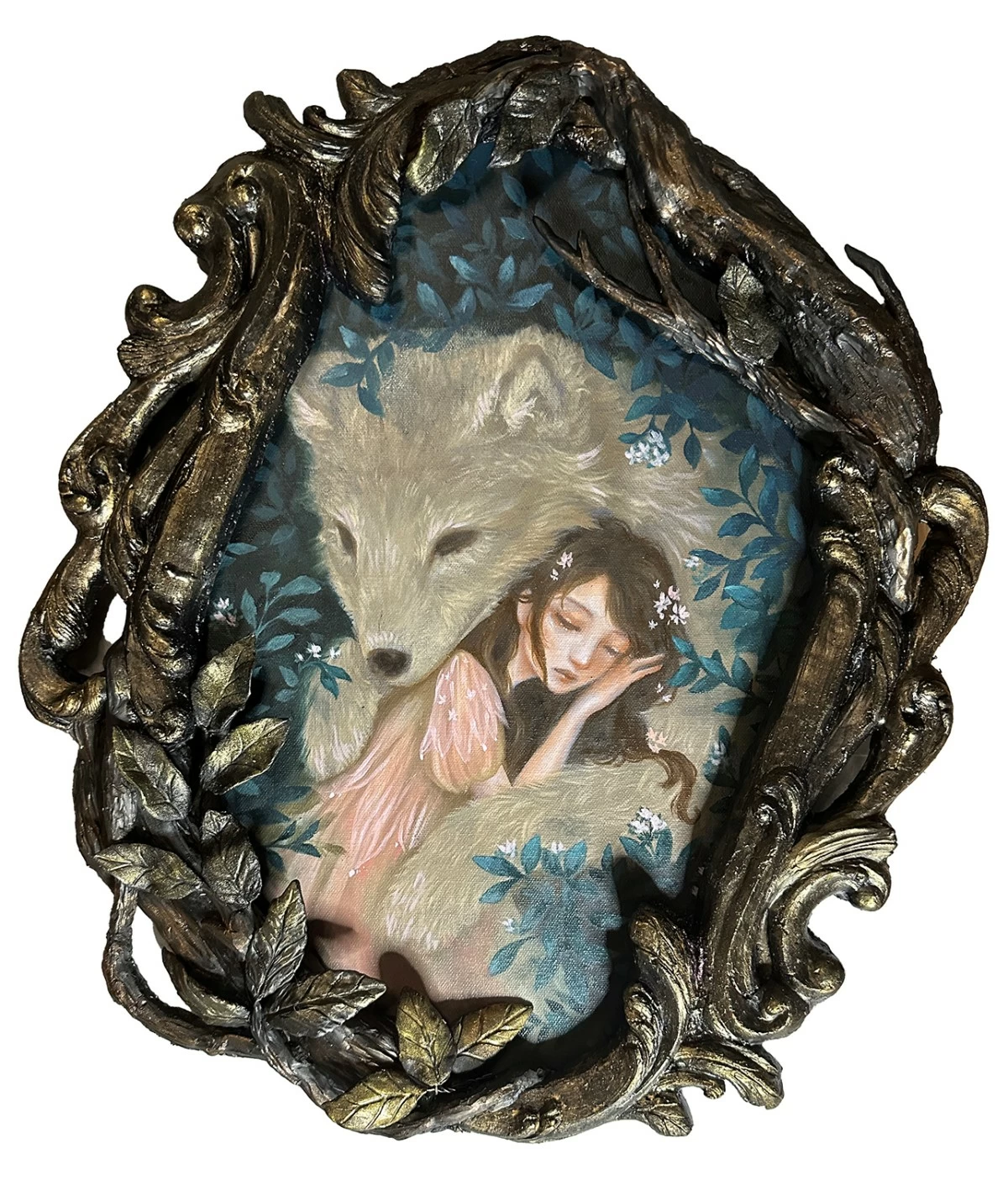
For Alexis, the frames are a symbolic element. She uses them to “give each piece character and uniqueness,” and they are “made to appear like ruins of magic mirrors showing a glimpse of what seems to be a past life.”
The creative process often begins with writing. “I like to write just to capture a thought. It could be about a past experience, an imagination, an idea, a feeling,” Alexis explains. This thought then dictates the visual approach, “I like to play around with how I can visually tell this story. Sometimes a happy memory can be presented with melancholy, and a sad thought can be beautiful.”

The universal invitation
The core concept for the exhibit stemmed from the idea that everyone shares a common experience. “I imagine that there is a place we all have once been in,” Alexis states. “Not a place of origin or where one is born, but a place for the phase of childhood when one begins to awaken. The in-between of consciousness and innocence, fantasy and reality.”

Alexis hopes the viewer leaves the exhibit with a specific emotional reaction. “I wanted this exhibit to give a sense of fantasy, nostalgia, and a longing,” she says. Ultimately, the work is “an invitation to reflect upon their own stories and memories, the common experience of childhood, and then maybe find themselves again in their own garden of origin.”
“Garden of Origin” ran until Oct. 4 at Art Verite, Serendra, Taguig.