ADVERTISEMENT

5,000 schools affected: DepEd, LGUs ramp up disaster response to protect teachers and learners

DepEd intensifies coordination with local governments to fast-track rehabilitation, ensure learning continuity in calamity-hit areas

Published Oct 23, 2025 04:22 pm
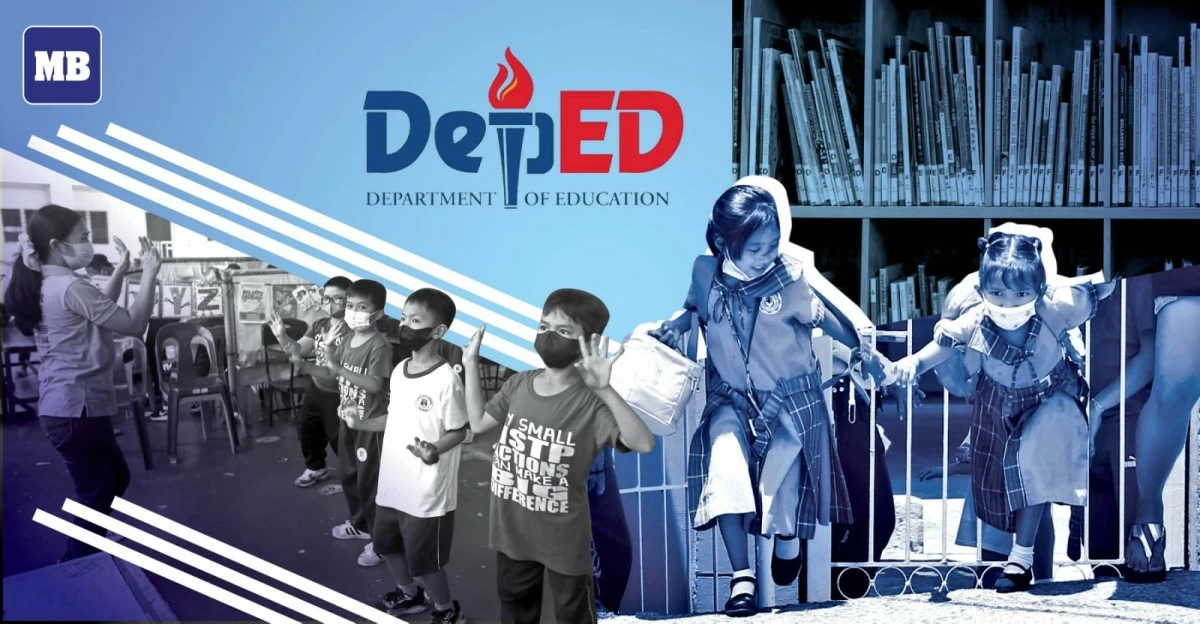
DepEd and LGUs strengthen disaster response to aid 5,000 affected schools, focusing on faster rehabilitation, school safety, and psychosocial support for teachers and learners. (DepEd /MB Visual Content Group)
The Department of Education (DepEd) and local government units (LGUs) are ramping up coordinated, community-driven efforts to accelerate education recovery following recent disasters that have affected around 5,000 schools nationwide.
In a statement issued Thursday, October 23, DepEd Secretary Sonny Angara said the joint initiative focuses on restoring safe learning spaces, repairing damaged facilities, and providing psychosocial support for both teachers and learners.
“Mahalaga sa atin na laging katuwang natin ang ating mga LGU sa paghahatid ng tulong at pag-asa sa ating kababayan (It’s important for us to always work hand in hand with our LGUs in delivering aid and hope to our fellow citizens),” Angara said.
“Sa bawat sakuna, kailangang sabay-sabay tayong bumangon—DepEd, LGUs, guro, at mga magulang (In every disaster, we must rise together — DepEd, LGUs, teachers, and parents),” he added.
Schools hit by recent disasters
DepEd data showed around 5,000 schools in several regions have been affected by recent earthquakes and floods, underscoring the urgency of strengthening disaster risk reduction and management (DRRM) measures nationwide.
To bolster preparedness, DepEd continues to conduct awareness campaigns, simulation drills, and capacity-building programs to help teachers and learners respond effectively during emergencies.
DepEd regional offices have also been directed to coordinate closely with LGUs to expedite school repairs and rehabilitation in disaster-stricken communities, ensuring that learning continues even under challenging conditions.
On-ground recovery and psychosocial support
In Davao Region, DepEd teams conducted Psychological First Aid sessions and clean-up operations in nine priority schools, providing immediate psychosocial and logistical support to affected personnel.
In Cebu, schools adopted alternative delivery modes (ADM) to sustain classes while facilities undergo assessment and minor repairs.
In Metro Manila, LGUs in Pasig, Manila, and San Juan distributed Emergency Go Bags to teachers and students to strengthen disaster readiness in schools.
In Antique, local governments partnered with schools to update contingency plans. Meanwhile, in the Zamboanga Peninsula, more than half of LGUs have adopted the Rapid Earthquake Damage Assessment System (REDAS)—a science-based tool for evaluating school safety and disaster impacts.
Tech-driven tools for safer schools
To improve resilience and preparedness, DepEd’s Disaster Risk Reduction and Management Service (DRRMS) launched the M7X Ready Framework, an earthquake preparedness certification program for schools, along with the Guidebook on Safer Learning Facilities.
In collaboration with the Department of Science and Technology (DOST) and PHIVOLCS, DepEd also developed PlanSmart for Safe Schools, an automated tool for multi-hazard contingency planning.
DepEd said it is also exploring the creation of a Sensor Network that will provide real-time data on earthquake intensity and damage, enabling faster response and recovery efforts.
Commitment to resilient education
Meanwhile, Angara reaffirmed DepEd’s commitment to strengthening school safety through partnerships with local governments and science agencies.
“Kapag handa ang mga paaralan, ligtas ang kinabukasan (When schools are prepared, the future is secure),” Angara said. “At kapag kumilos ang buong komunidad, walang bagyo o lindol ang makakapigil sa pagkatuto (And when the whole community takes action, no storm or earthquake can stop learning),” he added.
DepEd emphasized that prepared schools mean a safer future—one where communities are empowered to act swiftly and collaboratively in the face of disasters.

Related Tags

DepEd disaster response DepEd LGU partnership affected schools Philippines earthquake DepEd psychosocial support DepEd Secretary Sonny Angara
ADVERTISEMENT
.most-popular .layout-ratio{ padding-bottom: 79.13%; } @media (min-width: 768px) and (max-width: 1024px) { .widget-title { font-size: 15px !important; } }

{{ articles_filter_1561_widget.title }}

.most-popular .layout-ratio{ padding-bottom: 79.13%; } @media (min-width: 768px) and (max-width: 1024px) { .widget-title { font-size: 15px !important; } }

{{ articles_filter_1562_widget.title }}

.most-popular .layout-ratio{ padding-bottom: 79.13%; } @media (min-width: 768px) and (max-width: 1024px) { .widget-title { font-size: 15px !important; } }

{{ articles_filter_1563_widget.title }}

{{ articles_filter_1564_widget.title }}

.mb-article-details { position: relative; } .mb-article-details .article-body-preview, .mb-article-details .article-body-summary{ font-size: 17px; line-height: 30px; font-family: "Libre Caslon Text", serif; color: #000; } .mb-article-details .article-body-preview iframe , .mb-article-details .article-body-summary iframe{ width: 100%; margin: auto; } .read-more-background { background: linear-gradient(180deg, color(display-p3 1.000 1.000 1.000 / 0) 13.75%, color(display-p3 1.000 1.000 1.000 / 0.8) 30.79%, color(display-p3 1.000 1.000 1.000) 72.5%); position: absolute; height: 200px; width: 100%; bottom: 0; display: flex; justify-content: center; align-items: center; padding: 0; } .read-more-background a{ color: #000; } .read-more-btn { padding: 17px 45px; font-family: Inter; font-weight: 700; font-size: 18px; line-height: 16px; text-align: center; vertical-align: middle; border: 1px solid black; background-color: white; } .hidden { display: none; }
function initializeAllSwipers() { // Get all hidden inputs with cms_article_id document.querySelectorAll('[id^="cms_article_id_"]').forEach(function (input) { const cmsArticleId = input.value; const articleSelector = '#article-' + cmsArticleId + ' .body_images'; const swiperElement = document.querySelector(articleSelector); if (swiperElement && !swiperElement.classList.contains('swiper-initialized')) { new Swiper(articleSelector, { loop: true, pagination: false, navigation: { nextEl: '#article-' + cmsArticleId + ' .swiper-button-next', prevEl: '#article-' + cmsArticleId + ' .swiper-button-prev', }, }); } }); } setTimeout(initializeAllSwipers, 3000); const intersectionObserver = new IntersectionObserver( (entries) => { entries.forEach((entry) => { if (entry.isIntersecting) { const newUrl = entry.target.getAttribute("data-url"); if (newUrl) { history.pushState(null, null, newUrl); let article = entry.target; // Extract metadata const author = article.querySelector('.author-section').textContent.replace('By', '').trim(); const section = article.querySelector('.section-info ').textContent.replace(' ', ' '); const title = article.querySelector('.article-title h1').textContent; // Parse URL for Chartbeat path format const parsedUrl = new URL(newUrl, window.location.origin); const cleanUrl = parsedUrl.host + parsedUrl.pathname; // Update Chartbeat configuration if (typeof window._sf_async_config !== 'undefined') { window._sf_async_config.path = cleanUrl; window._sf_async_config.sections = section; window._sf_async_config.authors = author; } // Track virtual page view with Chartbeat if (typeof pSUPERFLY !== 'undefined' && typeof pSUPERFLY.virtualPage === 'function') { try { pSUPERFLY.virtualPage({ path: cleanUrl, title: title, sections: section, authors: author }); } catch (error) { console.error('ping error', error); } } // Optional: Update document title if (title && title !== document.title) { document.title = title; } } } }); }, { threshold: 0.1 } ); function showArticleBody(button) { const article = button.closest("article"); const summary = article.querySelector(".article-body-summary"); const body = article.querySelector(".article-body-preview"); const readMoreSection = article.querySelector(".read-more-background"); // Hide summary and read-more section summary.style.display = "none"; readMoreSection.style.display = "none"; // Show the full article body body.classList.remove("hidden"); } document.addEventListener("DOMContentLoaded", () => { let loadCount = 0; // Track how many times articles are loaded const offset = [1, 2, 3, 4, 5, 6, 7, 8, 9, 10]; // Offset values const currentUrl = window.location.pathname.substring(1); let isLoading = false; // Prevent multiple calls if (!currentUrl) { console.log("Current URL is invalid."); return; } const sentinel = document.getElementById("load-more-sentinel"); if (!sentinel) { console.log("Sentinel element not found."); return; } function isSentinelVisible() { const rect = sentinel.getBoundingClientRect(); return ( rect.top < window.innerHeight && rect.bottom >= 0 ); } function onScroll() { if (isLoading) return; if (isSentinelVisible()) { if (loadCount >= offset.length) { console.log("Maximum load attempts reached."); window.removeEventListener("scroll", onScroll); return; } isLoading = true; const currentOffset = offset[loadCount]; window.loadMoreItems().then(() => { let article = document.querySelector('#widget_1690 > div:nth-last-of-type(2) article'); intersectionObserver.observe(article) loadCount++; }).catch(error => { console.error("Error loading more items:", error); }).finally(() => { isLoading = false; }); } } window.addEventListener("scroll", onScroll); });

Sign up by email to receive news.