






Manila Bulletin
 Philippines
National
Yamsuan bill to address shortage of public lawyers serving poor Pinoys
Philippines
National
Yamsuan bill to address shortage of public lawyers serving poor Pinoys
Philippines
National
Yamsuan bill to address shortage of public lawyers serving poor Pinoys
Yamsuan bill to address shortage of public lawyers serving poor Pinoys
Published Oct 22, 2025 11:29 pm


At A Glance
- The House of Representatives must do its part in addressing the acute shortage of public attorneys serving marginalized sectors by passing a measure that would create a scholarship program for aspiring lawyers willing to render mandatory service in government institutions.
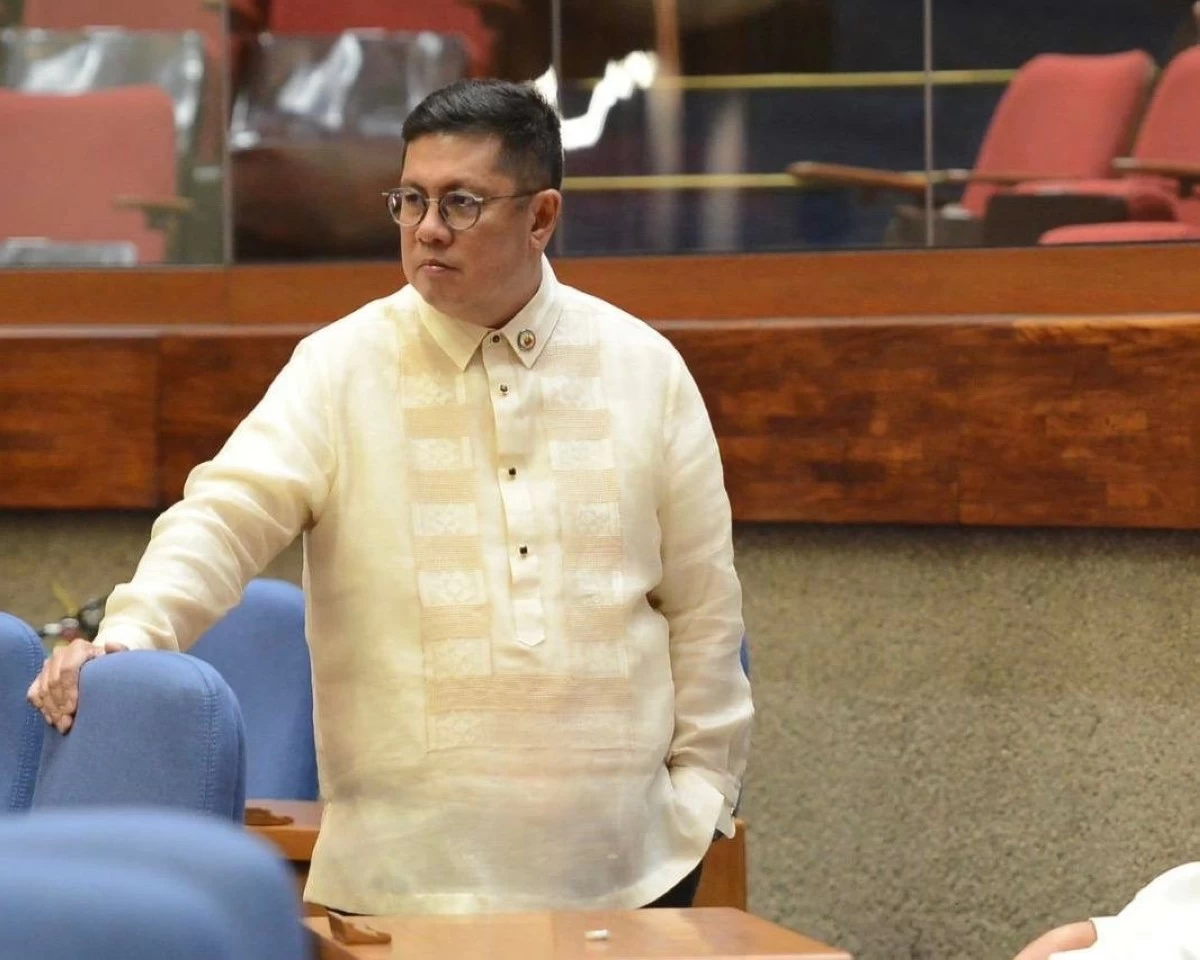
Parañaque City 2nd district Rep. Brian Raymund Yamsuan (Rep. Yamsuan’s office)
The House of Representatives must do its part in addressing the acute shortage of public attorneys serving marginalized sectors by passing a measure that would create a scholarship program for aspiring lawyers willing to render mandatory service in government institutions.
Thus, said Parañaque City 2nd district Rep. Brian Raymund Yamsuan, author of House Bill (HB) No.5242 or his proposed “Abogado Para Sa Bayan Act”.
Under Yamsuan’s bill, qualified law students will be granted full scholarship benefits in exchange for rendering mandatory return service of at least two years in the Public Attorney’s Office (PAO) and other government agencies.
“Pursuing a legal education is not easy nor is it cheap. There are many deserving students who want to become lawyers but are hindered by financial constraints," he noted.
"Layunin ng ating Abogado Para Sa Bayan Act na tulungan silang matupad ang kanilang mga pangarap (Our Abogado Para sa Bayan Act’s goal is to help them realize their dream) while also helping ensure that the government would have a steady pool of competent and committed lawyers at the [PAO] and other government institutions providing legal services to indigent clients and other underserved sectors,” Yamsuan said.
“As the late President Ramon Magsaysay once said, ‘Those who have less in life should have more in law.’ Kaya nga lamang, karaniwang hindi natutupad ang adbokasiyang ito dahil na rin sa matinding kakulangan ng mga abogadong handang magbigay ng kanilang serbisyo para sa mga mahihirap nating mga kababayan,” added the first-time district congressman.
(However, this advocacy is rarely carried out because of the acute shortage of lawyers ready to provide their services to our poor countrymen.)
Citing the latest available data, Yamsuan said that in 2024, the PAO was able to serve 15,069,235 clients and handle 847,317 cases, of which 92,052 involved persons deprived of liberty (PDLs).
However, only 2,676 public attorneys were available to handle these cases which translates to roughly a ratio of 5,631 clients and 317 cases per lawyer, according to PAO’s 2024 Accomplishment Report.
To help ease the shortage, the Department of Budget and Management (DBM) approved the creation of 178 new Public Attorney positions in 2024 while the Supreme Court (SC) released its rules on the Unified Legal Aid Service (ULAS), which mandates covered lawyers to render at least 60 hours of pro bono legal aid every three years to indigent clients.
“These efforts, while commendable, are still not enough. Justice is a right, not a privilege. Our measure will future-proof our legal sector and make sure that all Filipinos have access to legal aid regardless of his or her social and economic status in life,” Yamsuan said.
Under HB No.5242’s Legal Scholarship and Return Service (LSRS) Program, the full scholarship benefits to be offered to deserving students cover tuition and other school fees, and allowances for prescribed books, supplies, bar review fees and licensure fees.
To qualify for the scholarship, a prospective law student must be a Filipino citizen residing in the Philippines, a graduating student or graduate of an undergraduate degree program, and passed the entrance examinations and complied with other requirements for admission of the school where one intends to enroll.
The prospective scholar should pursue studies in State Universities and Colleges (SUC) or in partner private educational institutions in regions where there are no SUCs offering Juris Doctor or Bachelor of Laws degrees.
They must sign an agreement and complete their law studies within the prescribed time frame of the educational institution, and take the bar exams within one year after graduation from law school.
Within five years from admission to the practice of law, the LSRS Program beneficiary shall render mandatory return service for two years in government agencies including, but not limited to, the PAO, National Prosecution Service, and other government agencies that provide legal services to poor and marginalized individuals and communities, public school teachers, public health workers, and military and uniformed personnel involved in cases arising from, or in connection with, the performance of their duties and functions.
Beneficiaries who after three years from admission to the practice of law fail to secure an appointment in government shall have the option to pay the full cost of the scholarship and benefits, or undertake alternative compliance programs to be formulated by the Legal Education Board (LEB).
Under the bill, the LEB is tasked to determine the number and geographical allocation of scholars admitted to the LSRS Program.