






Manila Bulletin
 Business
Trade & Industry
Lifting bans, simplifying rules give local mining 'renewed energy'
Business
Trade & Industry
Lifting bans, simplifying rules give local mining 'renewed energy'
Business
Trade & Industry
Lifting bans, simplifying rules give local mining 'renewed energy'
Lifting bans, simplifying rules give local mining 'renewed energy'
Published Oct 22, 2025 04:53 pm


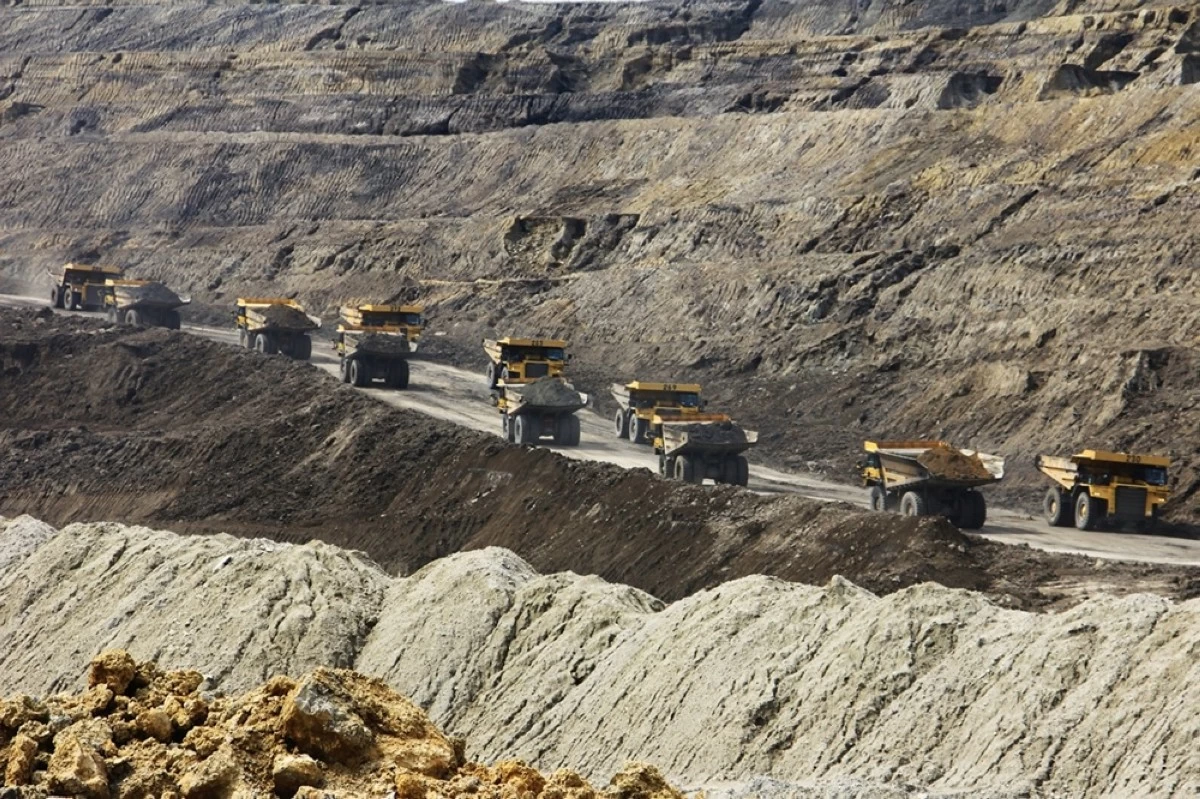
SEMIRARA Island, one of the country’s coal mining reservations. (Tara Yap)
The Chamber of Mines of the Philippines (COMP) expects the local mining industry to once again become a major driver of the national economy in the near term, driven by the recent implementation of favorable reforms.
Speaking before the 2025 Mining Philippines International Conference and Exhibition, COMP Chairman Michael Toledo said reforms aimed at liberalizing the industry position it for further growth.
Toledo noted that he is confident that mining can once again reach the heights it once reached during the 1980s, when the industry accounted for over 20 percent of the country’s export earnings.
Data from the Philippine Statistics Authority (PSA) showed that mineral products reached $7.02 billion or just below 10 percent of total exports last year.
Currently, the mining industry only accounts for 0.5 percent of the Philippines’ gross domestic product (GDP), down from around two percent during the 1980s.
“Mining once accounted for over 20 percent of our export earnings, and with the right support, it can do so again—maybe even more,” said Toledo.
Toledo emphasized that at a time of global uncertainty, the country requires another pillar for growth—one that is resilient and adaptable.
“If we continue to operate responsibly, sustainably, and transparently, mining can once again become one of the strongest drivers of our economy,” he added.
Toledo stated that the mining reforms implemented under the Marcos administration have provided the industry with a “renewed sense of energy and momentum.”
In particular, Toledo cited the lifting of the moratorium on new projects, the removal of the open-pit ban, and the ongoing efforts to simplify the permitting process.
He also highlighted the recent enactment of the Enhanced Fiscal Regime for Large-Scale Metallic Mining Act, which aims to simplify the country’s mining fiscal regime.
COMP earlier welcomed the law’s passage for establishing a competitive fiscal environment for the industry, making the country an attractive destination for investors.
“For years, we’ve said that responsible mining can be a partner in nation-building. Today, that belief is finally reflected in government policy and, we hope, in growing public understanding as we continue to earn the trust of our stakeholders,” said Toledo.
Despite this, Toledo said the local industry is still pushing for the introduction of more reforms that can help unlock its full potential.
He stated that the industry should have more
consistent rules, reliable infrastructure, and affordable energy, alongside better alignment between national and local policies.
“Getting it right can unlock billions in investments, create thousands of jobs, and uplift communities that need it most,” he added.
COMP previously stated that reforms under Marcos improved the country’s standing to 16th out of 82 jurisdictions in investment attractiveness and 25th in policy perception in the Fraser Institute’s 2024 Annual Survey of Mining Companies.
In 2023, the country ranked 72nd in investment attractiveness and 79th in policy perception.
“These improvements in ranking show how steady reforms are paying off. It sends a clear message: the Philippines is open for responsible, quality investment,” said Toledo.