

ADVERTISEMENT

Leviste flags endemic under-allocation per region under DPWH's intiial budget for 2026

Published Oct 22, 2025 08:01 pm

At A Glance

  • Batangas 1st district Rep. Leandro Legarda Leviste has exposed an endemic under-allocation of the Department of Public Works and Highways (DPWH) budget for 2026 as far as funding for individual regions is concerned.
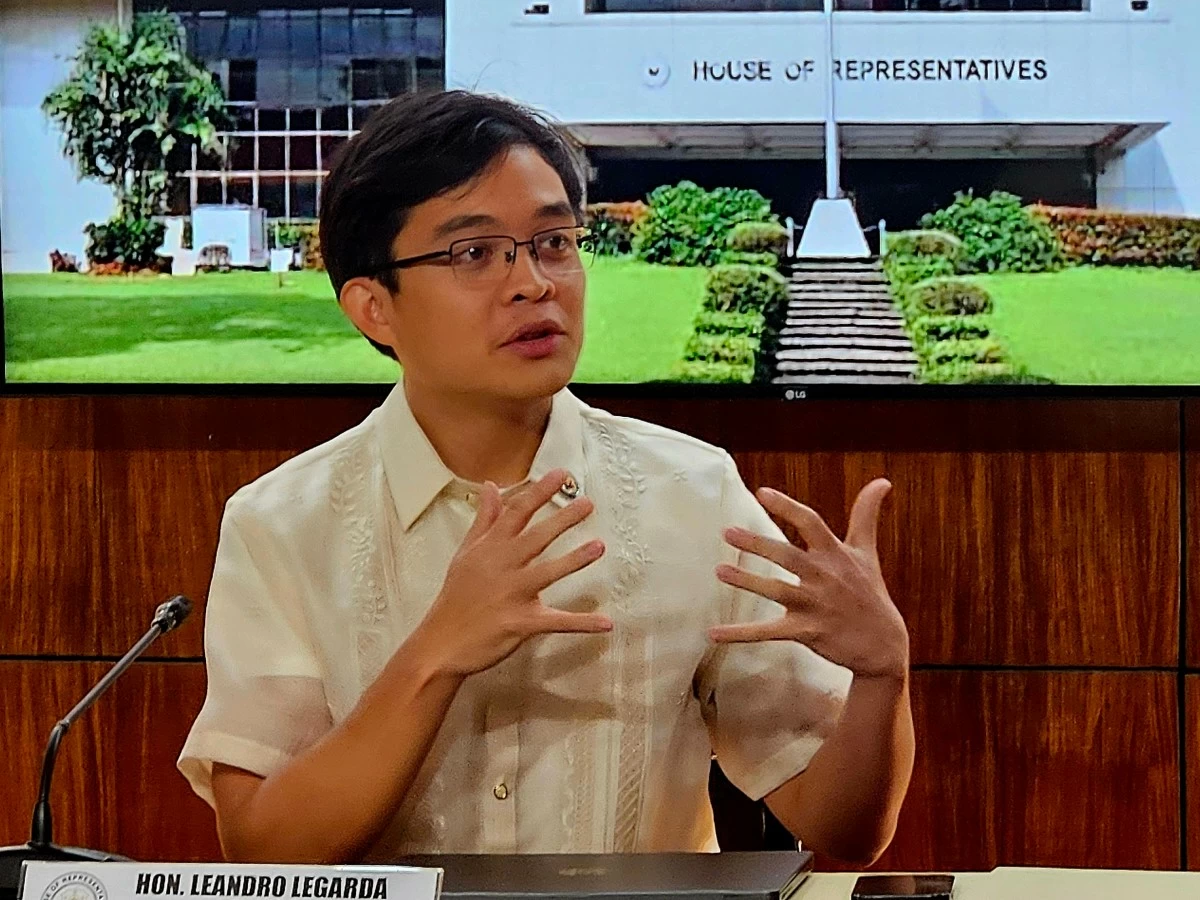
Batangas 1st district Rep. Leandro Legarda Leviste (Ellson Quismorio/ MANILA BULLETIN)


Batangas 1st district Rep. Leandro Legarda Leviste has exposed an endemic under-allocation of the Department of Public Works and Highways (DPWH) budget for 2026 as far as funding for individual regions is concerned.
This was among the glaring findings of Leviste's analysis of the projects proposed by the DPWH under the 2026 National Expenditure Program (NEP). The NEP, which emanates from the executive branch, is the precursor to the General Appropriations Bill (GAB).
Basically, Leviste found out during his month-long review of DPWH's 661-page budget that allocations for the regions often did not correspond to the regions' population.
He cited as an example how Region VI (Western Visayas), which has a population of 4.86 million, was allocated a budget of P16.37 billion, while CAR (Cordillera Administrative Region), which has a population of 1.81 million, was allocated a bigger budget of P17.00 billion.
Leviste also cited how the country’s most populous regions — Region 3 (Central Luzon), Region 4A (Southern Luzon), the National Capital Region (NCR), and Pangasinan make up almost 41 percent of the country’s population and 60 percent of the economy, but only receive about 25 percent of the DPWH budget.
“Given the smaller DPWH budget for certain regions compared to their much bigger contribution to national taxes, they would be better off if the DPWH budget were instead given to local governments equitably through the National Tax Allotment, which is based on a formula 50 percent population, 25 percent land area, and 25 percent equal sharing,” Leviste said.
He claimed that budgets did not even bring significant benefits to the provinces that received larger allocations.
He pointed to how DPWH in 2025 had approximately P30 billion in projects in Oriental Mindoro, equivalent to almost P150,000 per family. He reckoned that the budget, which funded mostly flood control projects in a few towns, could have instead been spent on housing or classrooms for the same province.
The 32-year-old neophyte solon also cited the under-allocation of budget to Region 4A on Oct. 13 when he cast one of the 12 "no" votes in the House of Representatives against the P6.793-trillion 2026 GAB.
His home province of Batangas belongs to Region 4A. The 2026 GAB, which featured an overhauled DPWH budget, still attained third reading passage on the strength of 287 "yes" votes.
In a privilege speech on Oct. 8, Leviste proposed that DPWH lower project costs by 25 percent in a bid to remove P150 billion in possible kickbacks, and re-allocate the savings to classrooms and underfunded regions.
In several interviews, Leviste jas argued that DPWH often allocates budgets not based on need, but where projects can be less visible and be made of substandard materials to increase profit margins.
Leviste also noted that the favored regions and types of projects were not driven by politics as much as where contractors saw there to be more potential profit, and that the favored regions tended to change from year to year, but consistently based on a pattern that prioritized profit over need.
Leviste said that corruption has incentivized horizontal projects like flood control, asphalt overlay, and slope protection to be prioritized in the DPWH budget over vertical projects like classrooms.
“The reason there’s a classroom shortage is because there are almost no kickbacks in classrooms. It is easier to do substandard work on the thickness of an asphalt project than on a three-story classroom building,” he noted.
ADVERTISEMENT
.most-popular .layout-ratio{ padding-bottom: 79.13%; } @media (min-width: 768px) and (max-width: 1024px) { .widget-title { font-size: 15px !important; } }

{{ articles_filter_1561_widget.title }}

.most-popular .layout-ratio{ padding-bottom: 79.13%; } @media (min-width: 768px) and (max-width: 1024px) { .widget-title { font-size: 15px !important; } }

{{ articles_filter_1562_widget.title }}

.most-popular .layout-ratio{ padding-bottom: 79.13%; } @media (min-width: 768px) and (max-width: 1024px) { .widget-title { font-size: 15px !important; } }

{{ articles_filter_1563_widget.title }}

{{ articles_filter_1564_widget.title }}

.mb-article-details { position: relative; } .mb-article-details .article-body-preview, .mb-article-details .article-body-summary{ font-size: 17px; line-height: 30px; font-family: "Libre Caslon Text", serif; color: #000; } .mb-article-details .article-body-preview iframe , .mb-article-details .article-body-summary iframe{ width: 100%; margin: auto; } .read-more-background { background: linear-gradient(180deg, color(display-p3 1.000 1.000 1.000 / 0) 13.75%, color(display-p3 1.000 1.000 1.000 / 0.8) 30.79%, color(display-p3 1.000 1.000 1.000) 72.5%); position: absolute; height: 200px; width: 100%; bottom: 0; display: flex; justify-content: center; align-items: center; padding: 0; } .read-more-background a{ color: #000; } .read-more-btn { padding: 17px 45px; font-family: Inter; font-weight: 700; font-size: 18px; line-height: 16px; text-align: center; vertical-align: middle; border: 1px solid black; background-color: white; } .hidden { display: none; }
function initializeAllSwipers() { // Get all hidden inputs with cms_article_id document.querySelectorAll('[id^="cms_article_id_"]').forEach(function (input) { const cmsArticleId = input.value; const articleSelector = '#article-' + cmsArticleId + ' .body_images'; const swiperElement = document.querySelector(articleSelector); if (swiperElement && !swiperElement.classList.contains('swiper-initialized')) { new Swiper(articleSelector, { loop: true, pagination: false, navigation: { nextEl: '#article-' + cmsArticleId + ' .swiper-button-next', prevEl: '#article-' + cmsArticleId + ' .swiper-button-prev', }, }); } }); } setTimeout(initializeAllSwipers, 3000); const intersectionObserver = new IntersectionObserver( (entries) => { entries.forEach((entry) => { if (entry.isIntersecting) { const newUrl = entry.target.getAttribute("data-url"); if (newUrl) { history.pushState(null, null, newUrl); let article = entry.target; // Extract metadata const author = article.querySelector('.author-section').textContent.replace('By', '').trim(); const section = article.querySelector('.section-info ').textContent.replace(' ', ' '); const title = article.querySelector('.article-title h1').textContent; // Parse URL for Chartbeat path format const parsedUrl = new URL(newUrl, window.location.origin); const cleanUrl = parsedUrl.host + parsedUrl.pathname; // Update Chartbeat configuration if (typeof window._sf_async_config !== 'undefined') { window._sf_async_config.path = cleanUrl; window._sf_async_config.sections = section; window._sf_async_config.authors = author; } // Track virtual page view with Chartbeat if (typeof pSUPERFLY !== 'undefined' && typeof pSUPERFLY.virtualPage === 'function') { try { pSUPERFLY.virtualPage({ path: cleanUrl, title: title, sections: section, authors: author }); } catch (error) { console.error('ping error', error); } } // Optional: Update document title if (title && title !== document.title) { document.title = title; } } } }); }, { threshold: 0.1 } ); function showArticleBody(button) { const article = button.closest("article"); const summary = article.querySelector(".article-body-summary"); const body = article.querySelector(".article-body-preview"); const readMoreSection = article.querySelector(".read-more-background"); // Hide summary and read-more section summary.style.display = "none"; readMoreSection.style.display = "none"; // Show the full article body body.classList.remove("hidden"); } document.addEventListener("DOMContentLoaded", () => { let loadCount = 0; // Track how many times articles are loaded const offset = [1, 2, 3, 4, 5, 6, 7, 8, 9, 10]; // Offset values const currentUrl = window.location.pathname.substring(1); let isLoading = false; // Prevent multiple calls if (!currentUrl) { console.log("Current URL is invalid."); return; } const sentinel = document.getElementById("load-more-sentinel"); if (!sentinel) { console.log("Sentinel element not found."); return; } function isSentinelVisible() { const rect = sentinel.getBoundingClientRect(); return ( rect.top < window.innerHeight && rect.bottom >= 0 ); } function onScroll() { if (isLoading) return; if (isSentinelVisible()) { if (loadCount >= offset.length) { console.log("Maximum load attempts reached."); window.removeEventListener("scroll", onScroll); return; } isLoading = true; const currentOffset = offset[loadCount]; window.loadMoreItems().then(() => { let article = document.querySelector('#widget_1690 > div:nth-last-of-type(2) article'); intersectionObserver.observe(article) loadCount++; }).catch(error => { console.error("Error loading more items:", error); }).finally(() => { isLoading = false; }); } } window.addEventListener("scroll", onScroll); });

Sign up by email to receive news.