







Kai Stroem: The Rugby playmaker who builds
Published Oct 22, 2025 05:32 pm


Physically strong (1.81 m, approx. 105 kg), he’s played hooker and in backline roles depending on what the game demanded. (Image provided by Kai Stroem)
I first met Kai Stroem in 2023 at the Philippine Olympic Committee’s Athlete Commission meeting. He was one of the early arrivals—quiet, grounded, approachable. I didn’t know much about rugby then. There he was, present long before the lights and microphones, not trying to stand out, just doing the work. That moment stuck with me.
Months later, as I dug into sports beyond the usual headlines, I learned that those small, steady moments are the foundation of who Kai is—forged in fields and training camps, but also in early mornings at home, in being a dad, in choosing to lead when others don’t see the path.
That consistency was on full display again in October 2025, when the Volcanoes battled through the Asia Rugby Sevens Series in Sri Lanka.
Despite injuries and tight turnarounds, Kai anchored the team through close matches against regional powerhouses—proof that leadership isn’t just about the wins, but how you hold the line when it matters most.
Kai Kristian Ledesma Stroem has worn many hats: forward turned playmaker, NEC Green Rockets player in Japan, long-standing member of the Philippine Volcanoes 7s program since 2015, and, as of recent years, captain of both the men’s 7s and 15s squads.
Publicly, his record is built on grit: leading his team to third place in the second leg of the 2022 Asia 7s Series in Korea, being named 2023 Philippine Rugby Male Player of the Year, and serving as captain continuously from 2021 through 2025 in different tournament formats.
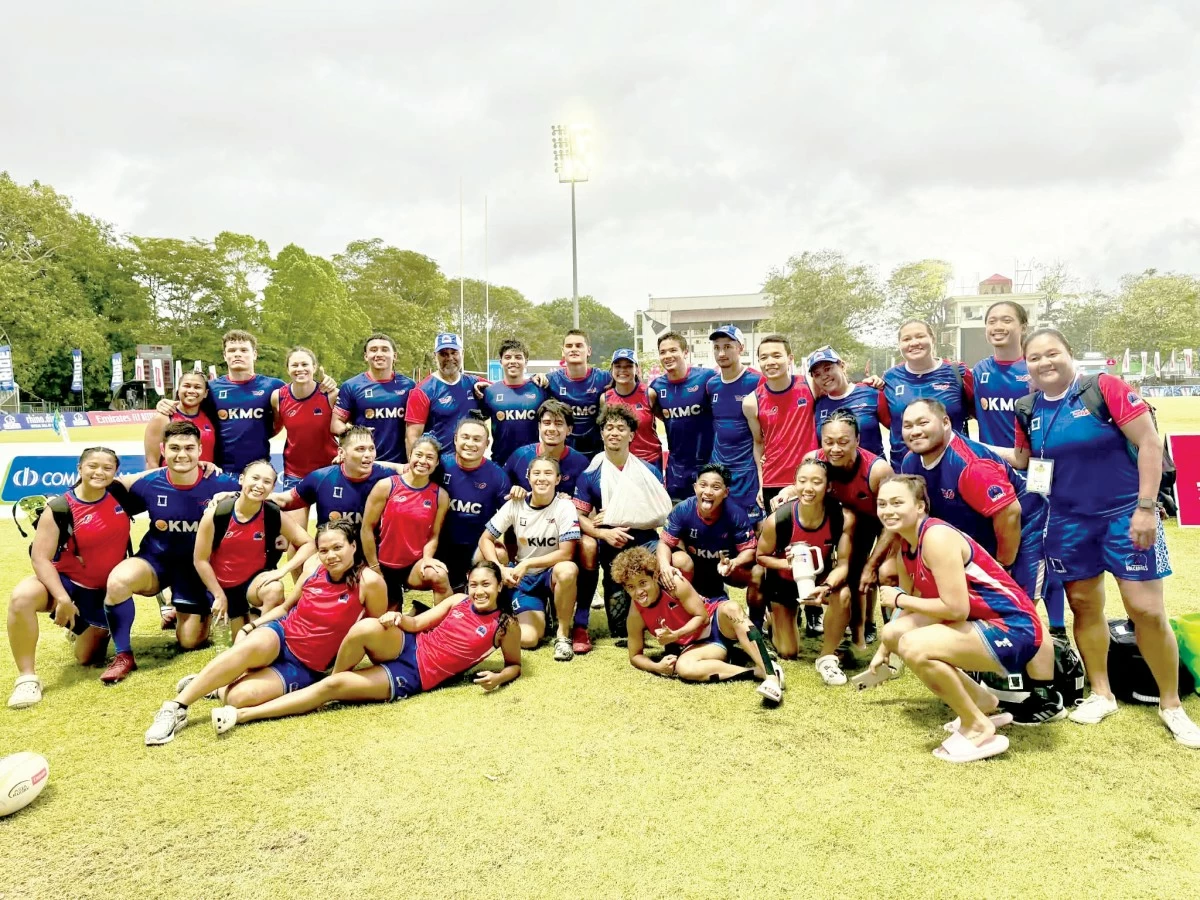
The Philippine Men’s and Women’s Volcanoes wrapped up their 2025 Asia Rugby Emirates Sevens Series campaign in Sri Lanka — closing the season with heart, grit, and pride for the flag.
When asked how he balances being a father, consultant, athlete, and captain, Kai doesn’t sound stretched—he sounds rooted. “I’ve been lucky enough to have had incredible role models in my life for each of these ‘hats’,” he shares. On the rugby field, mentors taught him to give everything—but also to remember that “it is just a game.” At home, his father is his anchor: a model of quiet responsibility and care. “One of my greatest motivations is to be just like my dad—in being a father, in his attitude to work and how much he looked after his family.”
What Rugby teaches
One thing he’s clear about: what many outside the sport don’t see. “The reality of rugby in the Philippines is that it is still very much associated with the solvent/glue that is sniffed. It is a painful comparison that us athletes have to live with... after all of the sacrifices that we athletes have to make.”
That stigma, the noise outside the pitch, is something Kai says deeply hangs over every match and every moment off the field.
On the flip side, when kids say they watched the Volcanoes play that weekend, that they’re cheering for them from homes where rugby isn’t always a known sport, Kai thinks, that’s worth everything.
Rugby, especially the fast and unforgiving seven’s format, has given him lessons no other sport did: resilience, adversity, and the discipline of hard work. “You train for hours and hours, but only get 15 minutes.” He speaks about “controlling your controllables”—the mindset that separates those who endure from those who fade.
Challenges, losses, and breakthroughs
Some of Kai’s toughest lessons came in close losses—games decided by one or two points. At the recent Asia Rugby Emirates Sevens in China, the Volcanoes had three matches slide out of their hands by razor-thin margins: against Korea, Chinese Taipei, and Uzbekistan. It’s a bitter taste, he says—but also proof of how far they’ve come.
He values those moments just as much as the victorious ones. “Being able to represent my country again… this group endured some tough ups and downs throughout our training camp… so to show some character and still front up for all of our games was very rewarding.”
Planting roots through outreach
In September 2025, Kai joined the Volcanoes on an outreach with Aeta youth in New Clark City—even while sick.
He describes the experience as “phenomenal.” Not just giving them jerseys and memorabilia from around the world, but giving them exposure: letting them step on a field, run some rugby drills, feel the possibility of “what it could be.” For many, hearing the game, seeing the jersey, and touching the ball is enough to spark something.
“It brings me back to how I learned the game,” he says—education, yes, but also the belief that sport can broaden horizons.
What Kai hopes will change
Despite the progress and passion, Kai is candid about what still needs to shift. The biggest gap, he says, is perception. The stigma around rugby in the Philippines is a weight: comments that reduce players to caricatures, social media threads that dismiss the sport, and a lack of awareness or support. For him, changing that—not just in the public eye, but in funding, in training opportunities, in infrastructure—is urgent.
Kai Stroem doesn’t want the spotlight for himself. He wants it for rugby—and for the kids watching, hoping, believing. He wants to leave behind a Philippines where rugby isn’t “that weird sport” but a respected part of the sporting fabric.
He’s captain, playmaker, father, consultant, but what grounds him most is the role he rarely talks about in public: son. The lessons from his father, the humility, the drive, the commitment—they’re what guide him off the field just as much as on it.