






Manila Bulletin
 Business
The Economy
Storms hit local construction as number of projects fall 2% in August
Business
The Economy
Storms hit local construction as number of projects fall 2% in August
Business
The Economy
Storms hit local construction as number of projects fall 2% in August
Storms hit local construction as number of projects fall 2% in August
Published Oct 21, 2025 04:00 pm


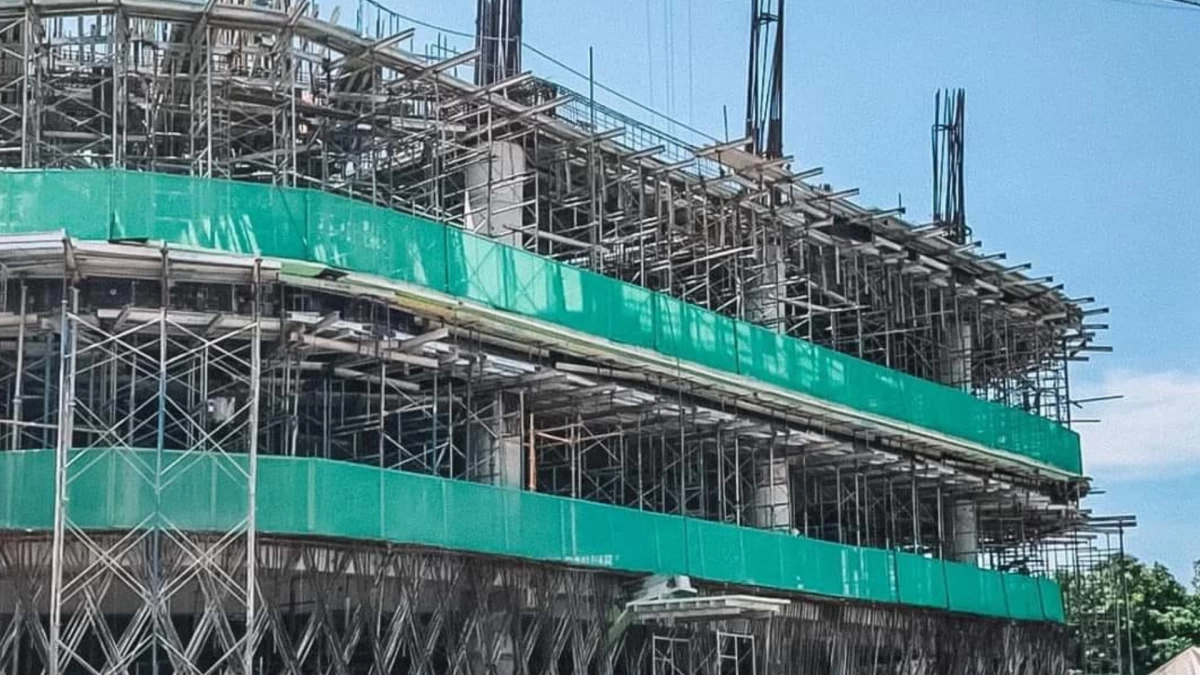
Amid typhoons and adverse weather conditions, private construction activity in the country declined in August, with fewer projects approved even as total floor area and project value increased, according to the Philippine Statistics Authority (PSA).
Preliminary data from the PSA, released on Oct. 20, showed a 2.0 percent year-on-year decline in approved building permits, with about 14,340 projects in August 2025, from 14,627 in the same month last year. The number of constructions in July was also revised, reflecting a 7.5 percent year-on-year decline.
In terms of value, PSA data showed that private construction reached ₱58.66 billion in August, a 14.2 percent year-on-year increase from ₱51.38 billion in the same month last year and up from ₱45 billion in July.
As for floor area, the 4.1 million square meters (sqm) covered by building permits approved in August 2025 increased by 13.2 percent from 3.6 million sqm in the same month last year, and from 3.5 million sqm recorded in July.
The data also showed that residential buildings accounted for the largest share of constructions, with 9,820 projects—over two-thirds of the total for the month. This segment recorded an annual increase of 5.3 percent.
“Majority of the total residential constructions were single-type houses with 7,516 constructions (76.5 percent),” the PSA data showed.
However, in terms of value, residential construction recorded a 13.2 percent year-on-year decline, totaling ₱19 billion, from ₱21 billion in the same month last year and ₱20 billion in July. In terms of floor area, it also posted a year-on-year decline of 5.3 percent, covering 1.5 million sqm compared to 1.6 million sqm in the same month last year and in July.
Meanwhile, PSA data indicated that non-residential constructions ranked second in August, with 2,849 projects—accounting for nearly one-fifth of the month’s total.
“This type of construction dropped during the period at an annual rate of 13.4 percent. Most of the non-residential constructions were commercial buildings with 1,918 constructions (67.3 percent),” the report added.
Despite the decline in the number of non-residential projects, PSA reported a 41.8 percent year-on-year increase in value, reaching about ₱28.16 billion, from ₱20 billion in the same month last year and in July. In terms of floor area, it also grew by 29.7 percent this month, covering about 2.5 million sqm, up from roughly two million sqm last year and last month.
PSA data also showed that alterations and repairs declined by about 18 percent in number this month but increased in value by 29.4 percent to ₱3.6 billion. Other types of construction rose in both numbers, by 1.1 percent, and value, by 63.5 percent, totaling approximately ₱7.4 billion.
Michael Ricafort, chief economist at Rizal Commercial Banking Corp. (RCBC), told the Manila Bulletin on Tuesday, Oct. 21, that the exit of Philippine offshore gaming pperations (POGOs) by the end of 2024 has led to higher vacancies and inventories, prompting developers to pause new projects and slowing construction, including in the residential sector.
Ricafort added that slower US and global economic growth, driven by higher tariffs, trade wars, and other protectionist measures, could indirectly dampen the local economy and, in turn, slow construction activities.
He emphasized that slower growth was partly due to storms and flooding from July to September 2025, which reduced construction activity, though reconstruction work in hard-hit areas provided some offset.
“The slower growth could also reflect some slowdown in government spending, especially on infrastructure, in view of the anti-corruption measures since the State of the Nation Address (SONA) on July 28, 2025, amid political noises related to the anomalous flood control projects, thereby fundamentally slowing construction activities,” Ricafort said.
However, Ricafort noted that a positive factor has been the series of rate cuts by the US Federal Reserve (Fed) and the Bangko Sentral ng Pilipinas (BSP) since late 2024, which lowered borrowing costs and boosted loan demand for new investments and expansion projects, thereby supporting construction activity.
(Ricard M. Austria)