







Microfinance guarantee fund corporation: Why not?
Published Oct 20, 2025 12:05 am
|
Updated Oct 19, 2025 03:13 pm


FROM THE MARGINS
For more than three decades, the Philippine microfinance industry has been a source of financial innovation and social transformation. From microinsurance and banking services to digital finance and social enterprises, microfinance institutions (MFIs) have continually sought new ways to empower low-income Filipinos and support inclusive growth.
Today, a new and ambitious idea is taking shape — the Microfinance Guarantee Fund Corporation (MGFC), a private-led initiative that aims to strengthen MFIs’ resilience and unlock greater opportunities for microentrepreneurs aspiring to grow into small-and-medium enterprises (SMEs).
Learning from Japan’s success
The concept took shape following a study visit to Japan in May 2023, where representatives from Philippine MFIs joined the Bangko Sentral ng Pilipinas (BSP) delegation. The team engaged with key Japanese institutions — including the Credit Risk Database (CRD), Japan International Cooperation Agency (JICA), Small and Medium Enterprise Agency (SMEA), Financial Services Agency (FSA), Bank of Japan, and the Credit Guarantee Corporation of Tokyo — to learn from their best practices in financial inclusion and risk management.
The visit provided valuable insights into how Japan’s credit guarantee system has helped its SMEs thrive, balancing access to finance with prudent risk management. A follow-up internship from Feb. 19 to March 1, 2024 enabled MFI representatives to learn directly from institutions like CRD-Japan, Mizuho Bank, and Tokyo Credit Guarantee Corporation — hands-on engagements that explored governance models, sustainability mechanisms, and client servicing systems that sustain the robustness and credibility of Japan’s credit guarantee framework.
From these engagements, a simple but powerful question emerged: If Japan could build such a system for its entrepreneurs — why not the Philippines?
A shared vision
That question gained momentum during a high-level study visit to Tokyo from Sept. 23 to 29, 2025, organized by CRD-Business Support Limited, Japan. The delegation included leaders from six of the country’s leading MFIs: Kabalikat para sa Maunlad na Buhay, Inc. (KMBI), ASA Philippines Foundation, Negros Women for Tomorrow Foundation (NWTF), Community Economic Ventures, Inc. (CEV), Ramon Aboitiz Foundation, Inc. (RAFI) and Center for Agriculture and Rural Development Mutually Reinforcing Institutions (CARD MRI).
Over a week of exchanges with Japan’s top credit guarantee companies, our group learned how risk-sharing mechanisms, portfolio diversification, and guarantee fee systems could stabilize lending and support business continuity. We also saw how guarantees could strengthen agricultural, housing, and start-up financing — areas that remain challenging in the Philippines.
The experience deepened a shared conviction among us: the Philippine microfinance sector needs to develop its own homegrown, industry-led credit guarantee system to help clients weather risks and scale up sustainably.
Founding a new institution
By the end of the visit, the six MFIs reached a historic agreement: to establish the Microfinance Guarantee Fund Corporation (MGFC), with ₱500 million initial target capitalization. The founding institutions will contribute at least 20 to 25 percent of the planned capital — signaling a very strong collective confidence in the initiative.
Capitalization will be augmented through innovative financing streams, like participating in the global carbon markets. MFIs which already implement environmental programs, like tree planting and mangrove rehabilitation, plan to generate carbon credits and sell them to partners in Japan, Europe, and other markets — augmenting the fund’s capital and supporting global sustainability efforts.
Engagement with government regulators will also be done, to explore additional fund sources, like allocating portions of the two percent tax collected from accredited MFIs or the penalties from banks’ non-compliance with RA 11901 (Agriculture, Fisheries and Rural Development Financing Enhancement Act).
The proposed MGFC is envisioned to be both a safety net and a growth catalyst for the microfinance sector. It will guarantee loan portfolios — particularly in agriculture, housing, and start-up enterprises — while also offering capacity-building and technical assistance to partner institutions. To ensure efficiency and responsiveness, guarantee applications and claims will be processed quickly. A risk-based fee structure will be applied, aligning guarantee costs with institutional performance and credit quality.
A steering committee composed of the six founding MFIs is now finalizing the corporation’s registration with the Securities and Exchange Commission (SEC), along with its governance framework, business plan, and operational systems. If all goes as planned, the MGFC could be operational by next year.
Looking ahead
The envisioned guarantee corporation will initially focus on helping microentrepreneurs transition to SMEs, supporting start-ups, agri-based processing enterprises, and microfinance client housing projects — sectors often underserved by traditional finance. Over time, it aims to become a pillar of inclusive finance, reducing credit risks, fostering innovation, and encouraging more investment into the microfinance ecosystem.
As the Japan study tours have shown, a well-designed credit guarantee system can be transformative — not by eliminating risk, but by sharing it wisely. For the Philippine microfinance industry, the question “Why not?” has become more than a thought experiment. It is now a collective call to action — a challenge to build a stronger, more resilient system that ensures every Filipino entrepreneur can grow with confidence.
* * *
“Teamwork makes the dream work.” – John C. Maxwell
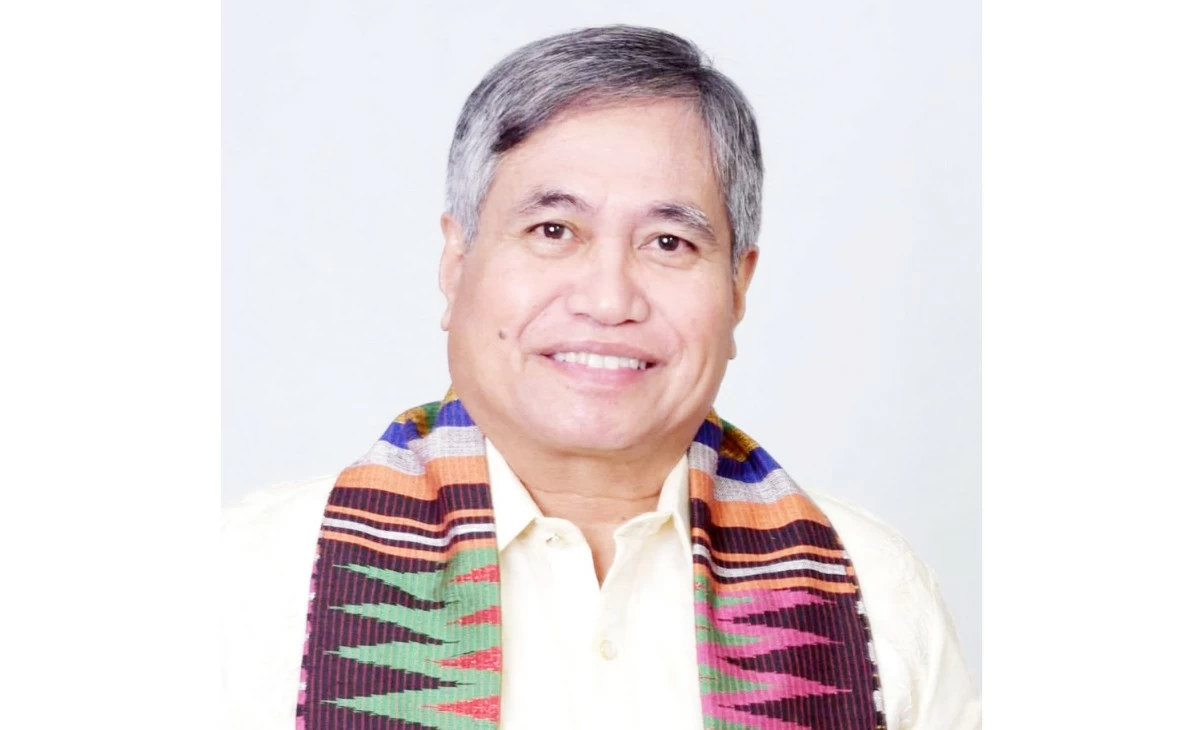
(Dr. Jaime Aristotle B. Alip is a poverty eradication advocate. He is the founder of the Center for Agriculture and Rural Development Mutually-Reinforcing Institutions (CARD MRI), a group of 23 organizations that provide social development services to eight million economically-disadvantaged Filipinos and insure more than 27 million nationwide.)