







Here's how foam fillers are reshaping facial contours
Understanding the beauty of the blend
Published Oct 20, 2025 09:35 pm


At A Glance
- Beauty insiders are buzzing because it promises a natural-looking lift that lasts longer than traditional fillers, all while keeping safety levels sky-high.
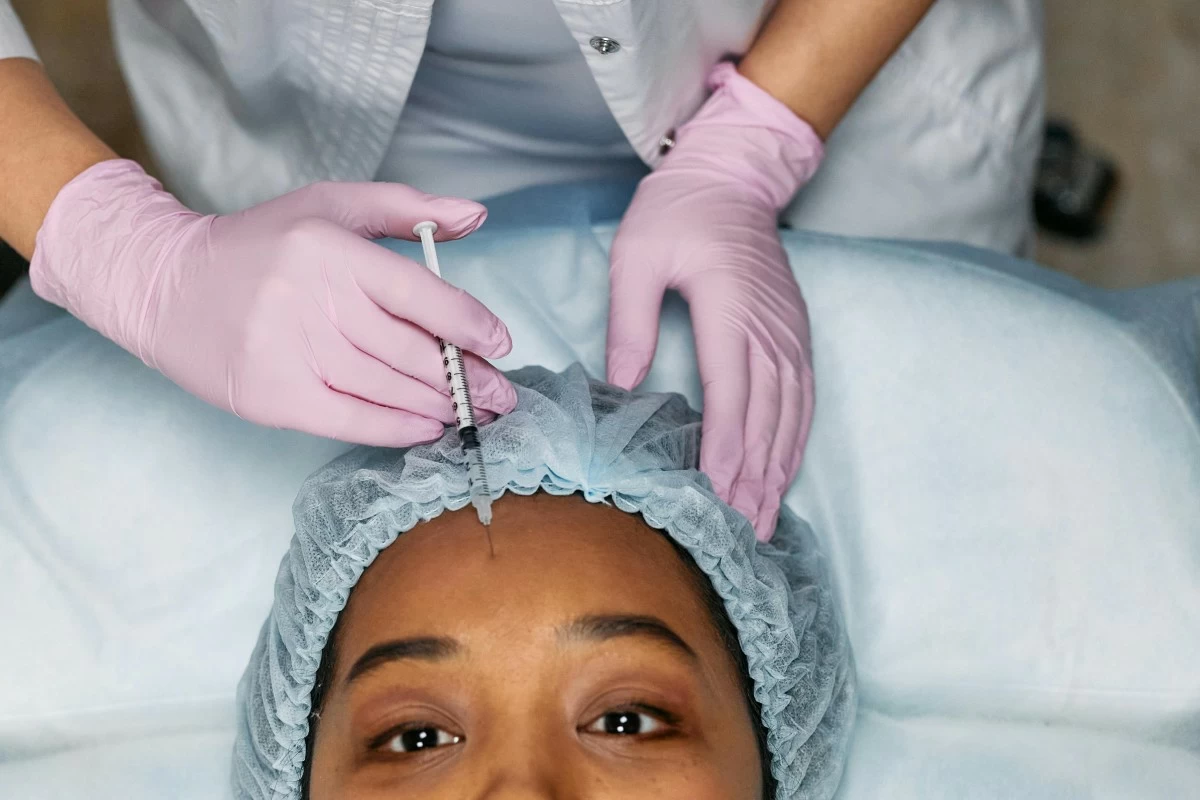
A frothy new fix for facial contours
At a recent clinic demonstration, I watched a fellow doctor perform what looked like a barista’s trick rather than a cosmetic procedure. He drew two clear gels into a syringe, then whipped the mixture back and forth until it turned into a light, frothy “filler foam.” This isn’t a coffee creation. It’s an innovative approach to facial contouring. Dubbed the hybrid foaming filler technique, this method combines two advanced injectables, Radiesse and Belotero, to sculpt the face with both instant and long-lasting effects. Beauty insiders are buzzing because it promises a natural-looking lift that lasts longer than traditional fillers, all while keeping safety levels sky-high.
The science of calcium and hyaluronic acid: Two fillers, one face
What exactly are these two magic ingredients? Calcium hydroxylapatite (CaHA), the key ingredient in Radiesse, is a mineral naturally found in our bones. In filler form, it consists of tiny calcium-based microspheres suspended in a gel. When injected, CaHA acts as a scaffold that stimulates your skin’s fibroblast cells to produce new collagen and elastin. Over time, those microspheres dissolve, but they leave behind fresh collagen – firming the skin from within like rebar reinforcing concrete. Studies even show CaHA fillers can increase skin thickness by 50 percent in three months and maintain that improvement well over a year, a testament to their collagen-boosting prowess.
On the other hand, hyaluronic acid (HA), found in Belotero and many popular fillers, is a sugar molecule our skin makes naturally. HA is famous for holding water; it’s the same substance in high-end moisturizers because it hydrates and plumps the tissue. As a filler, HA works like a soft, malleable gel cushion that instantly fills wrinkles and restores lost volume. It gives you that quick “aha!” moment in the mirror – cheeks look fuller, lines look smoother, right after the injection. Both CaHA and HA have excellent safety records and proven efficacy on their own. They’ve been the go-to choices for non-surgical face rejuvenation for years, so it was only a matter of time before doctors tried using them together in one syringe.
Whipping up the perfect mix: The “foaming” technique
Simply mixing CaHA and HA in one syringe is already clever, but the real twist (literally) is the foaming technique. This novel method involves connecting two syringes, one loaded with Radiesse, one with Belotero, plus a dash of lidocaine anesthetic, and pushing the contents back and forth repeatedly. By drawing in a bit of air and vigorously mixing, the blend becomes a lighter, whipped consistency, hence the “foam.” It’s akin to chefs whisking cream or egg whites to create a fluffier texture. In the filler world, this frothiness is a feature, not a bug: it ensures the calcium microspheres and HA gel are thoroughly intermingled and evenly distributed.
Why bother with this extra step? Homogeneity and smooth flow. Research shows that the foaming technique produces a more uniform mixture of CaHA and HA compared to simple mixing. Under the microscope, foamed hybrid filler has smoother particles and no clumps, whereas non-foamed mixes can look a bit uneven. For patients, this translates to a silkier injection experience and a more even spread under the skin – crucial for avoiding any bumps or nodules. In ultrasound imaging, foamed filler even shows up with well-defined borders and a distinct pattern (a “ring-down artifact,” for the ultrasound geeks), indicating it’s nicely dispersed, unlike the blob-like appearance of a regular filler mix. In plain English, the foam technique helps the doctor place the filler more smoothly and precisely, which likely means better results and fewer problems.
Immediate lift + lasting boost: A two-in-one wonder
The beauty of this hybrid filler approach is in its synergy. By combining HA and CaHA, we get to harness the strengths of each. Right after a treatment, the HA component in the mixture attracts water and adds volume, so patients see a gentle plumping and smoothing effect – think of it as the “quick win” for an event next week. Meanwhile, the CaHA component gets to work like a slow-release fertilizer under your skin, stimulating collagen over the next several months. This means the contouring effect isn’t just a temporary fix; it actually improves over time as your skin becomes firmer and tighter from within.
Doctors have observed that premixing CaHA with HA offers some practical advantages too. It provides enhanced tissue lift (more structure than HA alone can achieve) and reduces early volume loss after injection. Pure CaHA (Radiesse) can sometimes be injected in a diluted form for a more subtle result, but if it’s too dilute or if the gel carrier absorbs quickly, you might lose a bit of that initial volume. Mixing with HA helps “lock in” the volume early on. Essentially, the HA acts like a net that holds the CaHA in place initially, and by the time the HA gradually breaks down, new collagen has filled in to maintain the lift. It’s the best of both worlds: instant gratification and lasting improvement. As I often tell my patients, HA is like the quick bloom of a flower, and CaHA is the sturdy vine that keeps growing after the bloom. Together, they create a result that’s both immediate and enduring.
Sculpting jawlines and cheeks: The art of the ratio
One area where this hybrid filler has truly shined is jawline contouring. A well-defined jawline is a universal sign of youth and attractiveness, and it’s one of the first areas to soften as we age. By injecting along the jawbone (near the back by the ears, along the mandible, and at the chin), we can literally redraw a sharper jaw. The CaHA in the mix provides a firm scaffold – almost like a liquid bone, while the HA ensures the transitions are smooth and not abrupt. Importantly, practitioners have found that using an equal ratio of Radiesse to Belotero (a 1:1 mix) yields the best consistency and results. In fact, in one study of 126 patients focusing on jawline enhancement, about two-thirds were treated with a 1:1 CaHA: HA syringe ratio, and this was optimal for achieving crisp, long-lasting jawlines without any adverse events. The hybrid filler could be fanned along the jaw via a cannula (a blunt-tipped needle), molding neatly to the bone for a clean, natural-looking definition.
The midface, essentially the cheeks and tear trough area, also benefits greatly from this approach. As we get older, our cheeks deflate and descend, and simply piling in traditional filler can sometimes create an overfilled “pillow face.” The hybrid technique offers a subtler touch. Small aliquots of the Radiesse+HA foam can lift the cheeks and restore volume in a controlled way. The immediate HA plump prevents that gaunt, hollow look, while the CaHA encourages a tightening effect over time, so the cheek uplift you see initially might actually improve in firmness months later. Aging skin isn’t just about volume loss; it’s about weakened structure. This combo tackles both by replacing volume and rebuilding support. I’ve had patients describe it as if their skin quality itself got better – they report their jawline or cheeks still felt firmer and smoother even after the initial filler would normally have worn off.
Safety and satisfaction: What studies show
Any new treatment sounds great on paper, but the real question is: does it work well in practice, and is it safe? The evidence so far is very encouraging. We now have several years of data on CaHA+HA hybrid fillers, including large-scale studies. One five-year retrospective analysis (2018–2023) pooled the experience of two expert injectors using the hybrid blend in over 2,100 patients. The outcome was astonishingly positive – only five minor adverse events were recorded out of 2,112 treatments. That’s a complication rate of just 0.24 percent, meaning 99.76 percent had no issues at all. Those few issues were mild and manageable (four cases of small, non-inflamed nodules – essentially tiny lumps – and one temporary swelling, all resolved). No serious reactions like vascular complications or severe inflammation were seen. This aligns with other publications and indeed reflects what I see in my own practice: the CaHA+HA combo, when prepared and injected properly, is just as safe as the standard fillers we’ve trusted for years.
Even the foaming technique, despite introducing a bit of air, appears to maintain safety. In the 1,559-patient study that introduced the foaming method, not a single adverse event was reported. Electron microscopy and ultrasound checks confirmed that the foam mix didn’t contain any large air pockets or irregularities that could cause problems. It was smooth and well-behaved under the skin, and patients did just as well as (if not better than) those who got the non-foamed mixture. For a new technique, having zero complications in over a thousand cases is a strong safety signal.
What about patient satisfaction? After all, a treatment can be safe and still not worth it if nobody loves the results. Here, too, the hybrid filler delivers. In clinical studies, both patients and independent doctors have rated the outcomes highly. For example, a controlled trial in 2024 looked at using a CaHA/HA hybrid filler versus CaHA alone for hand rejuvenation (aging hands often have visible veins and tendons). Both groups saw significant improvements in skin hydration, elasticity, and thickness by objective measurements, but the hybrid group showed a bit more collagen stimulation on ultrasound. More importantly, patients were very satisfied in both groups, and blinded evaluators (other doctors who didn’t know which treatment was used) were also impressed with the cosmetic improvements. This tells us the hybrid formula wasn’t just hype – it performed as well as a trusted filler and even hinted at extra benefits in tissue quality. For the face, we have multiple studies and years of clinical use indicating high satisfaction. In one report on midface and jawline treatments, every single patient had a visible improvement at 3 months, and even a year later, 85 percent of them maintained a significant improvement in their facial contour. And notably, in that study, there were no complications at all. Patients often comment that they love the “two-stage” effect – an immediate refresh followed by a second wave of improvement as their skin gradually tightens and glows over time. It’s a bit like renovating a home: you put up some new wallpaper (instant change) and also repair the foundation (slower, structural change). The end result is both cosmetic and structural enhancement.
Blending art and science for a natural look
What I find most appealing about the Radiesse+Belotero foaming filler is how it blends art and science. As a dermatologist (and a linguist by training), I appreciate a good portmanteau – a blend – that creates something greater than the sum of its parts. In language, two words combine to convey a new meaning; in aesthetics, two fillers combine to deliver a new level of rejuvenation. This hybrid approach allows for artful sculpting of the face. The doctor can contour the jawline or cheekbones with the confidence that the result will be smooth yet defined, and that it will likely improve over time rather than suddenly deflate. The key is that it doesn’t scream “I got filler”; it whispers refinement. The changes are often described as rested or refreshed rather than drastic. Because the filler is more homogenous, it integrates with your tissue in a very natural way, avoiding that telltale lumpy or overstuffed look.
Another advantage: the hybrid filler can be a collagen kick-starter for those noticing early skin laxity. For patients in their 40s and 50s who say, “My skin just doesn’t snap back like it used to,” adding CaHA to an HA filler is like an insurance policy – you get the immediate perk-up of the HA, and the CaHA works in the background to strengthen the skin’s support matrix. Over a few months, many notice that their skin texture and firmness have improved in the treated areas, even beyond the initial filling effect. It’s proactive aging care, encouraging your own tissues to participate in the rejuvenation process.
The takeaway: A new era of filler for the thoughtful patient
In a world of beauty quick-fixes, it’s heartening to see a technique that checks both boxes: instant results and long-term benefit. The Radiesse-Belotero foaming filler approach exemplifies the direction modern aesthetic medicine is headed – toward combo therapies that are greater than the sum of their parts. For readers who are considering filler treatments, the takeaway is to be aware of these advancements. Ask your aesthetic doctor about hybrid fillers: How might a combined CaHA/HA injection help in my case? Is the clinic experienced with the foaming technique? For many, this could be a game-changer, especially for enhancing areas like the jawline and midface, where we want definition but also longevity.
Finally, as with any cosmetic procedure, results hinge on the injector’s skill. This technique is an art that requires a trained hand and understanding of facial anatomy. Ensure you consult a board-certified dermatologist or aesthetic physician who is knowledgeable about the hybrid approach. When done correctly, the hybrid foaming filler is a remarkably safe and effective way to refresh your look in a subtle, sophisticated manner, giving you that immediate glow-up and a slow boost in one go. It’s a beautiful example of science and artistry coming together, much like a perfectly blended cappuccino for your face, foam and all, for a truly satisfying rejuvenation.