ADVERTISEMENT

EU pushes Philippine raw materials study for sustainable access

Published Oct 20, 2025 12:00 am  |  Updated Oct 18, 2025 03:40 pm
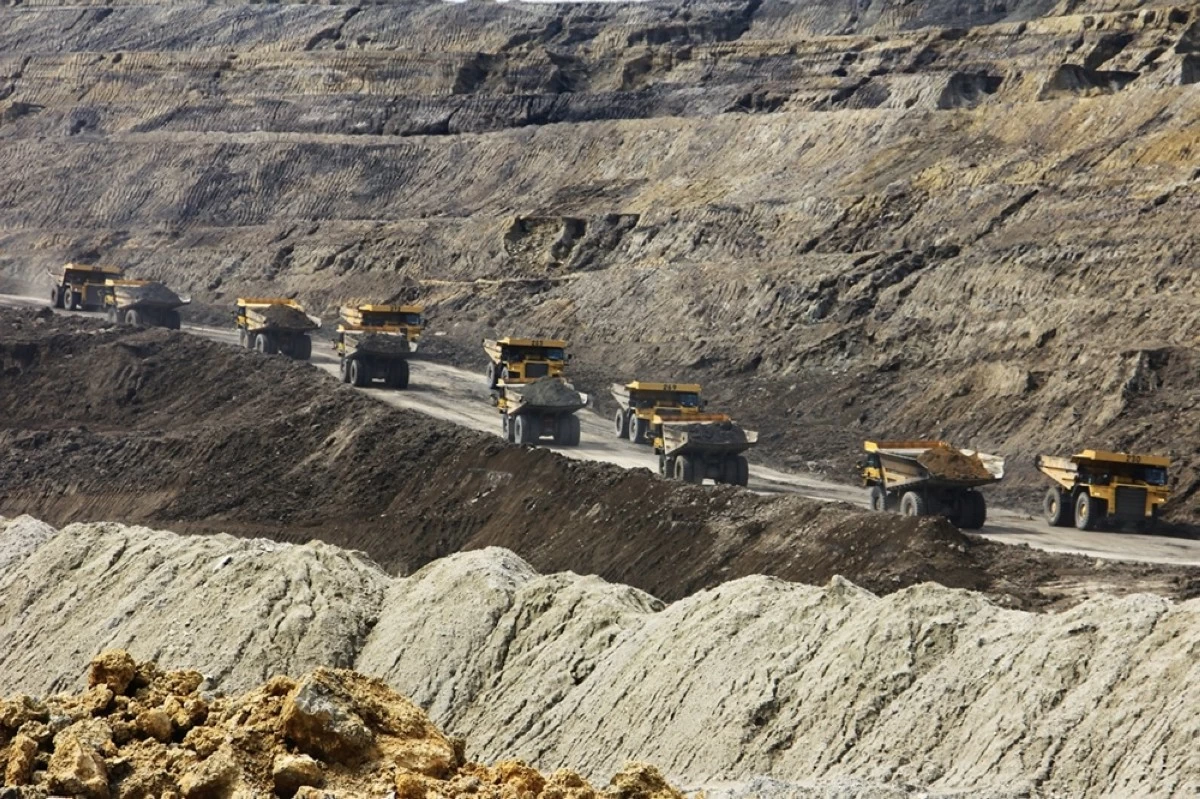
SEMIRARA  Island, one of the country’s coal mining reservations.  (Tara Yap)
SEMIRARA Island, one of the country’s coal mining reservations. (Tara Yap)
The European Union (EU) is still exploring the prospect of launching a study with the Philippine government that would identify sites for critical raw materials, aimed at promoting sustainable use and attracting investments in the local mining industry.
EU Ambassador to the Philippines Massimo Santoro said he is still working with the government, through the Department of Environment and Natural Resources (DENR), to secure a partnership for the study.
Santoro said the goal is to work with the DENR on critical raw materials, particularly in sharing best practices and expertise on their responsible use and management.
He added that the collaboration would also cover the protection of rights involved in the extraction and utilization of critical raw materials to ensure that such activities are conducted sustainably.
“We are still working on that, together with our Philippine counterparts,” Santoro told reporters last week.
The official said there are ongoing discussions about the study, and he is optimistic that it will be finalized by next year, at the latest.
The EU first expressed its interest in exploring the Philippines’ critical raw materials during the 2023 visit of European Commission President Ursula von der Leyen to Manila.
During her meeting with President Marcos, von der Leyen said the regional bloc was willing to partner with the Philippines to identify projects that would help develop the local mining industry.
She said this would support communities surrounding mining activities and further strengthen the country’s role in the global supply of critical raw materials.
Santoro said last May that he has since been working with the Philippine government to implement this potential partnership.
He has clarified that the EU will not be extracting these minerals. Instead, the study would serve only as a framework to ensure the sustainable access and use of critical raw materials.
On top of this, the study is expected to promote “reciprocal investments” that would bring fresh capital from European companies into the domestic mining industry.
The EU has been ramping up its efforts to ensure a secure and sustainable supply of critical raw materials for its member states due to their vulnerability to supply disruptions, such as during times of war or disaster.
Under its Critical Raw Materials Act, the EU defined these minerals as "indispensable" for its economy and strategic sectors such as renewable energy, digital, aerospace, and defense.
Through this law, the 27-member bloc aims to establish a resilient and sustainable value chain for critical raw materials to enhance its competitiveness and maintain its autonomy in an increasingly challenging geopolitical environment.
The EU classifies 34 minerals as critical raw materials, 17 of which are designated as strategic.
These minerals include nickel, copper, silicon metal, lithium, cobalt, tungsten, and phosphate rock, among others.

Related Tags

European Union
ADVERTISEMENT
.most-popular .layout-ratio{ padding-bottom: 79.13%; } @media (min-width: 768px) and (max-width: 1024px) { .widget-title { font-size: 15px !important; } }

{{ articles_filter_1561_widget.title }}

.most-popular .layout-ratio{ padding-bottom: 79.13%; } @media (min-width: 768px) and (max-width: 1024px) { .widget-title { font-size: 15px !important; } }

{{ articles_filter_1562_widget.title }}

.most-popular .layout-ratio{ padding-bottom: 79.13%; } @media (min-width: 768px) and (max-width: 1024px) { .widget-title { font-size: 15px !important; } }

{{ articles_filter_1563_widget.title }}

{{ articles_filter_1564_widget.title }}

.mb-article-details { position: relative; } .mb-article-details .article-body-preview, .mb-article-details .article-body-summary{ font-size: 17px; line-height: 30px; font-family: "Libre Caslon Text", serif; color: #000; } .mb-article-details .article-body-preview iframe , .mb-article-details .article-body-summary iframe{ width: 100%; margin: auto; } .read-more-background { background: linear-gradient(180deg, color(display-p3 1.000 1.000 1.000 / 0) 13.75%, color(display-p3 1.000 1.000 1.000 / 0.8) 30.79%, color(display-p3 1.000 1.000 1.000) 72.5%); position: absolute; height: 200px; width: 100%; bottom: 0; display: flex; justify-content: center; align-items: center; padding: 0; } .read-more-background a{ color: #000; } .read-more-btn { padding: 17px 45px; font-family: Inter; font-weight: 700; font-size: 18px; line-height: 16px; text-align: center; vertical-align: middle; border: 1px solid black; background-color: white; } .hidden { display: none; }
function initializeAllSwipers() { // Get all hidden inputs with cms_article_id document.querySelectorAll('[id^="cms_article_id_"]').forEach(function (input) { const cmsArticleId = input.value; const articleSelector = '#article-' + cmsArticleId + ' .body_images'; const swiperElement = document.querySelector(articleSelector); if (swiperElement && !swiperElement.classList.contains('swiper-initialized')) { new Swiper(articleSelector, { loop: true, pagination: false, navigation: { nextEl: '#article-' + cmsArticleId + ' .swiper-button-next', prevEl: '#article-' + cmsArticleId + ' .swiper-button-prev', }, }); } }); } setTimeout(initializeAllSwipers, 3000); const intersectionObserver = new IntersectionObserver( (entries) => { entries.forEach((entry) => { if (entry.isIntersecting) { const newUrl = entry.target.getAttribute("data-url"); if (newUrl) { history.pushState(null, null, newUrl); let article = entry.target; // Extract metadata const author = article.querySelector('.author-section').textContent.replace('By', '').trim(); const section = article.querySelector('.section-info ').textContent.replace(' ', ' '); const title = article.querySelector('.article-title h1').textContent; // Parse URL for Chartbeat path format const parsedUrl = new URL(newUrl, window.location.origin); const cleanUrl = parsedUrl.host + parsedUrl.pathname; // Update Chartbeat configuration if (typeof window._sf_async_config !== 'undefined') { window._sf_async_config.path = cleanUrl; window._sf_async_config.sections = section; window._sf_async_config.authors = author; } // Track virtual page view with Chartbeat if (typeof pSUPERFLY !== 'undefined' && typeof pSUPERFLY.virtualPage === 'function') { try { pSUPERFLY.virtualPage({ path: cleanUrl, title: title, sections: section, authors: author }); } catch (error) { console.error('ping error', error); } } // Optional: Update document title if (title && title !== document.title) { document.title = title; } } } }); }, { threshold: 0.1 } ); function showArticleBody(button) { const article = button.closest("article"); const summary = article.querySelector(".article-body-summary"); const body = article.querySelector(".article-body-preview"); const readMoreSection = article.querySelector(".read-more-background"); // Hide summary and read-more section summary.style.display = "none"; readMoreSection.style.display = "none"; // Show the full article body body.classList.remove("hidden"); } document.addEventListener("DOMContentLoaded", () => { let loadCount = 0; // Track how many times articles are loaded const offset = [1, 2, 3, 4, 5, 6, 7, 8, 9, 10]; // Offset values const currentUrl = window.location.pathname.substring(1); let isLoading = false; // Prevent multiple calls if (!currentUrl) { console.log("Current URL is invalid."); return; } const sentinel = document.getElementById("load-more-sentinel"); if (!sentinel) { console.log("Sentinel element not found."); return; } function isSentinelVisible() { const rect = sentinel.getBoundingClientRect(); return ( rect.top < window.innerHeight && rect.bottom >= 0 ); } function onScroll() { if (isLoading) return; if (isSentinelVisible()) { if (loadCount >= offset.length) { console.log("Maximum load attempts reached."); window.removeEventListener("scroll", onScroll); return; } isLoading = true; const currentOffset = offset[loadCount]; window.loadMoreItems().then(() => { let article = document.querySelector('#widget_1690 > div:nth-last-of-type(2) article'); intersectionObserver.observe(article) loadCount++; }).catch(error => { console.error("Error loading more items:", error); }).finally(() => { isLoading = false; }); } } window.addEventListener("scroll", onScroll); });

Sign up by email to receive news.