







Empowering our nation's IPs
Published Oct 20, 2025 12:05 am
|
Updated Oct 19, 2025 03:18 pm


PEACE BY PEACE
As a young lieutenant who just completed my Scout Ranger course in 1985, I felt that I could overcome any challenge that came my way. Little did I know that the knowledge and skills that I learned during that intensive training would be tested in the jungles of Agusan del Norte and Surigao del Sur in December 1985.
The 2nd Scout Ranger Battalion that I belonged to was deployed in Cabadbaran-Puting Bato, near the mountain boundaries of Mt. Mabaho. I was tasked to lead a platoon during a month-long combat operation. One day, as we navigated the thick jungle, we realized that we had lost our way.
Days turned into weeks. All of us were already exhausted, hungry, and dehydrated. The jungle’s thick foliage and unfamiliar terrain disoriented even the most experienced among us. We had no clear direction, signal and sustenance. All of us were cut off from the outside world. And then, help came from the least expected place.
A member of the Mamanwa-Manobo tribe found us. He then guided our battalion through the dense forest and led us safely to their village in Puting Bato, Cabadbaran. Their community welcomed, fed and sheltered us. More than 200 Scout Rangers were saved by the compassion of our Lumad brothers and sisters.
That incident had a profound impact on me as a soldier and more so, as a human being. It made me realize that kindness, dignity and humanity can often be found even in the most remote places of our land, and among the people who ask for nothing else but respect, dignity and understanding.
This is the reason why, decades later, I have developed a profound sense of gratitude and affinity with our Indigenous Peoples (IPs). What is most amazing is that despite being among the most marginalized sectors in our country, they remain to be among the most resilient, compassionate, and steadfast in their love for our homeland.
Today, as I head the Office of the Presidential Adviser on Peace, Reconciliation and Unity (OPAPRU), I carry with me a lifelong debt of gratitude for our IPs. Through the programs our agency is implementing, we are doing our best to honor, help, and empower our IP brothers and sisters across the country.
During our meeting with Agusan del Norte Governor Angelica Amante-Matba and her team last year, we committed to provide her province with ₱370 million worth of infrastructure projects under our Payapa at Masaganang Pamayanan (PAMANA) Program for Fiscal Year 2025.
These projects, which include roads, bridges, water systems and livelihood opportunities, will directly benefit IP communities in the province and neighboring areas. For many years, they have struggled even to put food on the table. It is fitting that they are provided with the assistance and services they rightfully deserve.
As we celebrate National Indigenous Peoples’ Month this October with the theme, “Weaving Culture, Enriching Future: Empowering Indigenous Communities as Bedrock of Sustainable Development,” we are reminded of the invaluable contribution of our IPs culture, heritage and history.
As National Commission on Indigenous People (NCIP) Chairperson Dr. Marie Grace T. Pascua has said, “This annual observance is a call to action for the continuous support of indigenous livelihoods, safeguarding their ancestral lands, and recognizing their vital role in environmental stewardship and cultural continuity.”
Indeed, our IPs are not merely stewards of the environment but are invaluable partners in peacebuilding and development. Over the years, they have been at the forefront of the government’s environmental protection interventions, demonstrating that peace and sustainability must be rooted in culture and cooperation.
At OPAPRU, we are mandated to ensure that the concerns of our IP brothers and sisters are not only heard but addressed. Over the past years, we have carried out various initiatives to uplift their socioeconomic well-being such as livelihood and infrastructure projects, to education and peacebuilding efforts.
Through our PAMANA and Social Healing and Peacebuilding (SHAPE) Programs, we have aided Indigenous communities once exploited by armed groups, such as those in Haran and Talaingod, break free from influence of the communist group. We have built housing projects, held livelihood trainings, and led local peace engagements to help rebuild their lives.
In the Cordillera region, we are supporting the establishment of a Peace and Development Center that will serve as a hub for cultural preservation and inter-community dialogue. Meanwhile, in collaboration with Senator Loren Legarda, OPAPRU has expanded its budget to include scholarships for IP children under our Educational Assistance Program.
For Fiscal Year 2026, IP beneficiaries are part of the 5,160 students covered by PAMANA’s ₱258 million allocation for social projects. From 2026 to 2030, the program aims to assist a total of 6,062 IP students throughout the country who want to pursue their higher education and secure their future
The PAMANA’s annual targets are as follows: 1,160 students in FY 2026–2027; 2,825 in FY 2027–2028; 2,053 in FY 2028–2029; and 5,000 in FY 2029–2030. The proposed funding for IP assistance is as follows: ₱58 million (FY 2026–2027), ₱141.25 million (FY 2027–2028), ₱102.65 million (FY 2028–2029), and ₱250 million (FY 2029–2030).
These scholarships reflect the Marcos administration’s commitment to inclusive peacebuilding, ensuring that IP communities have equitable access to education and development opportunities. By empowering IP youth through learning, the government seeks to strengthen their capacity to contribute to peace, stability, and progress in their communities.
Moving forward, the OPAPRU, in collaboration with its peace partners, is also developing a National Action Plan for Indigenous Peoples, similar to our existing frameworks for women, youth, peace, and security. This plan will guide a whole-of-government approach to protecting IP rights and promoting inclusive development.
We are also working on the establishment of a Quick Response Team to address cases of violence and discrimination against non-Moro IPs in the Bangsamoro Autonomous Region in Muslim Mindanao (BARMM). Every Filipino, regardless of ethnicity or faith, must not be deprived of their right to live in peace and security.
As someone who once owed his life to the compassion of the Mamanwa-Manobo, I know that no amount of projects or programs can ever fully repay that debt of gratitude I have for them. But we can honor their kindness by ensuring that our IP communities will never again be forgotten or left behind.
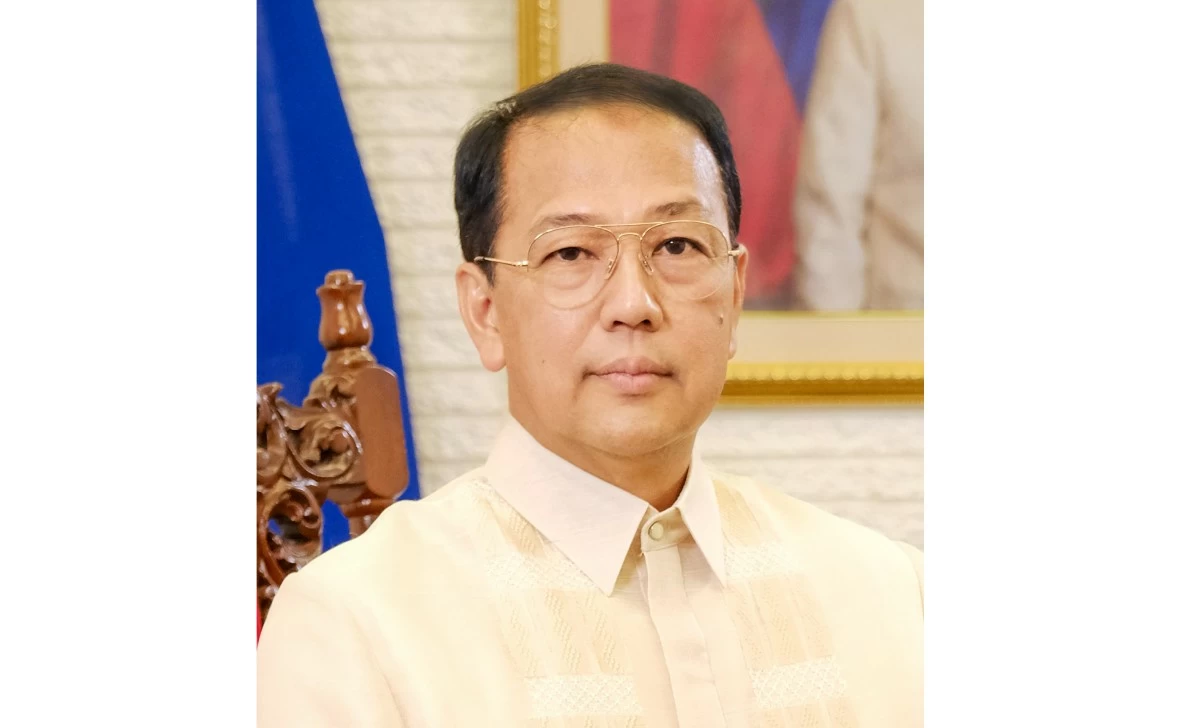
(Secretary Carlito G. Galvez, Jr., is the presidential adviser on peace, reconciliation and unity.)