







Corporate power: The new reserve force multiplier
Published Oct 20, 2025 12:05 am
|
Updated Oct 19, 2025 03:21 pm


BARRACKS AND STRATEGY
When—not if—the “Big One” strikes, Metro Manila and nearby provinces will face unprecedented devastation. Experts warn that a magnitude 7.2 earthquake could collapse thousands of buildings, cripple major lifelines such as power and water systems, and isolate communities for days. In such a catastrophic scenario, the Armed Forces of the Philippines (AFP) alone cannot respond to every emergency, rebuild every road, or restore every utility. Only a serious and comprehensive reservist program, reinforced by private corporate initiatives, can serve as the force multiplier that ensures national survival. Through joint engagements in critical areas like power, water resources, and engineering, the reservist corps can mobilize technical expertise and logistical capacity that go far beyond what government agencies can deliver on their own.
In an increasingly volatile world, nations must prepare for scenarios that may once have seemed unthinkable: widespread natural disasters, crippling cyberattacks, and even the looming specter of war. For the Philippines, a country positioned at the heart of the Indo-Pacific and perpetually exposed to both natural and man-made crises, building a credible reserve force is not optional—it is a necessity. Yet, despite the clear lessons from history and the urgency of our circumstances, the reservist program remains undervalued, underfunded, and underutilized.
AFP affiliated reserve units
The Philippines already has a framework for leveraging civilian expertise through the AFP Affiliated Reserve Units (ARUs). Organized within corporations, institutions, and organizations, ARUs are tasked to provide vital services during emergencies—medical response, transportation, communication, water, power, and engineering.
On paper, this is a visionary program that bridges the gap between civilian sectors and military preparedness.
However, reality paints a different picture. In the wake of recent natural disasters, ARUs were largely absent. The system, designed to enhance resilience, failed to manifest when it was needed most.
A model of private sector partnership
The Management Association of the Philippines (MAP) has pioneered a transformative initiative encouraging its members to undergo military training and join the pool of reservists that will form part of the Army Affiliated Units. MAP’s membership spans across industries and includes top executives such as Atty. Benedicta Du-Baladad, former MAP president and chairman of the Philippine Bank of Commerce; LTC Gina Marie Angangco, president of ARMSCOR Global Defense; and other prominent business leaders.
Their participation highlights how corporate leadership can drive national resilience, setting an example for others to follow.
Breaking free from cycles of neglect
Legislative inertia and political controversies have turned what should be a strategic necessity into a perennially postponed agenda. Budget allocations, meanwhile, are often redirected elsewhere, reflecting a shortsighted view that ignores long-term security in favor of immediate political expediency. The irony is painful: whenever disaster strikes, the lack of trained reserve manpower is lamented. Yet once the crisis passes, urgency dissipates, and the reserve program slips back into neglect.
The private sector
If waiting for government action is unreliable, then the private sector must step forward as a crucial partner. Encouragingly, recent forums have drawn participation from influential groups such as MAP, MERALCO, and ARMSCOR. Their involvement underscores an important reality: national defense and resilience are not purely military matters—they are societal obligations.
To institutionalize this partnership, practical measures must be adopted:
1. Corporate funding commitment – Establish a mandate or incentive structure where a percentage of corporate net income is dedicated to supporting ARUs. Funds must be earmarked for training, equipment, and simulation exercises that replicate real-world crises.
2. Executive leadership – Appointing corporate executives as commissioned reserve officers ensures buy-in at the highest level.
3. Mandatory training for executives – Through the AFP Reserve Command, business leaders should undergo Basic Military Training as a prerequisite for commission and as a symbolic commitment to preparedness.
4. Banking and finance sector engagement – Integrate banks and financial institutions into Civil Auxiliary Services to sustain emergency funding mechanisms and reinforce disaster-response capabilities.
5. Integration under the Self-Reliant Defense Posture (SRDP) program – Link corporate contributions to defense industry development, fostering indigenous capabilities in arms manufacture, cyber defense, and logistics.
This dual role strengthens both military readiness and economic resilience, ensuring that the nation’s survival mechanisms are embedded within its corporate fabric.
A call to national consciousness
The truth is stark. If tomorrow the Philippines is struck by the Big One, another super-typhoon, or an external military threat, our current system will falter. The AFP alone cannot secure every community, restore every utility, or manage every relief operation.
Without empowered reservists, the response will be slow, fragmented, and inadequate.
The rationalization of the reservist program is therefore not merely a defense issue—it is a national imperative. By engaging the private sector, leveraging existing frameworks, and nurturing a culture of preparedness, the Philippines can transform its reserve force into a credible, responsive, and resilient pillar of national security.
Reservists are not an afterthought; they are the citizens who stand ready when the nation needs them most. The time to act is not when war or disaster is already at the doorstep. The time to act is now.
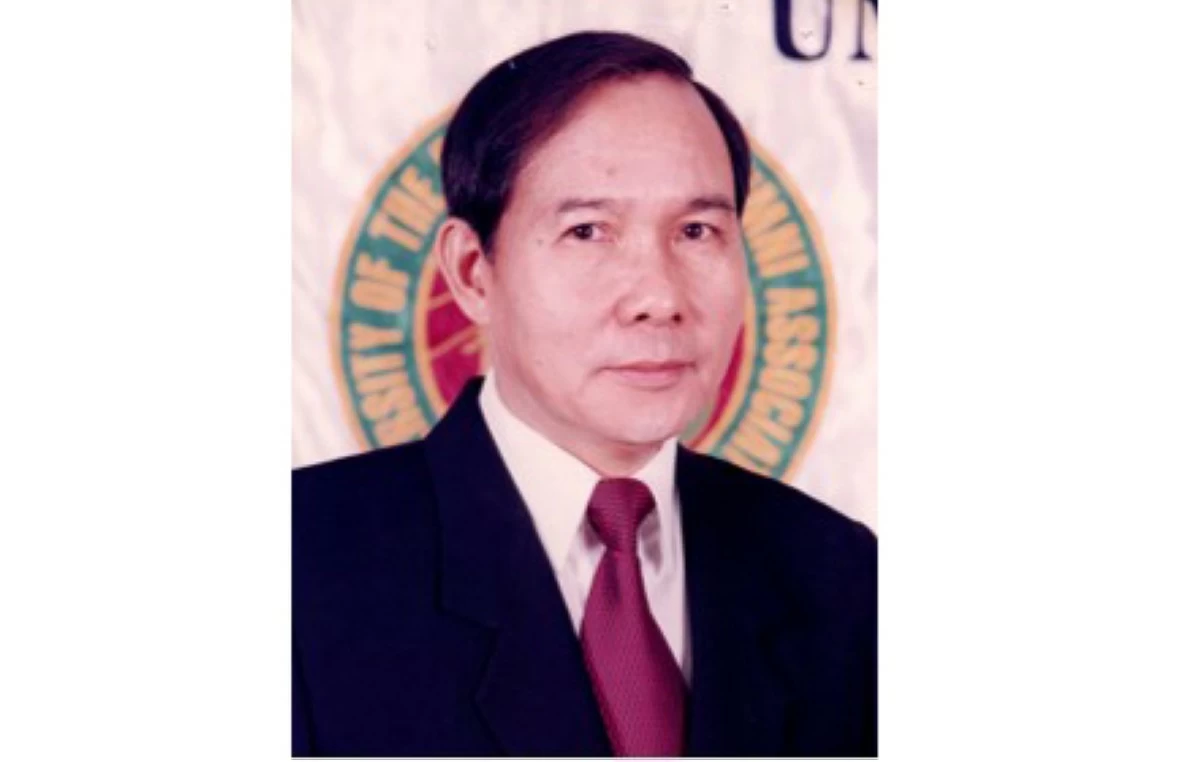
(Lt. Gen. Jaime S. de los Santos served with distinction as a military professional, 42nd Commanding Gen. Philippine Army, 1st Force Commander, UN Multi-National Peacekeeping Force in East Timor, former member, UP Board of Regents and Professorial Lecturer II (part-time), UP-Diliman.)