ADVERTISEMENT

Cebu Relief App: Bridging the gap on disaster relief response

How these three young innovators from University of Cebu built a life saving app

Published Oct 20, 2025 10:21 am
In times of calamity, every second matters—and for three Bachelor of Science in Information Technology (BSIT) students from the University of Cebu–Main, technology can make the difference between being seen or being stranded.
When a major earthquake struck Cebu recently, Vince Clave Igot, Ralph Adriane Dilao, and Clint Alonzo noticed a troubling pattern on social media: countless pleas for help from people in remote areas who had not yet received any aid. In an interview with Manila Bulletin Lifestyle, these three young innovators shared how this gap—between victims and rescuers—sparked an idea that saved lives.
“The idea came after the major earthquake. While scrolling through social media, we saw many people, especially in remote areas, who hadn’t received any help,”the team recalled. “That’s when we decided to build the Cebu Relief app to solve the lack of communication and transparency in relief distribution. We actually built the first version in just about eight hours.”
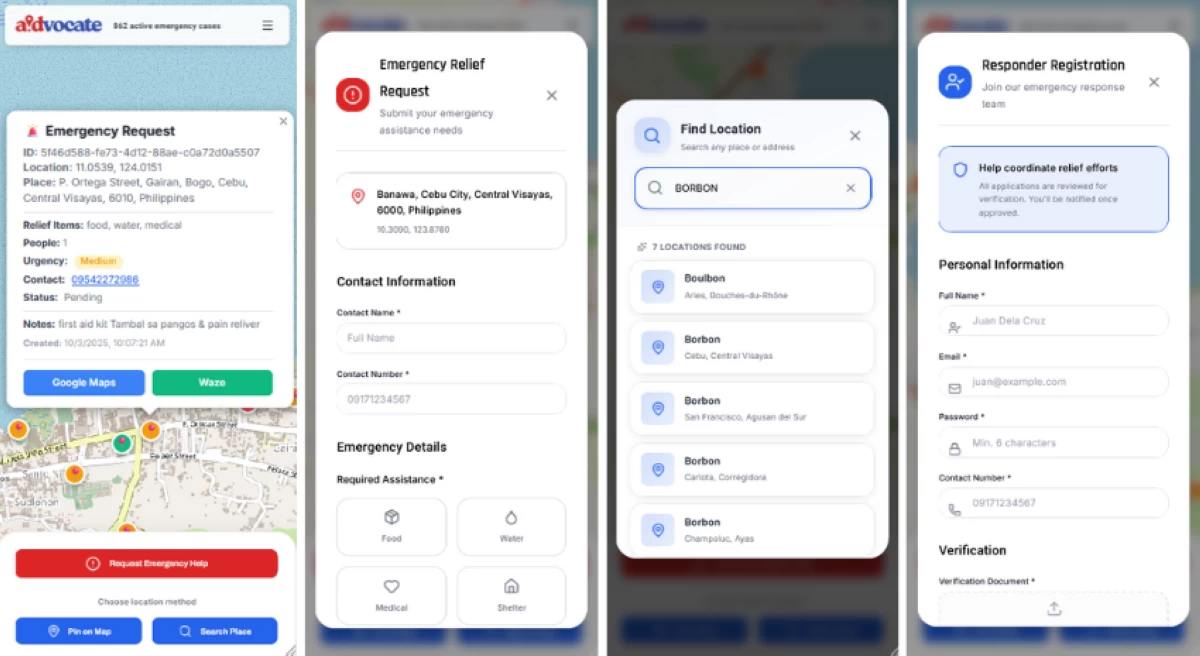
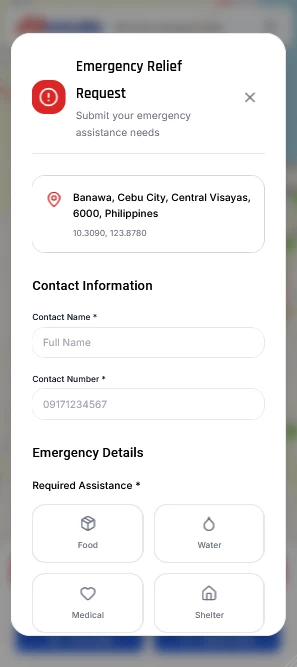
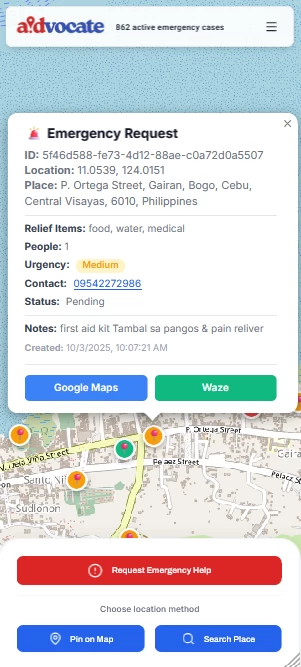
Cebu Relief app is an online platform designed to connect disaster victims directly with rescuers and volunteers. Through it, anyone in need can pin their exact location, specify what kind of aid they require, and send out an SOS that appears in real time on a live map.

“Our app is mainly designed to help locate people who are heavily affected during disasters, like earthquakes. It allows volunteers, LGUs, and NGOs to easily track where help is needed most,” they explained. “And for transparency, everyone using the app can also see who really needs help, making the whole process more open, organized, and trustworthy during critical times.”
For the three developers, their university life played a crucial role in shaping their mindset and motivation. “As students of the University of Cebu, we’ve been inspired to innovate beyond the classroom. Our department constantly reminds us that technology isn’t just about coding or grades—it’s about creating real impact,” they said.
The team’s journey, however, was far from easy. “One of our biggest challenges was the intense time pressure during development. We pushed ourselves to make the app live within just one day of continuous coding, spending long hours without sleep just to ensure everything would work properly,” the students mused. Despite sleepless nights and technical glitches, the experience became a lesson in perseverance and teamwork.
Their efforts didn’t go unnoticed. After the app went viral online, the Cebu Provincial Capitol reached out to collaborate. “At first, we started developing the app just as a group of friends who wanted to help. But after we posted about it and it went viral, the Cebu Provincial Capitol noticed our project,” they said.”That’s when we began collaborating with them by merging our app with their system to strengthen and improve the overall relief response.”
Now, the trio hopes to scale their innovation nationwide. “Hopefully, we can expand our service beyond Cebu and reach the entire Philippines. We also plan to continue improving and maintaining the app to make disaster response faster, more transparent, and more accessible to everyone who needs help.”
To fellow students and aspiring changemakers, they offer this piece of advice: “Never be afraid to take risks and bring your ideas to life. If you believe your project can make a difference, go for it. Great things start from small steps and sometimes, all it takes is the courage to start and the determination to keep going.”
Through the Cebu Relief app, Vince, Ralph, and Clint have proven that compassion and code can work hand in hand, and that sometimes, the best response to a crisis starts with an idea and the will to make it real.

Related Tags

Cebu Relief App earthquake
ADVERTISEMENT
.most-popular .layout-ratio{ padding-bottom: 79.13%; } @media (min-width: 768px) and (max-width: 1024px) { .widget-title { font-size: 15px !important; } }

{{ articles_filter_1561_widget.title }}

.most-popular .layout-ratio{ padding-bottom: 79.13%; } @media (min-width: 768px) and (max-width: 1024px) { .widget-title { font-size: 15px !important; } }

{{ articles_filter_1562_widget.title }}

.most-popular .layout-ratio{ padding-bottom: 79.13%; } @media (min-width: 768px) and (max-width: 1024px) { .widget-title { font-size: 15px !important; } }

{{ articles_filter_1563_widget.title }}

{{ articles_filter_1564_widget.title }}

.mb-article-details { position: relative; } .mb-article-details .article-body-preview, .mb-article-details .article-body-summary{ font-size: 17px; line-height: 30px; font-family: "Libre Caslon Text", serif; color: #000; } .mb-article-details .article-body-preview iframe , .mb-article-details .article-body-summary iframe{ width: 100%; margin: auto; } .read-more-background { background: linear-gradient(180deg, color(display-p3 1.000 1.000 1.000 / 0) 13.75%, color(display-p3 1.000 1.000 1.000 / 0.8) 30.79%, color(display-p3 1.000 1.000 1.000) 72.5%); position: absolute; height: 200px; width: 100%; bottom: 0; display: flex; justify-content: center; align-items: center; padding: 0; } .read-more-background a{ color: #000; } .read-more-btn { padding: 17px 45px; font-family: Inter; font-weight: 700; font-size: 18px; line-height: 16px; text-align: center; vertical-align: middle; border: 1px solid black; background-color: white; } .hidden { display: none; }
function initializeAllSwipers() { // Get all hidden inputs with cms_article_id document.querySelectorAll('[id^="cms_article_id_"]').forEach(function (input) { const cmsArticleId = input.value; const articleSelector = '#article-' + cmsArticleId + ' .body_images'; const swiperElement = document.querySelector(articleSelector); if (swiperElement && !swiperElement.classList.contains('swiper-initialized')) { new Swiper(articleSelector, { loop: true, pagination: false, navigation: { nextEl: '#article-' + cmsArticleId + ' .swiper-button-next', prevEl: '#article-' + cmsArticleId + ' .swiper-button-prev', }, }); } }); } setTimeout(initializeAllSwipers, 3000); const intersectionObserver = new IntersectionObserver( (entries) => { entries.forEach((entry) => { if (entry.isIntersecting) { const newUrl = entry.target.getAttribute("data-url"); if (newUrl) { history.pushState(null, null, newUrl); let article = entry.target; // Extract metadata const author = article.querySelector('.author-section').textContent.replace('By', '').trim(); const section = article.querySelector('.section-info ').textContent.replace(' ', ' '); const title = article.querySelector('.article-title h1').textContent; // Parse URL for Chartbeat path format const parsedUrl = new URL(newUrl, window.location.origin); const cleanUrl = parsedUrl.host + parsedUrl.pathname; // Update Chartbeat configuration if (typeof window._sf_async_config !== 'undefined') { window._sf_async_config.path = cleanUrl; window._sf_async_config.sections = section; window._sf_async_config.authors = author; } // Track virtual page view with Chartbeat if (typeof pSUPERFLY !== 'undefined' && typeof pSUPERFLY.virtualPage === 'function') { try { pSUPERFLY.virtualPage({ path: cleanUrl, title: title, sections: section, authors: author }); } catch (error) { console.error('ping error', error); } } // Optional: Update document title if (title && title !== document.title) { document.title = title; } } } }); }, { threshold: 0.1 } ); function showArticleBody(button) { const article = button.closest("article"); const summary = article.querySelector(".article-body-summary"); const body = article.querySelector(".article-body-preview"); const readMoreSection = article.querySelector(".read-more-background"); // Hide summary and read-more section summary.style.display = "none"; readMoreSection.style.display = "none"; // Show the full article body body.classList.remove("hidden"); } document.addEventListener("DOMContentLoaded", () => { let loadCount = 0; // Track how many times articles are loaded const offset = [1, 2, 3, 4, 5, 6, 7, 8, 9, 10]; // Offset values const currentUrl = window.location.pathname.substring(1); let isLoading = false; // Prevent multiple calls if (!currentUrl) { console.log("Current URL is invalid."); return; } const sentinel = document.getElementById("load-more-sentinel"); if (!sentinel) { console.log("Sentinel element not found."); return; } function isSentinelVisible() { const rect = sentinel.getBoundingClientRect(); return ( rect.top < window.innerHeight && rect.bottom >= 0 ); } function onScroll() { if (isLoading) return; if (isSentinelVisible()) { if (loadCount >= offset.length) { console.log("Maximum load attempts reached."); window.removeEventListener("scroll", onScroll); return; } isLoading = true; const currentOffset = offset[loadCount]; window.loadMoreItems().then(() => { let article = document.querySelector('#widget_1690 > div:nth-last-of-type(2) article'); intersectionObserver.observe(article) loadCount++; }).catch(error => { console.error("Error loading more items:", error); }).finally(() => { isLoading = false; }); } } window.addEventListener("scroll", onScroll); });

Sign up by email to receive news.