







Brazil at the 24th Pelicula > Pelikula Festival De Cine Manila
Published Oct 20, 2025 01:47 pm


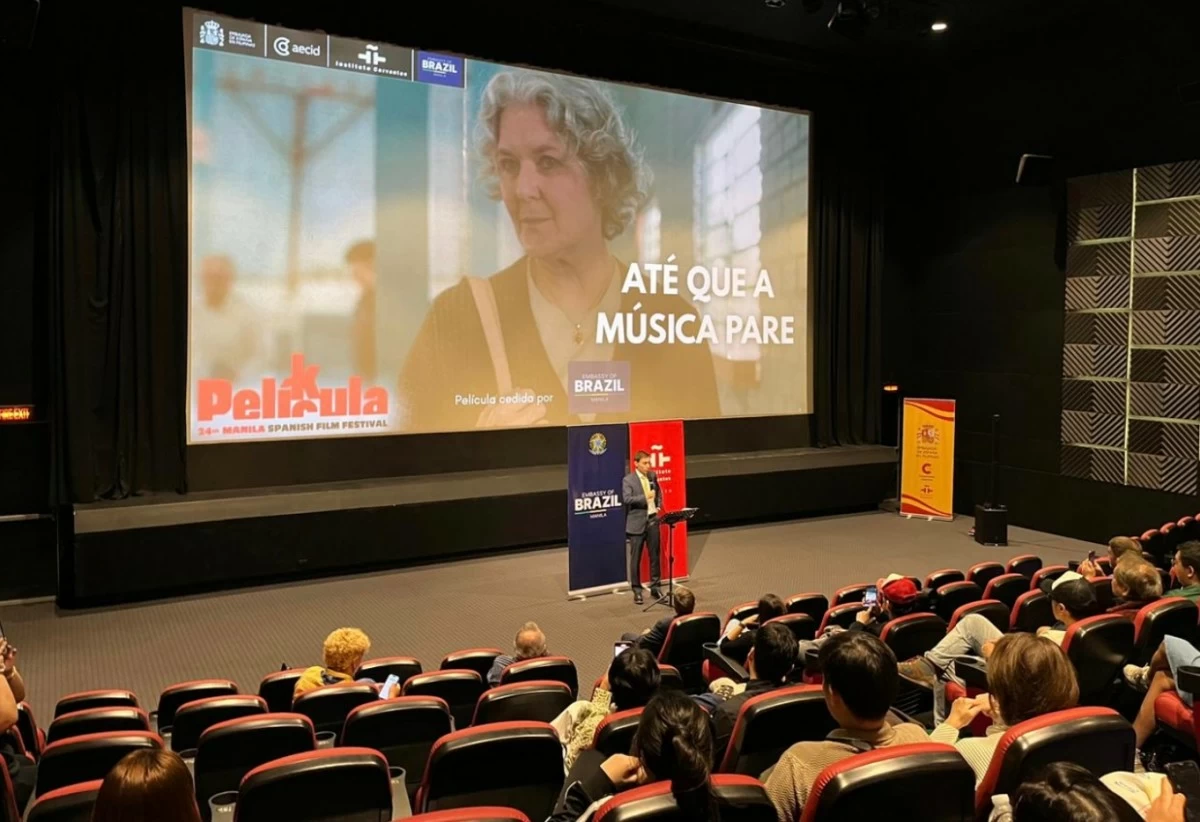
Gerson Gimenes, head of the Cultural Section of the Embassy of Brazil, delivers the welcome message.
The Embassy of Brazil in Manila, in collaboration with Instituto Cervantes, proudly presents Brazil’s participation in the 24th edition of the Pelicula > Pelikula Festival de Cine Manila.
On Oct. 15, the acclaimed Brazilian film “Até que a Música Pare” (Until the Music Is Over, 2023), directed by Cristiane Oliveira, was showcased at Power Plant Mall Cinema 6.
A poignant Brazil–Germany–Italy co-production, “Até que a Música Pare” follows Chiara, the matriarch of an Italian-descendant family in southern Brazil. After enduring the loss of a son and the departure of another, she joins her husband Alfredo on his itinerant sales journeys through the bars of Serra Gaúcha. Along the way, a tortoise and a deck of cards quietly witness a couple navigating the complexities of over five decades of shared life.
Through this intimate lens, Oliveira delves into themes of love, resilience, and the boundaries of tolerance, while also contemplating grief and its power to either fracture or fortify familial bonds.
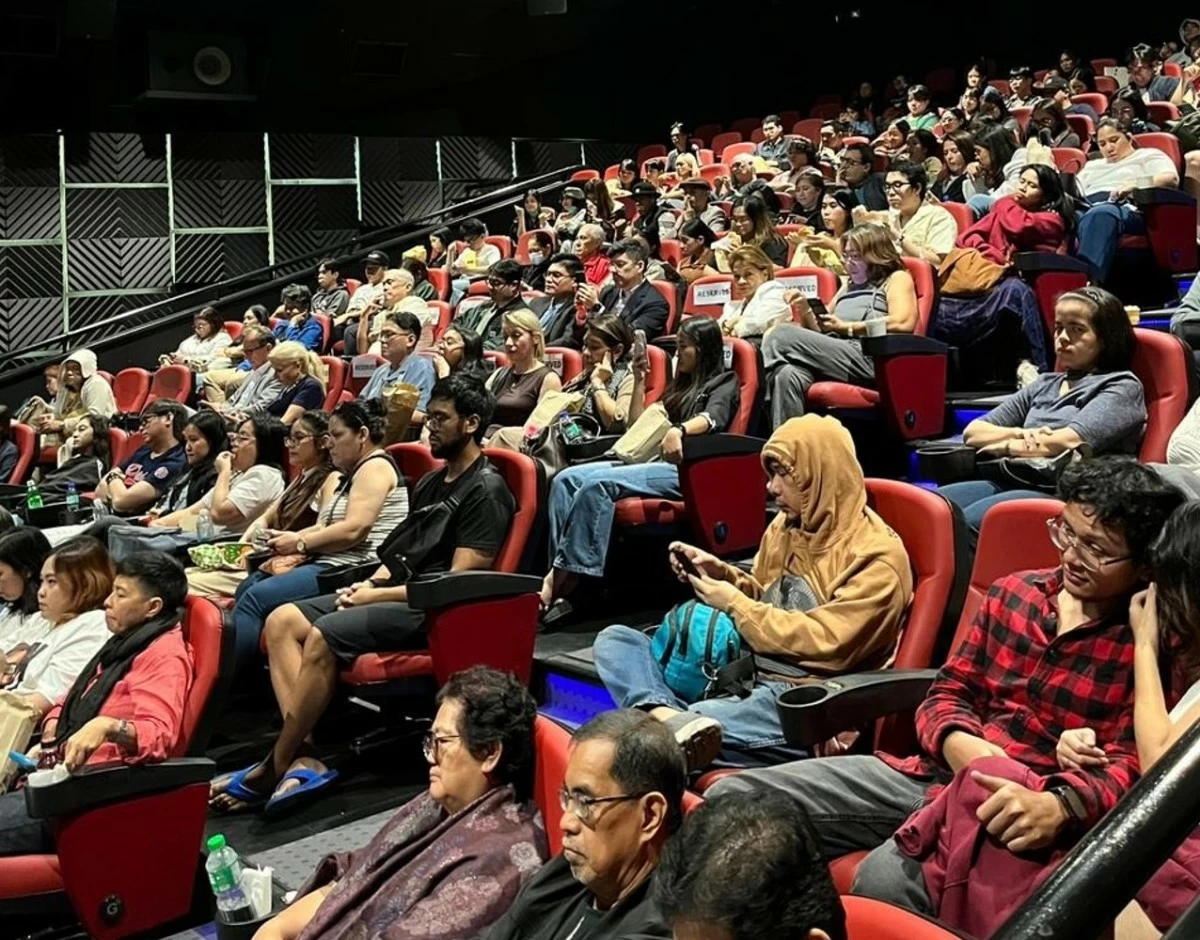
Every seat taken for Brazil’s cinematic gem
Filmed in Brazil’s far south, the film highlights the rich heritage of the local Italian community, where many still speak Talian—a unique language born from Portuguese and the dialects of 19th-century immigrants from Veneto and Lombardy.
“Até que a Música Pare” was an official selection at the 42nd Bergamo Film Meeting in Italy and earned the ACCIRS Award for Best Feature Film from Rio Grande do Sul in 2024.
The film is a Brazilian–German–Italian co-production, filmed in the southern region of Brazil, in Rio Grande do Sul, in the scenic Gaúcha Highlands, not far from the borders with Argentina and Uruguay.
“Until the Music is Over highlights the unique heritage of the Italian-descendant community in this region, where many people still speak ‘Talian’ – a language born in Brazil from Portuguese and the dialects of immigrants from Veneto and Lombardy in the late 19th century. It is a living cultural treasure, distinct from standard Italian,” shared Gerson Gimenes the Embassy of Brazil.