






Manila Bulletin
 Business
The Economy
Balisacan welcomes luxury spending 'slowdown,' citing low value added for imports
Business
The Economy
Balisacan welcomes luxury spending 'slowdown,' citing low value added for imports
Business
The Economy
Balisacan welcomes luxury spending 'slowdown,' citing low value added for imports
Balisacan welcomes luxury spending 'slowdown,' citing low value added for imports
By Derco Rosal
Published Oct 20, 2025 12:00 am
|
Updated Oct 18, 2025 02:36 pm


At A Glance
- National Socioeconomic Planner Arsenio M. Balisacan backs a potential shift away from luxury products and toward homegrown goods, saying consumers fuel the economy faster when their money stays local.
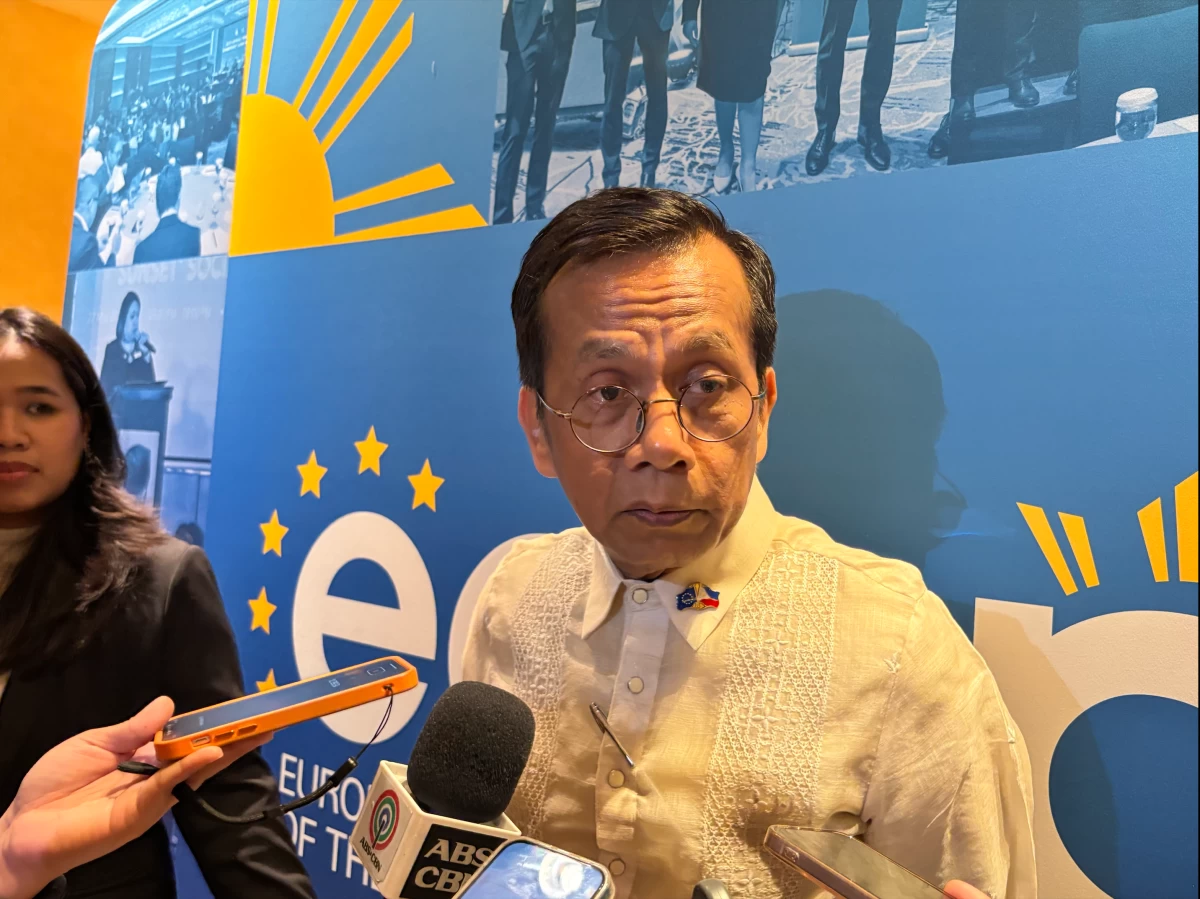
National Socioeconomic Planner Arsenio M. Balisacan is urging Filipino consumers to shun imported luxury goods for homegrown products, asserting that money spent locally boosts the economy faster than money sent overseas.
“I like it if there’s a slowdown in those areas [luxury spending] because these are very import-dependent anyway. The value added is low,” Balisacan told reporters on the sidelines of the European Chamber of Commerce of the Philippines’ (ECCP) European-Philippine Business Dialogue (EPDB) last week.
“All these luxury imports do not really generate much economic activity. If our consumers are shifting to locally produced goods that are not as luxurious as Lexus, then it creates more economic activity,” Balisacan noted.
Spending on luxury imports sends most of the money overseas, with only a thin slice retained through retail or taxes. Buying local products, however, circulates income among domestic producers, workers, and suppliers, boosting value created at home.
It can be recalled that the cases on the alleged corruption of flood control infrastructure funds first surfaced when the lifestyle of contractors Curlee and Sarah Discaya was featured, exposing their luxury cars.
As of September, the Bureau of Customs (BOC) has secured custody of 28 luxury vehicles owned by the Discayas. Twelve were seized from the compound of St. Gerard Construction General Contractor and Development Corp. in Pasig City, while the family turned over the other 16.
Among the surrendered cars were Mercedes-Benz, Land Rover, Cadillac, Ford, BMW, Jaguar, Porsche, Volvo, and GMC.
Last week, the BOC announced it would auction 13 luxury vehicles surrendered by the Discaya couple. Around ₱100 million in taxes were not paid when the units were acquired.
As of end-August, imports reached $88.1 billion, up 5.1 percent year-on-year and the second highest on record after the $93 billion logged in 2022 when the economy reopened from Covid-19 pandemic restrictions.
Since January, the Philippines, as a net importer, bought $25.2 billion worth of goods from China, making it the top source. Japan followed with $6.99 billion, or just over a fourth of the China total.
However, imports fell 4.9 percent to $10.6 billion in August from the same month last year, according to the Philippine Statistics Authority (PSA).
China accounted for 30.1 percent of the country’s imports in August at $3.19 billion. South Korea—August’s second-biggest source—supplied just $848.9 million, roughly a fourth of China’s shipments during the month.