ADVERTISEMENT

Today, put down the phone: Rediscover the art of conversation

Published Oct 19, 2025 12:05 am  |  Updated Oct 18, 2025 03:43 pm
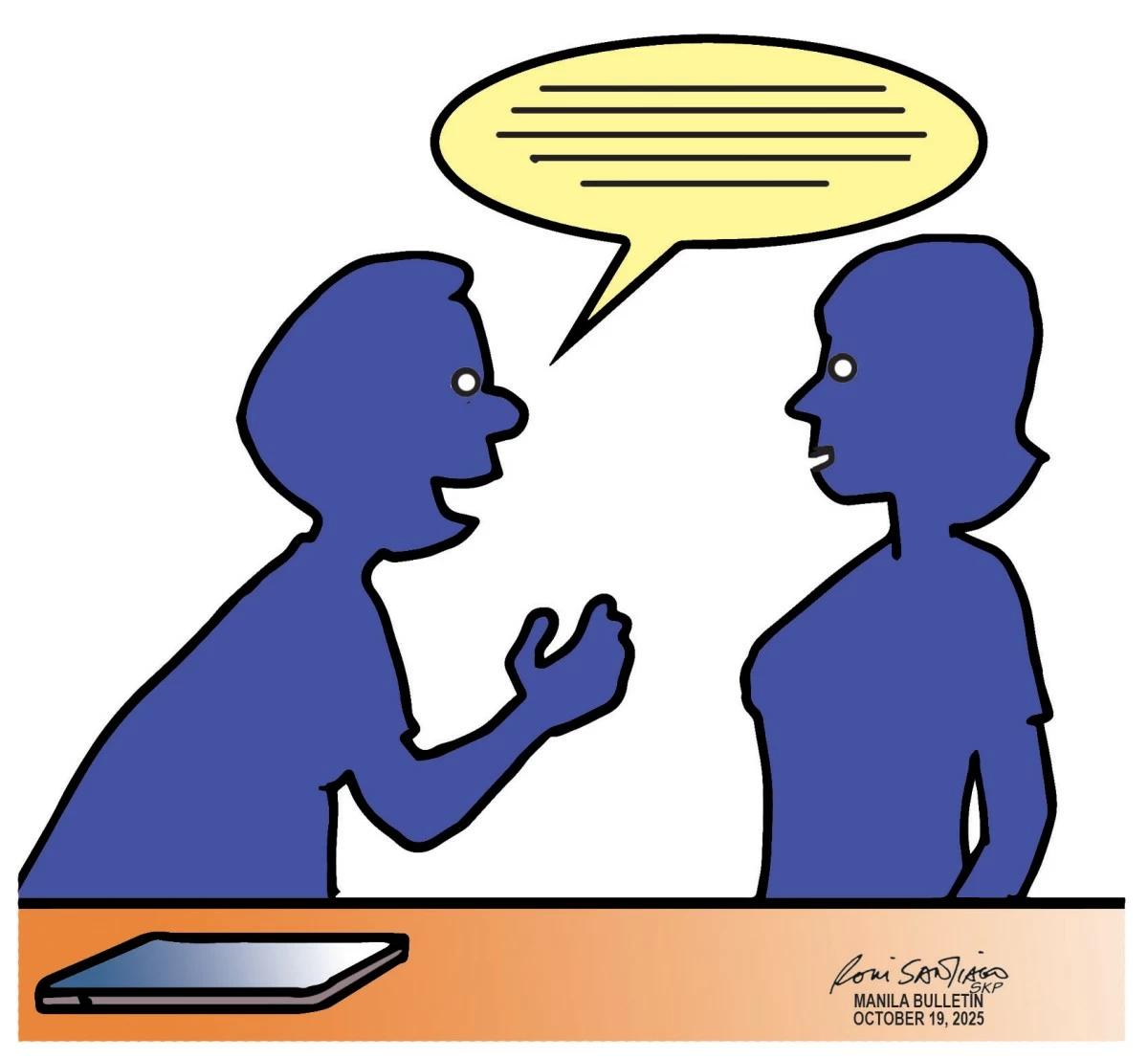
This Sunday, let us rediscover the ancient art of conversation that’s fading quietly under the glow of gadget screens. Try something simple but radical. Put down your gadgets. Look around. Observe the world, the people, the textures of life. But most of all—look at the person before you. And talk.
In our digital age, many of us are glued to notifications, ensnared by social media, tethered to our devices. We scroll, we glance, we double tap—but rarely do we truly listen. And so the conversation—face to face, heart to heart—is losing its place.
Conversation is more than exchanging facts. It is an act of presence. It is noticing shifts in tone, catching a pause, reading a wrinkle of emotion. It builds empathy. It breeds connection. It anchors us in relation, not in isolation.
The decline of conversation is not just poetic loss—it has real effects on mental, emotional, and relational health.
A large systematic review of 50 studies published in BioMed Central website found that excessive screen time in adolescents is associated with poorer mental well being, increased depressive symptoms, and anxiety.
A study conducted by Columbia Irving Medical Center found that addictive use of social media, not mere hours logged, predicted more serious mental health problems among children over time.
Another study of adolescents tracked 20 types of smartphone content and found that activities like online chatting, watching videos, and playing games had measurable negative effects on later mental health indicators such as depression or anxiety, according to PubMed, National Library of Medicine.
Overuse of smartphones can weaken social connectedness. A study published in Springer Nature Link showed that heavier smartphone use undermines feelings of belonging, which in turn links to psychological adjustment problems.
There is even a name given to this common offense – phubbing, a term coined after phone and snubbing. In romantic pairs, when one perceives being “phubbed,” it leads to conflict, lower relationship satisfaction, and even depressive symptoms. Even the mere presence of a phone during a conversation (even if not in use) reduces empathy, trust, and perceived connection.
In short, when attention is splintered, relationships suffer. Mental health frays. The art of being present weakens.
Try a “Conversation Sunday” by letting your device rest elsewhere while you share time with someone. Ask questions – start with “how was your week?” Allow silence to linger, and let stories be told. Pause, nod, lean in and notice the slight changes of expression, or a flicker of thought in someone’s eyes.
It’s a day to celebrate small moments before the work week swallows your attention. Laugh at a shared joke. Notice a detail of the setting you both see but ignored. Use it as raw material to talk.
Sunday is a good day for conversation. It is slower. It is communal. It is a pause from the usual rush. Let Sunday be a gentle repair to our disconnected habits.
We will all carry phones again tomorrow. But today, let’s pause. Let’s choose human presence over scrolling. Let’s remember that conversation is not just talk—but the real work of love, community, and connection.
Because the world is full of noise. But what matters most is what we say to one another. Start there. Today.
ADVERTISEMENT
.most-popular .layout-ratio{ padding-bottom: 79.13%; } @media (min-width: 768px) and (max-width: 1024px) { .widget-title { font-size: 15px !important; } }

{{ articles_filter_1561_widget.title }}

.most-popular .layout-ratio{ padding-bottom: 79.13%; } @media (min-width: 768px) and (max-width: 1024px) { .widget-title { font-size: 15px !important; } }

{{ articles_filter_1562_widget.title }}

.most-popular .layout-ratio{ padding-bottom: 79.13%; } @media (min-width: 768px) and (max-width: 1024px) { .widget-title { font-size: 15px !important; } }

{{ articles_filter_1563_widget.title }}

{{ articles_filter_1564_widget.title }}

.mb-article-details { position: relative; } .mb-article-details .article-body-preview, .mb-article-details .article-body-summary{ font-size: 17px; line-height: 30px; font-family: "Libre Caslon Text", serif; color: #000; } .mb-article-details .article-body-preview iframe , .mb-article-details .article-body-summary iframe{ width: 100%; margin: auto; } .read-more-background { background: linear-gradient(180deg, color(display-p3 1.000 1.000 1.000 / 0) 13.75%, color(display-p3 1.000 1.000 1.000 / 0.8) 30.79%, color(display-p3 1.000 1.000 1.000) 72.5%); position: absolute; height: 200px; width: 100%; bottom: 0; display: flex; justify-content: center; align-items: center; padding: 0; } .read-more-background a{ color: #000; } .read-more-btn { padding: 17px 45px; font-family: Inter; font-weight: 700; font-size: 18px; line-height: 16px; text-align: center; vertical-align: middle; border: 1px solid black; background-color: white; } .hidden { display: none; }
function initializeAllSwipers() { // Get all hidden inputs with cms_article_id document.querySelectorAll('[id^="cms_article_id_"]').forEach(function (input) { const cmsArticleId = input.value; const articleSelector = '#article-' + cmsArticleId + ' .body_images'; const swiperElement = document.querySelector(articleSelector); if (swiperElement && !swiperElement.classList.contains('swiper-initialized')) { new Swiper(articleSelector, { loop: true, pagination: false, navigation: { nextEl: '#article-' + cmsArticleId + ' .swiper-button-next', prevEl: '#article-' + cmsArticleId + ' .swiper-button-prev', }, }); } }); } setTimeout(initializeAllSwipers, 3000); const intersectionObserver = new IntersectionObserver( (entries) => { entries.forEach((entry) => { if (entry.isIntersecting) { const newUrl = entry.target.getAttribute("data-url"); if (newUrl) { history.pushState(null, null, newUrl); let article = entry.target; // Extract metadata const author = article.querySelector('.author-section').textContent.replace('By', '').trim(); const section = article.querySelector('.section-info ').textContent.replace(' ', ' '); const title = article.querySelector('.article-title h1').textContent; // Parse URL for Chartbeat path format const parsedUrl = new URL(newUrl, window.location.origin); const cleanUrl = parsedUrl.host + parsedUrl.pathname; // Update Chartbeat configuration if (typeof window._sf_async_config !== 'undefined') { window._sf_async_config.path = cleanUrl; window._sf_async_config.sections = section; window._sf_async_config.authors = author; } // Track virtual page view with Chartbeat if (typeof pSUPERFLY !== 'undefined' && typeof pSUPERFLY.virtualPage === 'function') { try { pSUPERFLY.virtualPage({ path: cleanUrl, title: title, sections: section, authors: author }); } catch (error) { console.error('ping error', error); } } // Optional: Update document title if (title && title !== document.title) { document.title = title; } } } }); }, { threshold: 0.1 } ); function showArticleBody(button) { const article = button.closest("article"); const summary = article.querySelector(".article-body-summary"); const body = article.querySelector(".article-body-preview"); const readMoreSection = article.querySelector(".read-more-background"); // Hide summary and read-more section summary.style.display = "none"; readMoreSection.style.display = "none"; // Show the full article body body.classList.remove("hidden"); } document.addEventListener("DOMContentLoaded", () => { let loadCount = 0; // Track how many times articles are loaded const offset = [1, 2, 3, 4, 5, 6, 7, 8, 9, 10]; // Offset values const currentUrl = window.location.pathname.substring(1); let isLoading = false; // Prevent multiple calls if (!currentUrl) { console.log("Current URL is invalid."); return; } const sentinel = document.getElementById("load-more-sentinel"); if (!sentinel) { console.log("Sentinel element not found."); return; } function isSentinelVisible() { const rect = sentinel.getBoundingClientRect(); return ( rect.top < window.innerHeight && rect.bottom >= 0 ); } function onScroll() { if (isLoading) return; if (isSentinelVisible()) { if (loadCount >= offset.length) { console.log("Maximum load attempts reached."); window.removeEventListener("scroll", onScroll); return; } isLoading = true; const currentOffset = offset[loadCount]; window.loadMoreItems().then(() => { let article = document.querySelector('#widget_1690 > div:nth-last-of-type(2) article'); intersectionObserver.observe(article) loadCount++; }).catch(error => { console.error("Error loading more items:", error); }).finally(() => { isLoading = false; }); } } window.addEventListener("scroll", onScroll); });

Sign up by email to receive news.