






Manila Bulletin
 Philippines
National
Multisectoral initiative empowers youth to promote sexual, reproductive health online
Philippines
National
Multisectoral initiative empowers youth to promote sexual, reproductive health online
Philippines
National
Multisectoral initiative empowers youth to promote sexual, reproductive health online
Multisectoral initiative empowers youth to promote sexual, reproductive health online
Published Oct 19, 2025 03:04 pm


At A Glance
- Young Filipinos in Metro Manila are leading online discussions on sexual and reproductive health through the "Adolescent Peer Champions for SRHR" initiative.
- The program trains adolescents and adult supporters to produce social media content that addresses stigma, misinformation, and rising teen pregnancy rates.
- Supported by UNFPA, Bayer Philippines, MakeSense Asia, Commission on Population and Development, and local government units, the project aims to reach over 200,000 youth with accurate, rights-based information on family planning and reproductive health.
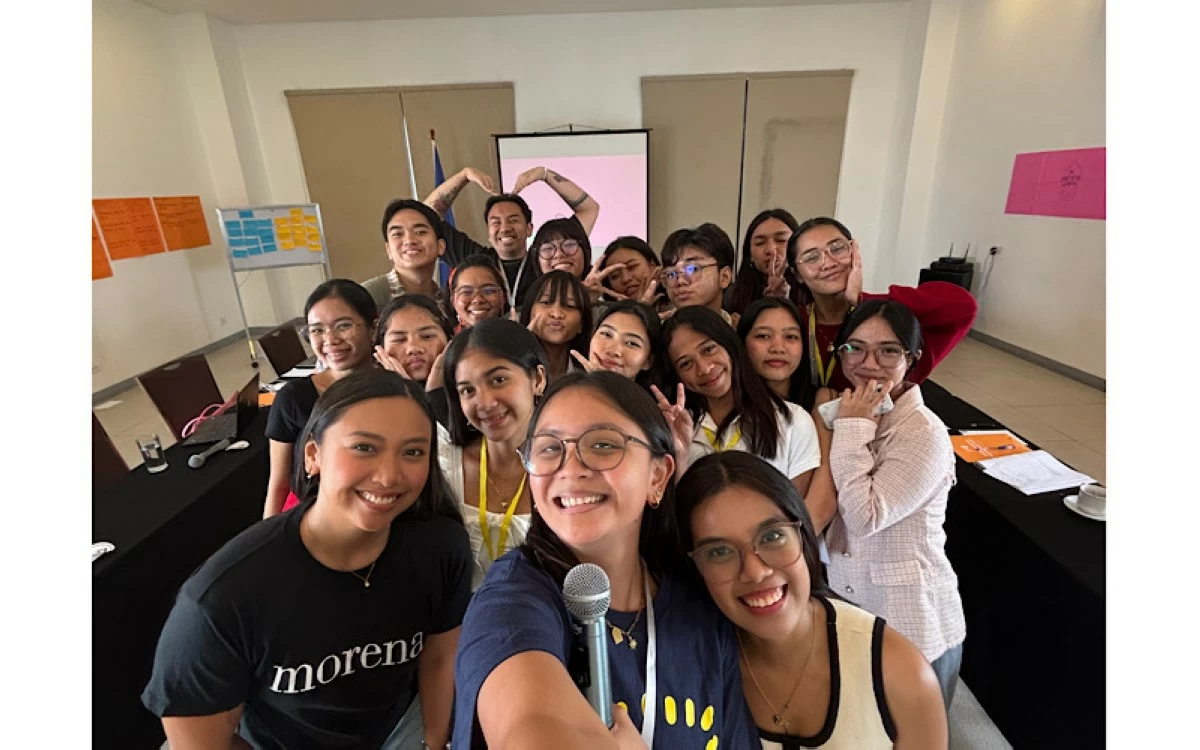
Participants pose for a group selfie after completing a training session on sexual and reproductive health advocacy, which is a part of the “Adolescent Peer Champions for SRHR” initiative empowering youth to lead online discussions and challenge stigma. (Bayer Philippines)
Young Filipinos are helping change the way sexual and reproductive health is talked about by using social media to empower peers and challenge stigma.
The “Adolescent Peer Champions for Sexual and Reproductive Health Rights (SRHR)” initiative, supported by the United Nations Population Fund (UNFPA), Bayer Philippines, MakeSense Asia, Commission on Population and Development, and participating local government units, trains youth to produce digital content on platforms, such as Facebook and TikTok.
The posts cover topics on legal frameworks and policies on access to information and protection of consent; access to contraception and family planning methods; and personal puberty journeys that promote better care for reproductive and sexual health.
“The initiative aims to equip young people and adult influencers in the National Capital Region (NCR) with the tools and knowledge to foster informed conversations around family planning and SRHR. This peer-led approach bridges generational gaps and addresses harmful gender norms, stigma, and misinformation,” said Christine Elaine Peralta, Government Affairs Manager-Pharmaceuticals of Bayer Philippines Inc.
The program enlisted 18 “adolescent champions” aged 15 to 19, supported by 12 “adult champions,” composed of parents, health professionals, and community leaders.
They come from Navotas and Pasig, two cities in Metro Manila with increasing adolescent pregnancy rates.
Championing conversations on sexual health
“The rise of adolescent pregnancy cases in NCR, including Navotas and Pasig, demands urgent and collective measures given the prevalence of misconceptions and inaccurate information about sexual and reproductive health,” Peralta said.
In Navotas, 458 of 1,549 births in 2020 were to adolescents aged 14 to 19, while Pasig reported a rise in adolescent pregnancies from 647 in 2022 to 729 in 2023.
Peralta said the initiative aims to reach over 200,000 young people through online platforms.
“Our ambition is to normalize and mainstream conversations around sexual and reproductive health, promote our rights related to these—and keep youth at the center of this discussion: their questions, their needs, and their experiences—ensuring that young people are not just participants, but leaders and agents in shaping their health and their lives,” she said.
She added that adult champions are meant to support and amplify the messages of the adolescent participants, strengthening parent-teen communication, reducing stigma, and improving access to factual, rights-based information on reproductive health.
Peralta said the champions were recruited and trained in June and are expected to publish their content from September to November. The pilot project runs until December, with possible expansion to other regions with high adolescent birth rates.
Social media advances family planning awareness
The initiative builds on findings from the Digital Conversion Study (DCS) conducted from October 2023 to January 2024, which assessed how digital engagement influences family planning decisions.
The study found that more than three-quarters of respondents visited a facility for family planning consultation after interacting with online content, and over 90 percent eventually availed of a family planning method.
Interactive tools such as chatbots and helplines were found to be especially effective in increasing consultations and service uptake.
Younger audiences, particularly those aged 18 to 29, were the most active online, with Facebook, TikTok, and YouTube as the top platforms for SRH information.
Peralta said the study highlighted the potential of social media to drive meaningful behavioral change.
“As learning from this study, it is essential to maximize the impact of family planning advocacy by sustaining and enhancing family planning and reproductive health contents on Facebook. Additionally, exploring other social media platforms can increase visibility and user engagement,” she said.
She added that efforts such as boosting posts, partnering with influencers, and highlighting chatbot features can help reach a wider audience and improve the user experience.
“Further, recent reports around adolescent pregnancy including the rise of repeat cases, indicate there is also a need to expand awareness around SRHR to include adolescents audiences as a way to help them make informed choices and decisions about their reproductive health,” Peralta said.
“This is why we teamed up with UNFPA Philippines for the ‘Adolescent Peer Champions for SRHR’ initiative and shared it on World Contraception Day,” she added.
Held every September 26, World Contraception Day raises awareness among adolescents and youth about sexual and reproductive health, giving them access to scientifically accurate, non-judgmental information on contraceptive methods and related topics to help them make informed choices.