ADVERTISEMENT

Afghanistan and Pakistan have agreed to an immediate ceasefire

Published Oct 19, 2025 01:09 pm
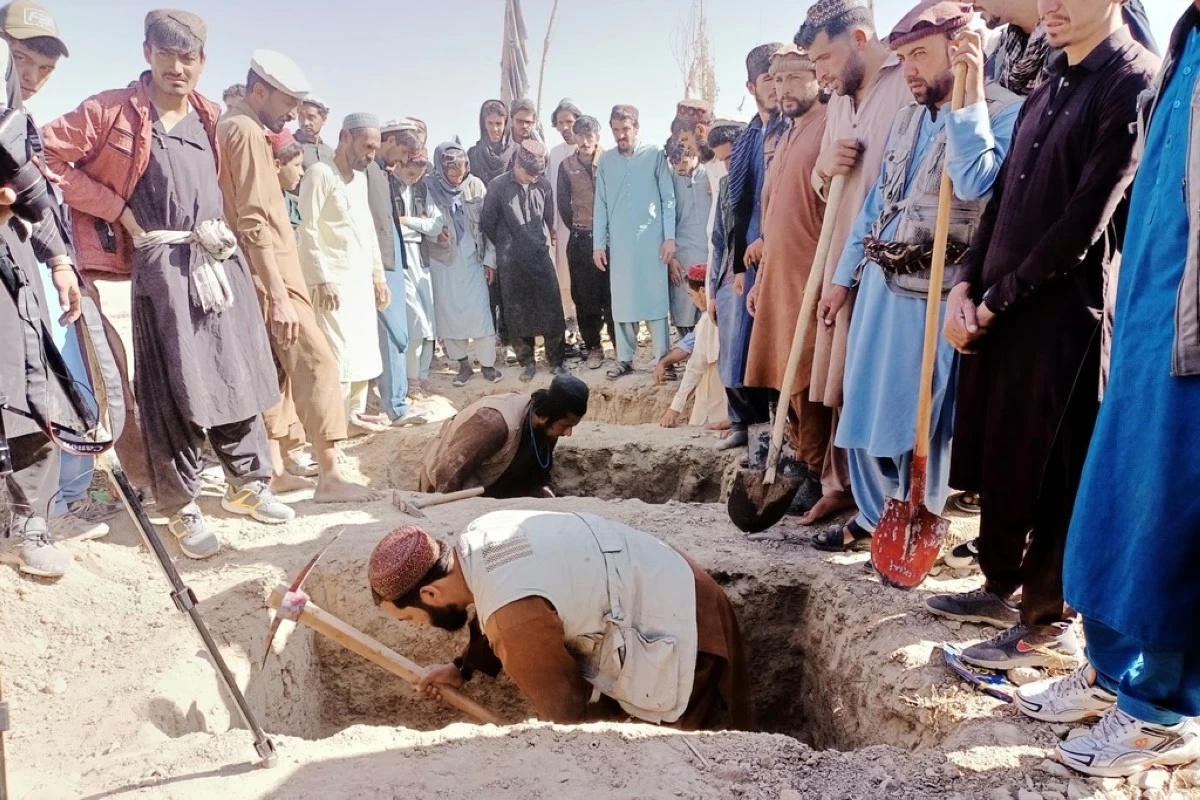
Locals dig graves for people killed in a cross-border airstrike by the Pakistani army in Afghanistan's eastern Paktika province, Saturday, Oct. 18, 2025. (AP Photo/Shafiqullah Mashaal)
ISLAMABAD (AP) — Afghanistan and Pakistan, embroiled in more than a week of fighting that has killed dozens of people and injured hundreds, have agreed to an immediate ceasefire, Qatar’s Foreign Ministry said Sunday. It is the deadliest crisis between the two countries in several years.
The sides agreed to establish mechanisms to consolidate lasting peace and stability, and to hold follow-up talks in the coming days to ensure the sustainability of the truce, the Qatari statement said. Qatar and Turkey mediated the negotiations, the statement added.
Violence has escalated between the neighbors since earlier this month, with each country saying they were responding to aggression from the other. Afghanistan denies harboring militants who carry out attacks in border areas.
Pakistan is grappling with militancy that has surged since 2021, when the Taliban seized control of Afghanistan and returned to power.
The fighting threatened to further destabilize a region where groups including the Islamic State group and al-Qaida are trying to resurface.
Michael Kugelman, a South Asia analyst, said the ceasefire gave the two sides “more breathing room” to think about what to do next.
But the problem was that the core driver of the crisis remained, Kugelman warned.
“The Taliban are not addressing Pakistan’s concerns about cross-border terrorism," he said. "And they’re denying they’re even a part of the problem.”
Aerial strikes trigger condemnation, boycott
A 48-hour ceasefire intended to pause hostilities expired Friday evening. Hours later, Pakistan struck across the border.
Pakistani security officials confirmed to The Associated Press that there were attacks on two districts in Afghanistan's eastern Paktika province.
The targets were hideouts of the militant Hafiz Gul Bahadur group, according to the officials, who spoke on condition of anonymity because they were not authorized to talk to the media. One said the operation was a direct response to the suicide bombing of a security forces compound in Mir Ali, in Pakistan’s Khyber Pakhtunkhwa province a day earlier.
The Pakistani Air Force raids killed dozens of armed fighters and there were no civilian deaths, they said.
But Afghan officials said the aerial assaults killed at least 10 civilians, including women, children and local cricketers who had been competing in a match nearby.
The attacks prompted the national cricket board to boycott an upcoming series in Pakistan. Cricket's global governing body, the International Cricket Council, said it was “saddened and appalled by the tragic deaths of three young and promising Afghan" players.
On Saturday, several thousand people attended funeral prayers in Paktika. They sat in the open air as loudspeakers broadcast sermons and condemnation.
Zabihullah Mujahid, the Taliban government’s chief spokesman, had earlier criticized the “repeated crimes of Pakistani forces and the violation of Afghanistan’s sovereignty.”
Such acts were deemed provocative and viewed as “deliberate attempts” to prolong the conflict, he added.
The two countries share a 2,611-kilometer (1,622-mile) border known as the Durand Line, but Afghanistan has never recognized it.
Pakistan's army chief, Asim Munir, urged Afghans to choose “mutual security over perpetual violence and progress over hardline obscurantism.”
“The Taliban must rein in the proxies who have sanctuaries in Afghanistan,” he told an audience at the Pakistan Military Academy in Kakul, Khyber Pakhtunkhwa, as high-level delegations from both countries arrived in the Qatari capital on Saturday for the negotiations.

Related Tags

WORLDNEWS CEASEFIRE Afghanistan Pakistan
ADVERTISEMENT
.most-popular .layout-ratio{ padding-bottom: 79.13%; } @media (min-width: 768px) and (max-width: 1024px) { .widget-title { font-size: 15px !important; } }

{{ articles_filter_1561_widget.title }}

.most-popular .layout-ratio{ padding-bottom: 79.13%; } @media (min-width: 768px) and (max-width: 1024px) { .widget-title { font-size: 15px !important; } }

{{ articles_filter_1562_widget.title }}

.most-popular .layout-ratio{ padding-bottom: 79.13%; } @media (min-width: 768px) and (max-width: 1024px) { .widget-title { font-size: 15px !important; } }

{{ articles_filter_1563_widget.title }}

{{ articles_filter_1564_widget.title }}

.mb-article-details { position: relative; } .mb-article-details .article-body-preview, .mb-article-details .article-body-summary{ font-size: 17px; line-height: 30px; font-family: "Libre Caslon Text", serif; color: #000; } .mb-article-details .article-body-preview iframe , .mb-article-details .article-body-summary iframe{ width: 100%; margin: auto; } .read-more-background { background: linear-gradient(180deg, color(display-p3 1.000 1.000 1.000 / 0) 13.75%, color(display-p3 1.000 1.000 1.000 / 0.8) 30.79%, color(display-p3 1.000 1.000 1.000) 72.5%); position: absolute; height: 200px; width: 100%; bottom: 0; display: flex; justify-content: center; align-items: center; padding: 0; } .read-more-background a{ color: #000; } .read-more-btn { padding: 17px 45px; font-family: Inter; font-weight: 700; font-size: 18px; line-height: 16px; text-align: center; vertical-align: middle; border: 1px solid black; background-color: white; } .hidden { display: none; }
function initializeAllSwipers() { // Get all hidden inputs with cms_article_id document.querySelectorAll('[id^="cms_article_id_"]').forEach(function (input) { const cmsArticleId = input.value; const articleSelector = '#article-' + cmsArticleId + ' .body_images'; const swiperElement = document.querySelector(articleSelector); if (swiperElement && !swiperElement.classList.contains('swiper-initialized')) { new Swiper(articleSelector, { loop: true, pagination: false, navigation: { nextEl: '#article-' + cmsArticleId + ' .swiper-button-next', prevEl: '#article-' + cmsArticleId + ' .swiper-button-prev', }, }); } }); } setTimeout(initializeAllSwipers, 3000); const intersectionObserver = new IntersectionObserver( (entries) => { entries.forEach((entry) => { if (entry.isIntersecting) { const newUrl = entry.target.getAttribute("data-url"); if (newUrl) { history.pushState(null, null, newUrl); let article = entry.target; // Extract metadata const author = article.querySelector('.author-section').textContent.replace('By', '').trim(); const section = article.querySelector('.section-info ').textContent.replace(' ', ' '); const title = article.querySelector('.article-title h1').textContent; // Parse URL for Chartbeat path format const parsedUrl = new URL(newUrl, window.location.origin); const cleanUrl = parsedUrl.host + parsedUrl.pathname; // Update Chartbeat configuration if (typeof window._sf_async_config !== 'undefined') { window._sf_async_config.path = cleanUrl; window._sf_async_config.sections = section; window._sf_async_config.authors = author; } // Track virtual page view with Chartbeat if (typeof pSUPERFLY !== 'undefined' && typeof pSUPERFLY.virtualPage === 'function') { try { pSUPERFLY.virtualPage({ path: cleanUrl, title: title, sections: section, authors: author }); } catch (error) { console.error('ping error', error); } } // Optional: Update document title if (title && title !== document.title) { document.title = title; } } } }); }, { threshold: 0.1 } ); function showArticleBody(button) { const article = button.closest("article"); const summary = article.querySelector(".article-body-summary"); const body = article.querySelector(".article-body-preview"); const readMoreSection = article.querySelector(".read-more-background"); // Hide summary and read-more section summary.style.display = "none"; readMoreSection.style.display = "none"; // Show the full article body body.classList.remove("hidden"); } document.addEventListener("DOMContentLoaded", () => { let loadCount = 0; // Track how many times articles are loaded const offset = [1, 2, 3, 4, 5, 6, 7, 8, 9, 10]; // Offset values const currentUrl = window.location.pathname.substring(1); let isLoading = false; // Prevent multiple calls if (!currentUrl) { console.log("Current URL is invalid."); return; } const sentinel = document.getElementById("load-more-sentinel"); if (!sentinel) { console.log("Sentinel element not found."); return; } function isSentinelVisible() { const rect = sentinel.getBoundingClientRect(); return ( rect.top < window.innerHeight && rect.bottom >= 0 ); } function onScroll() { if (isLoading) return; if (isSentinelVisible()) { if (loadCount >= offset.length) { console.log("Maximum load attempts reached."); window.removeEventListener("scroll", onScroll); return; } isLoading = true; const currentOffset = offset[loadCount]; window.loadMoreItems().then(() => { let article = document.querySelector('#widget_1690 > div:nth-last-of-type(2) article'); intersectionObserver.observe(article) loadCount++; }).catch(error => { console.error("Error loading more items:", error); }).finally(() => { isLoading = false; }); } } window.addEventListener("scroll", onScroll); });

Sign up by email to receive news.