ADVERTISEMENT

The Pasig River revival: Milestone for sustainability and heritage

Published Oct 18, 2025 12:05 am  |  Updated Oct 17, 2025 04:23 pm
The Pasig River, once declared biologically dead, is experiencing a remarkable revival through the Pasig Bigyang Buhay Muli (PBBM) program. This ambitious initiative, launched in 2023, is now receiving global recognition—earning the 2025 United Nations Asian Townscape Award for its contribution to sustainable urban development.
The award, to be formally presented in Hong Kong this November, was officially confirmed by the UN-Habitat Regional Office for Asia. It is an acknowledgment of the government's multi-sectoral efforts to rehabilitate a river that holds immense historical, ecological, and cultural value.
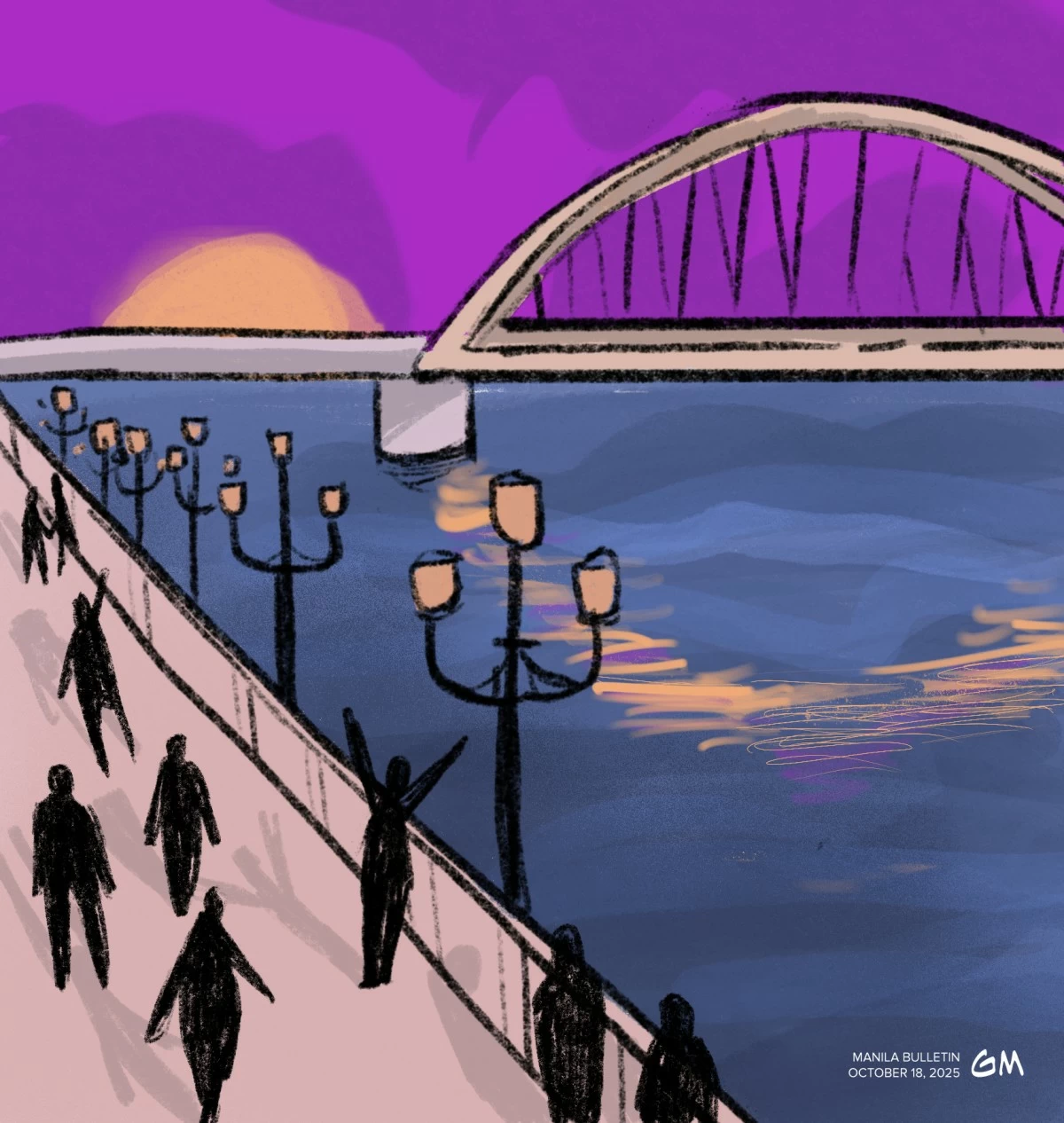
At the heart of this transformation is the Pasig River Esplanade, a major milestone in the river’s rehabilitation. First inaugurated in January 2024 with a 500-meter stretch behind the Manila Central Post Office, the esplanade now includes a 250-meter extension connecting to Plaza Mexico and Fort Santiago. The newest development closed a section of Plaza Mexico Road to create 2,000 square meters of public open space—a symbolic and physical reconnection of people with their river.
The esplanade now draws crowds, among them local and foreign tourists, for its “Instagrammable” charm and relaxing atmosphere. It features pedestrian walkways, bike lanes, commercial stalls, and green spaces that have turned the area into a lively hub for recreation, tourism, and local commerce.
But the transformation is not just visual. The project includes key purposes in flood control, urban mobility, and environmental sustainability. By revitalizing the Pasig River, the government is also strengthening Metro Manila’s resilience against climate impacts while reclaiming a historic waterway once vital to trade and transport.
The success of the PBBM project is due in large part to the leadership and vision of First Lady Liza Araneta-Marcos, who has been praised for her hands-on role and deep appreciation for the nation’s culture and heritage. According to President Marcos Jr., her close supervision ensured that the project honored both historical identity and modern needs.
The continuity of this project has been ensured by Executive Order No. 92, creating the Office of the Presidential Adviser on Pasig River Rehabilitation (OPAPRR) and reorganizing the Inter-Agency Council for the Pasig River Urban Development (IAC-PRUD). These bodies coordinate national and local efforts, streamline implementation, and report directly to the President. This governance structure aims to avoid the pitfalls that hindered previous rehabilitation attempts.
The Pasig River, historically a bustling artery for commerce and community life, deteriorated over decades due to unchecked pollution and urban neglect. Unlike rivers that run across major cities in many parts of the world, the riverfront of the Pasig River had not been fully developed to attract community and commercial activities.
The success of this initiative needs citizen involvement. Proper waste disposal, participation in cleanup drives, and support for eco-friendly practices are essential to maintaining the river’s health. Businesses, too, are called to adopt river segments, fund green spaces, or invest in sustainable urban design.
The Pasig Bigyang Buhay Muli project must be more than an infrastructure achievement. It must stand for a collective triumph that breathes new life into a waterway that reflects our culture and identity. Let this be a model for urban renewal, a rallying cry for civic responsibility, and a reminder that the environment is central to our progress.
From a symbol of decay, the Pasig River must become a living, thriving part of the Filipino story once again.
ADVERTISEMENT
.most-popular .layout-ratio{ padding-bottom: 79.13%; } @media (min-width: 768px) and (max-width: 1024px) { .widget-title { font-size: 15px !important; } }

{{ articles_filter_1561_widget.title }}

.most-popular .layout-ratio{ padding-bottom: 79.13%; } @media (min-width: 768px) and (max-width: 1024px) { .widget-title { font-size: 15px !important; } }

{{ articles_filter_1562_widget.title }}

.most-popular .layout-ratio{ padding-bottom: 79.13%; } @media (min-width: 768px) and (max-width: 1024px) { .widget-title { font-size: 15px !important; } }

{{ articles_filter_1563_widget.title }}

{{ articles_filter_1564_widget.title }}

.mb-article-details { position: relative; } .mb-article-details .article-body-preview, .mb-article-details .article-body-summary{ font-size: 17px; line-height: 30px; font-family: "Libre Caslon Text", serif; color: #000; } .mb-article-details .article-body-preview iframe , .mb-article-details .article-body-summary iframe{ width: 100%; margin: auto; } .read-more-background { background: linear-gradient(180deg, color(display-p3 1.000 1.000 1.000 / 0) 13.75%, color(display-p3 1.000 1.000 1.000 / 0.8) 30.79%, color(display-p3 1.000 1.000 1.000) 72.5%); position: absolute; height: 200px; width: 100%; bottom: 0; display: flex; justify-content: center; align-items: center; padding: 0; } .read-more-background a{ color: #000; } .read-more-btn { padding: 17px 45px; font-family: Inter; font-weight: 700; font-size: 18px; line-height: 16px; text-align: center; vertical-align: middle; border: 1px solid black; background-color: white; } .hidden { display: none; }
function initializeAllSwipers() { // Get all hidden inputs with cms_article_id document.querySelectorAll('[id^="cms_article_id_"]').forEach(function (input) { const cmsArticleId = input.value; const articleSelector = '#article-' + cmsArticleId + ' .body_images'; const swiperElement = document.querySelector(articleSelector); if (swiperElement && !swiperElement.classList.contains('swiper-initialized')) { new Swiper(articleSelector, { loop: true, pagination: false, navigation: { nextEl: '#article-' + cmsArticleId + ' .swiper-button-next', prevEl: '#article-' + cmsArticleId + ' .swiper-button-prev', }, }); } }); } setTimeout(initializeAllSwipers, 3000); const intersectionObserver = new IntersectionObserver( (entries) => { entries.forEach((entry) => { if (entry.isIntersecting) { const newUrl = entry.target.getAttribute("data-url"); if (newUrl) { history.pushState(null, null, newUrl); let article = entry.target; // Extract metadata const author = article.querySelector('.author-section').textContent.replace('By', '').trim(); const section = article.querySelector('.section-info ').textContent.replace(' ', ' '); const title = article.querySelector('.article-title h1').textContent; // Parse URL for Chartbeat path format const parsedUrl = new URL(newUrl, window.location.origin); const cleanUrl = parsedUrl.host + parsedUrl.pathname; // Update Chartbeat configuration if (typeof window._sf_async_config !== 'undefined') { window._sf_async_config.path = cleanUrl; window._sf_async_config.sections = section; window._sf_async_config.authors = author; } // Track virtual page view with Chartbeat if (typeof pSUPERFLY !== 'undefined' && typeof pSUPERFLY.virtualPage === 'function') { try { pSUPERFLY.virtualPage({ path: cleanUrl, title: title, sections: section, authors: author }); } catch (error) { console.error('ping error', error); } } // Optional: Update document title if (title && title !== document.title) { document.title = title; } } } }); }, { threshold: 0.1 } ); function showArticleBody(button) { const article = button.closest("article"); const summary = article.querySelector(".article-body-summary"); const body = article.querySelector(".article-body-preview"); const readMoreSection = article.querySelector(".read-more-background"); // Hide summary and read-more section summary.style.display = "none"; readMoreSection.style.display = "none"; // Show the full article body body.classList.remove("hidden"); } document.addEventListener("DOMContentLoaded", () => { let loadCount = 0; // Track how many times articles are loaded const offset = [1, 2, 3, 4, 5, 6, 7, 8, 9, 10]; // Offset values const currentUrl = window.location.pathname.substring(1); let isLoading = false; // Prevent multiple calls if (!currentUrl) { console.log("Current URL is invalid."); return; } const sentinel = document.getElementById("load-more-sentinel"); if (!sentinel) { console.log("Sentinel element not found."); return; } function isSentinelVisible() { const rect = sentinel.getBoundingClientRect(); return ( rect.top < window.innerHeight && rect.bottom >= 0 ); } function onScroll() { if (isLoading) return; if (isSentinelVisible()) { if (loadCount >= offset.length) { console.log("Maximum load attempts reached."); window.removeEventListener("scroll", onScroll); return; } isLoading = true; const currentOffset = offset[loadCount]; window.loadMoreItems().then(() => { let article = document.querySelector('#widget_1690 > div:nth-last-of-type(2) article'); intersectionObserver.observe(article) loadCount++; }).catch(error => { console.error("Error loading more items:", error); }).finally(() => { isLoading = false; }); } } window.addEventListener("scroll", onScroll); });

Sign up by email to receive news.