ADVERTISEMENT

PNP-ACG ramps up cyber defense training with leading PH finance super app

Published Oct 18, 2025 10:09 pm
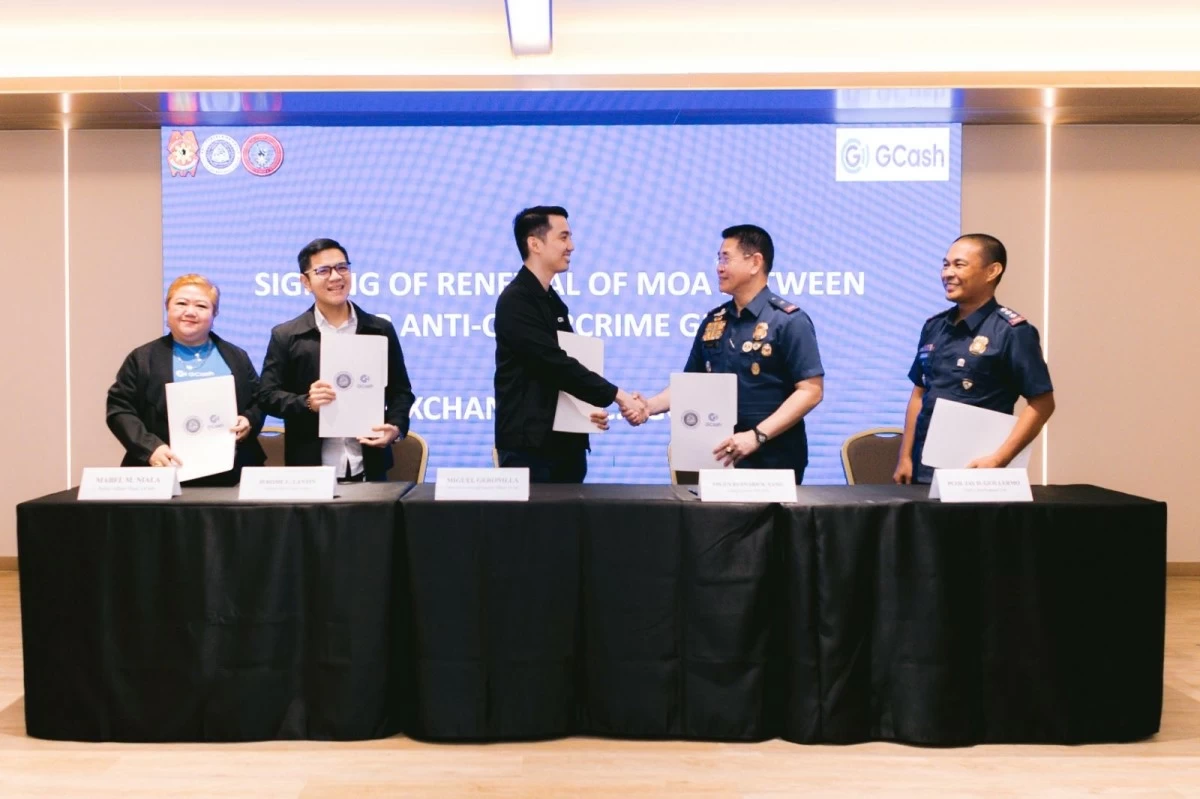
From left: GCash Public Affairs Head Mabel M.Niala, GCash External Affairs Head Jerome C. Lantin, GCash Chief Information and Security Officer Miguel Geronilla, PNP-ACG Director PBGen Bernard Yang, and PNP ACG Chief Investigative Officer PCol Jay D Guillermo

The Philippine National Police Anti-Cybercrime Group (PNP-ACG) has strengthened its drive against digital financial crimes with the launch of its Cybersecurity and Fintech Handbook and the renewal of its partnership with GCash. The event also introduced the Scam Assistance Hub, a project aimed at facilitating the quick and easy filing of scam reports through a simple QR Code. These major initiatives are targeted to complement law enforcement efforts in addressing emerging cyber fraud and scams for more timely and coordinated action.
The PNP-ACG and GCash renewed their Memorandum of Agreement (MOA), first signed in 2022, which established a framework for cooperation on cybersecurity awareness, capability-building, and information sharing.
This reaffirms the shared commitment of both institutions to handle financial cybercrimes and to strengthen consumer protection amid the continued growth of digital payments.
“Financial technology continues to evolve, and with it, the methods used by cybercriminals,” said Miguel Geronilla, Chief Information and Security Officer at GCash. “We at GCash are honored to support the PNP-ACG in enhancing the capabilities of law enforcers through education. By sharing fintech-specific use cases, we aim to help build a more informed response force against digital financial threats.”
Supporting cyber defense frontliners across the country
The Cybersecurity and Fintech Handbook was created in partnership with GCash to complement the efforts of the Regional Anti-Cybercrime Unit (RACU) and ACG personnel by outlining key trends and schemes in financial cybercrime. Specifically, the handbook features modules on cybersecurity frameworks, cybercrime laws, financial investigations, fintech systems, and cryptocurrency fundamentals, ensuring officers are better equipped to address today’s digital crime challenges.
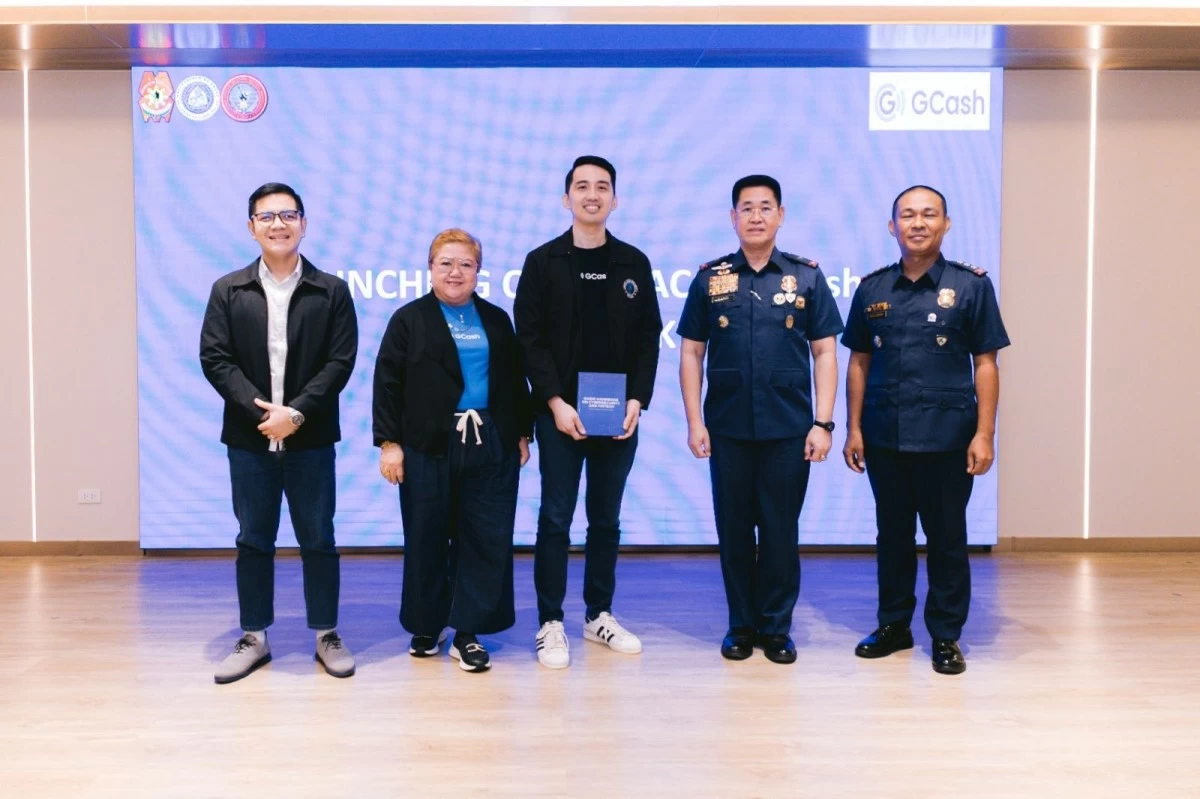
Miguel Geronilla, GCash Chief Information and Security Officer and PNP-ACG Director, PBGen Bernard Yang leading the official turnover of the Cybersecurity and Fintech Handbook
“These initiatives are a collective step forward in our continuing effort to protect Filipinos in the digital space,” said Brig. Gen. Bernard R. Yang, Director of the PNP-ACG. “Through strategic collaborations and timely learning tools, we are building a law enforcement force that is ready to address today’s emerging cyber threats.”
Other key officials present at the ceremonial event were PNP ACG Chief Investigative Officer PCol Jay D. Guillermo, GCash Chief Information and Security Officer Miguel Geronilla, GCash Public Affairs Manager Mabel M. Niala, and GCash External Affairs Manager Jerome C. Lantin.
The handbook will be rolled out to regional units via virtual assemblies and video modules, aligning with the PNP’s ongoing modernization strategy and the national government’s National Cybersecurity Plan (NCSP) 2023–2028. Developed by the Department of Information and Communications Technology (DICT), the NCSP sets the policy direction for a secure and resilient cyberspace in the Philippines.
This joint effort also comes on the heels of the recently released Implementing Rules and Regulations (IRR) of the Anti-Financial Account Scamming Act (AFASA), a new law passed in July 2024 aimed at curbing online scams and fraudulent financial activities.
The AFASA targets key financial crimes such as social engineering scams and money muling, while also empowering institutions like the Bangko Sentral ng Pilipinas (BSP) to investigate suspicious financial activities. The Cybersecurity and Fintech Handbook seeks to help reinforce these regulatory updates by helping frontline police better understand and enforce provisions under AFASA.
Reporting scams made easier via QR
The event also marked the introduction of the Scam Assistance Hub (SAH), a new platform that simplifies scam reporting for the public.
The SAH QR code connects users to the GCash SAH website, a platform where victims of online scams can file police reports, receive assistance, and process documentation for claims under GCash’s Express Send Scam Insurance.
This initiative ensures a more coordinated response between the PNP-ACG and GCash in handling fraud complaints and supporting affected users.
Building a future-ready police force
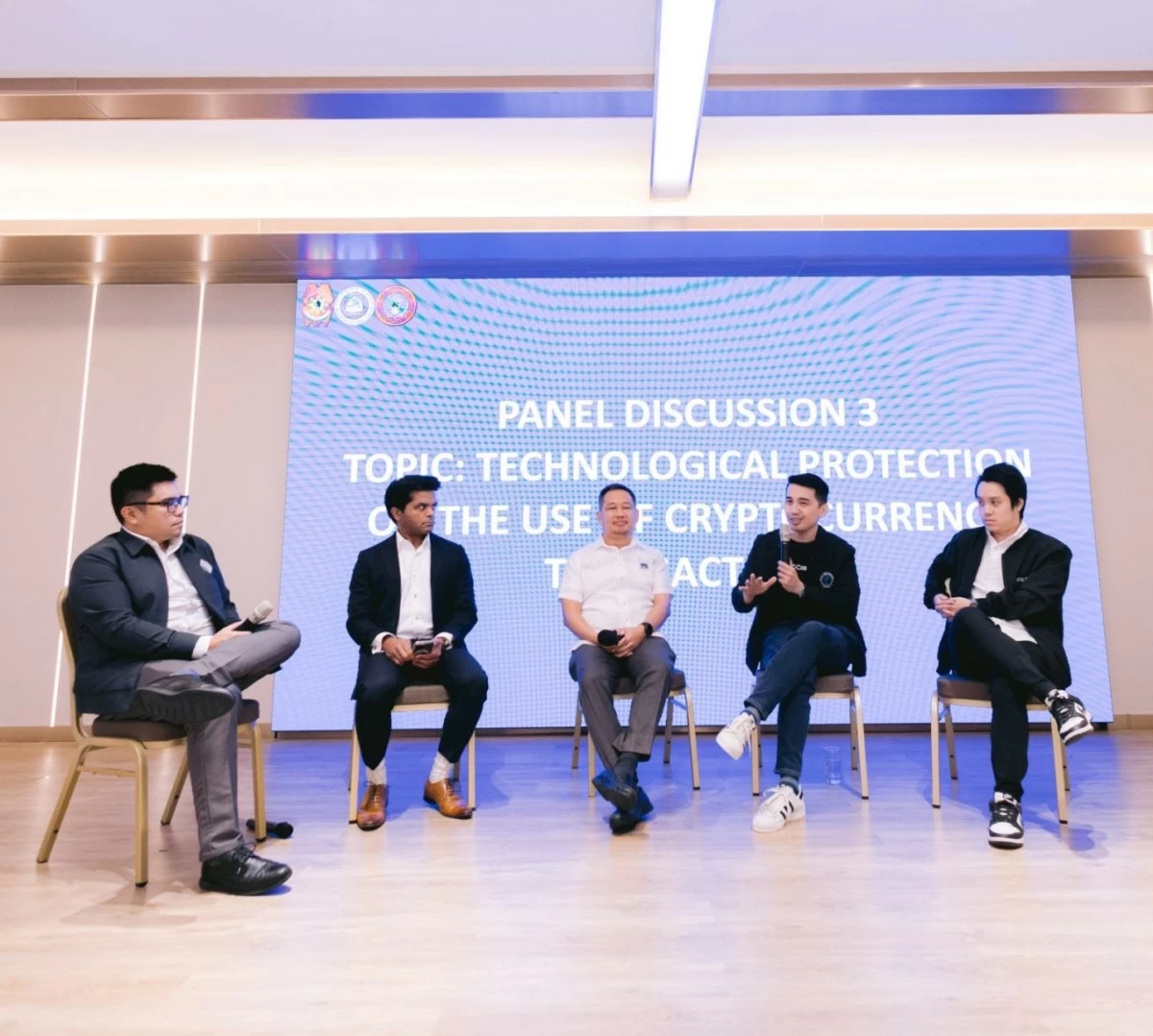
From left: Moderator, Atty. Paulo Montario M. Ong; Prashant Haldankar (SEKURO); Atty. Michel Montero (IBPAP); Miguel Geronilla (GCash); and Benjamin Thang (Coin.ph) having a panel discussion on
From left: Moderator, Atty. Paulo Montario M. Ong; Prashant Haldankar (SEKURO); Atty. Michel Montero (IBPAP); Miguel Geronilla (GCash); and Benjamin Thang (Coin.ph) having a panel discussion on "Technological Protection on the Use of Cryptocurrency Transactions"
These efforts complement the PNP-ACG’s broader public education and prevention campaigns designed to build digital literacy among both law enforcement and the general public.
“Technology will continue to evolve, and criminals will continue to adapt,” Brig. Gen. Yang added. “These initiatives will help in the long journey of strengthening our cyber defenses. What matters is that we are moving forward together with stronger capabilities, a clearer direction, and a deeper resolve.”
The group reminded that while the SAH QR Code is still being prepared for deployment, any incidents of cybercrime and fraud can still be reported via the PNP-ACG’s hotline 1326 or via GCash’s app Help Center or through any of the official customer support channels. The public may also follow PNP-ACG’s official social media pages for updates on its ongoing efforts to fight cybercrime and promote digital security nationwide.
ADVERTISEMENT
.most-popular .layout-ratio{ padding-bottom: 79.13%; } @media (min-width: 768px) and (max-width: 1024px) { .widget-title { font-size: 15px !important; } }

{{ articles_filter_1561_widget.title }}

.most-popular .layout-ratio{ padding-bottom: 79.13%; } @media (min-width: 768px) and (max-width: 1024px) { .widget-title { font-size: 15px !important; } }

{{ articles_filter_1562_widget.title }}

.most-popular .layout-ratio{ padding-bottom: 79.13%; } @media (min-width: 768px) and (max-width: 1024px) { .widget-title { font-size: 15px !important; } }

{{ articles_filter_1563_widget.title }}

{{ articles_filter_1564_widget.title }}

.mb-article-details { position: relative; } .mb-article-details .article-body-preview, .mb-article-details .article-body-summary{ font-size: 17px; line-height: 30px; font-family: "Libre Caslon Text", serif; color: #000; } .mb-article-details .article-body-preview iframe , .mb-article-details .article-body-summary iframe{ width: 100%; margin: auto; } .read-more-background { background: linear-gradient(180deg, color(display-p3 1.000 1.000 1.000 / 0) 13.75%, color(display-p3 1.000 1.000 1.000 / 0.8) 30.79%, color(display-p3 1.000 1.000 1.000) 72.5%); position: absolute; height: 200px; width: 100%; bottom: 0; display: flex; justify-content: center; align-items: center; padding: 0; } .read-more-background a{ color: #000; } .read-more-btn { padding: 17px 45px; font-family: Inter; font-weight: 700; font-size: 18px; line-height: 16px; text-align: center; vertical-align: middle; border: 1px solid black; background-color: white; } .hidden { display: none; }
function initializeAllSwipers() { // Get all hidden inputs with cms_article_id document.querySelectorAll('[id^="cms_article_id_"]').forEach(function (input) { const cmsArticleId = input.value; const articleSelector = '#article-' + cmsArticleId + ' .body_images'; const swiperElement = document.querySelector(articleSelector); if (swiperElement && !swiperElement.classList.contains('swiper-initialized')) { new Swiper(articleSelector, { loop: true, pagination: false, navigation: { nextEl: '#article-' + cmsArticleId + ' .swiper-button-next', prevEl: '#article-' + cmsArticleId + ' .swiper-button-prev', }, }); } }); } setTimeout(initializeAllSwipers, 3000); const intersectionObserver = new IntersectionObserver( (entries) => { entries.forEach((entry) => { if (entry.isIntersecting) { const newUrl = entry.target.getAttribute("data-url"); if (newUrl) { history.pushState(null, null, newUrl); let article = entry.target; // Extract metadata const author = article.querySelector('.author-section').textContent.replace('By', '').trim(); const section = article.querySelector('.section-info ').textContent.replace(' ', ' '); const title = article.querySelector('.article-title h1').textContent; // Parse URL for Chartbeat path format const parsedUrl = new URL(newUrl, window.location.origin); const cleanUrl = parsedUrl.host + parsedUrl.pathname; // Update Chartbeat configuration if (typeof window._sf_async_config !== 'undefined') { window._sf_async_config.path = cleanUrl; window._sf_async_config.sections = section; window._sf_async_config.authors = author; } // Track virtual page view with Chartbeat if (typeof pSUPERFLY !== 'undefined' && typeof pSUPERFLY.virtualPage === 'function') { try { pSUPERFLY.virtualPage({ path: cleanUrl, title: title, sections: section, authors: author }); } catch (error) { console.error('ping error', error); } } // Optional: Update document title if (title && title !== document.title) { document.title = title; } } } }); }, { threshold: 0.1 } ); function showArticleBody(button) { const article = button.closest("article"); const summary = article.querySelector(".article-body-summary"); const body = article.querySelector(".article-body-preview"); const readMoreSection = article.querySelector(".read-more-background"); // Hide summary and read-more section summary.style.display = "none"; readMoreSection.style.display = "none"; // Show the full article body body.classList.remove("hidden"); } document.addEventListener("DOMContentLoaded", () => { let loadCount = 0; // Track how many times articles are loaded const offset = [1, 2, 3, 4, 5, 6, 7, 8, 9, 10]; // Offset values const currentUrl = window.location.pathname.substring(1); let isLoading = false; // Prevent multiple calls if (!currentUrl) { console.log("Current URL is invalid."); return; } const sentinel = document.getElementById("load-more-sentinel"); if (!sentinel) { console.log("Sentinel element not found."); return; } function isSentinelVisible() { const rect = sentinel.getBoundingClientRect(); return ( rect.top < window.innerHeight && rect.bottom >= 0 ); } function onScroll() { if (isLoading) return; if (isSentinelVisible()) { if (loadCount >= offset.length) { console.log("Maximum load attempts reached."); window.removeEventListener("scroll", onScroll); return; } isLoading = true; const currentOffset = offset[loadCount]; window.loadMoreItems().then(() => { let article = document.querySelector('#widget_1690 > div:nth-last-of-type(2) article'); intersectionObserver.observe(article) loadCount++; }).catch(error => { console.error("Error loading more items:", error); }).finally(() => { isLoading = false; }); } } window.addEventListener("scroll", onScroll); });

Sign up by email to receive news.